


 Latinoamérica
 Europa
Beyond Stimulating the Rumen Flora




 c/José Echegaray, 8, Edificio Alvia 1, planta 2, oficina 6 Las Rozas 28232
  +34 916363251

The addition of fermentation products in early-age feed, due to their content of metabolites that optimize ruminal fermentations, stimulates the growth of the flora in the rumen.
The effect of using fermentation products is tremendously valuable, as the volatile fatty acids from ruminal fermentations contribute to the development of rumen papillae, promoting the development of the young ruminant’s digestive system.
The counts of these pathogens increase as the volatile fatty acids decrease.
Fermentation metabolites as a palatability factor
The effect of these metabolites is not limited to stimulating the rumen flora; their role is multifaceted (Alugongo et al, 2017). They are a palatability factor that stimulates feed intake, as they have an appetizing effect. It’s similar for us. All the fermentation products we consume, like bread, beer, wine, etc., have this appetizing effect.
The reasons for this effect are not clear. It could be the combination of certain flavors, but this combination is unknown. Yeast itself does not provide this appetizing effect. Some of its components do (yeast extract is used in soup manufacturing, for example), and especially the fermentation products of yeasts.
Growth of Salmonella and E.coli depending on the hours since the last feed intake
It has long been known that higher feed intake will reduce the predisposition to Salmonella infections (I.E. Brownlie and F. H. Grau, 1967).
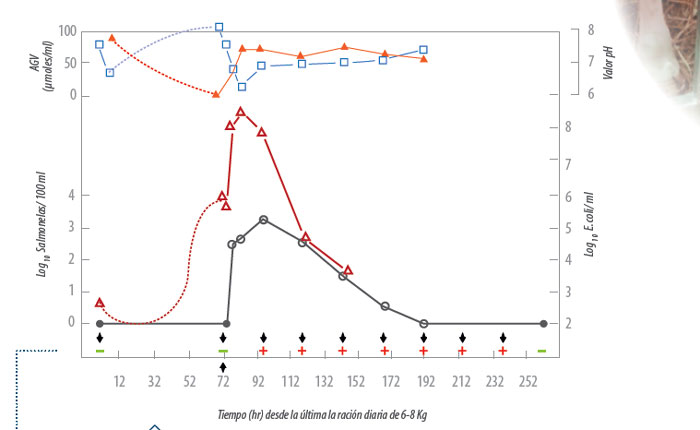
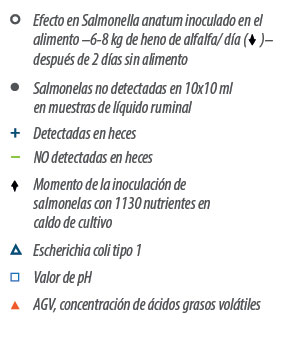
Volatile fatty acids, besides being the vehicle for the animal’s energy nutrition, play a role in infection prevention (Meyer J Wolin, 1969). In monogastrics, and even in young ruminants, it is known that butyric acid has a negative effect on pathogenic microorganisms such as salmonella or Escherichia coli.
By promoting the growth of rumen flora, we increase the production of volatile fatty acids that will have an interesting selective antimicrobial effect
Leismeister in 2004 conducted tests with original fermentation metabolite products(*) that systematically show an increase in starter feed intake. Early feed intake promotes animal development, which is not at odds with accelerated growth programs for heifers, as it not only increases feed intake but also milk replacer intake.
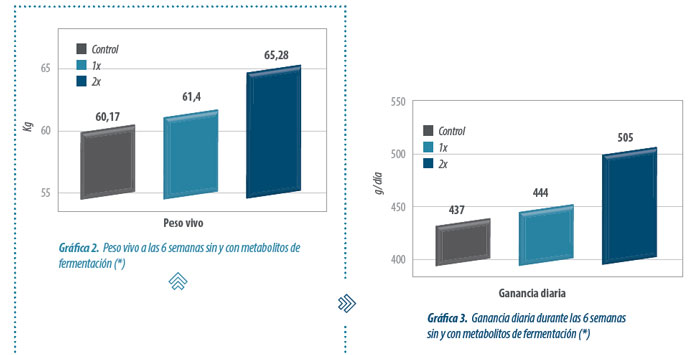
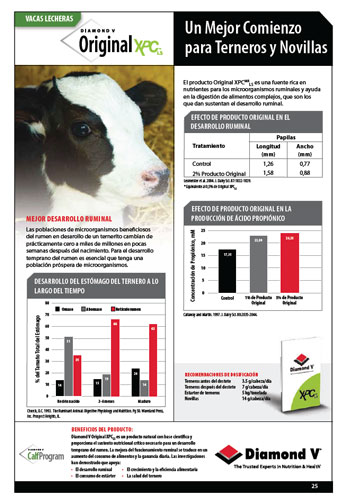
In graphs 2 and 3, we can see the effect observed by Leismeister and his collaborators with original fermentation metabolite products(*) at the recommended dose and twice the recommended dose (Leismeister 2004).
Bill Stone, from Diamond V, reminds us that at the base of the Statue of Liberty are verses by Emma Lazarus: “Give me your tired, your poor, your huddled masses yearning to breathe free.” These verses seem to be written by a Salmonella
Xiao and collaborators (Xiao, 2016) conducted a trial where they assigned 30 Holstein calves to one of three treatments: 0%, 0.5%, and 1% of original fermentation metabolite products(*).
The groups that received original fermentation metabolite products(*) also received SmartCare, a specific fermentation product for use in milk replacer.
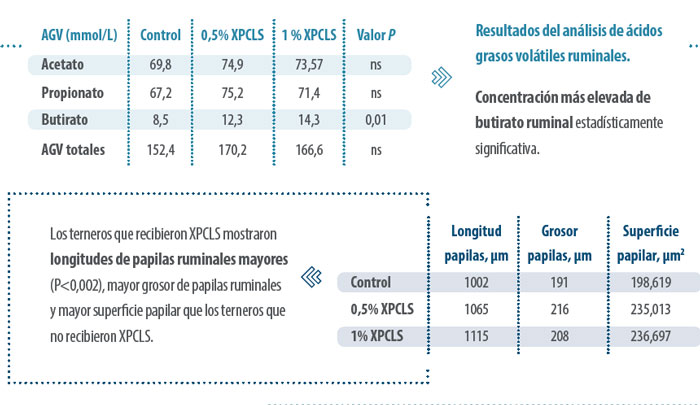
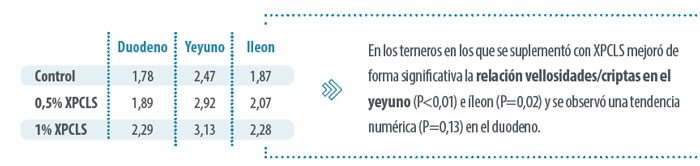
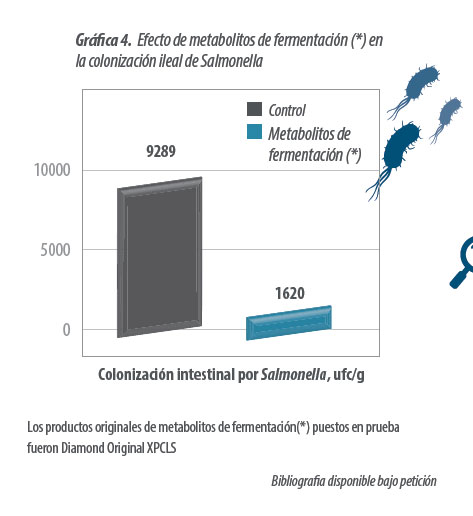
In another experiment, Bewer et al. (Bewer, 2014), inoculated 40 calves with Salmonella typhimurium, having treated half with fermentation metabolites (*). In treated animals, the growth of rumen papillae was significantly greater (23.6 μm versus 20.3, P<0.05). Significant reductions were observed in both fever episodes and post-infection diarrhea episodes. Once sacrificed, a lower ileal colonization of Salmonella was observed, as seen in graph 4. A significant reduction (P<0.05) in Salmonella shedding was also observed 6 days post-infection.