

 Latinoamérica
 Europa


 Prat de la Riba nº 50 Sant Cugat del Vallès (Barcelona) 08174
  +34 93 404 51 00
On June 7, Boehringer Ingelheim organized a symposium as part of the scientific program of the Anembe Congress. Under the title “Udder Health in the Dry Period. New Consensus on Selective Dry Cow Treatment“, the event aimed to address udder health during drying off in an environment of prudent antibiotic use.
The symposium, attended by around 70 prominent veterinarians specializing in milk quality, featured the participation of three internationally renowned specialists.
Professor Dr. Sarne de Vliegher, from Ghent University (Belgium) and a world opinion leader in milk quality, opened the program with a presentation on the Importance of the Teat Canal.
In his presentation, Dr. De Vliegher emphasized the importance of the dry period in the productive life of dairy cattle. He also pointed out that during this period, 10 times more intramammary infections occur than during lactation, due to the morphological changes the teat undergoes at the start of drying off. He added that the keratin plug, which should form in the first few days, fails to form in 25% of animals. This leaves an open pathway for germs, leading to new infections in the dry period.
Following Dr. Sarne De Vliegher, immunologist and professor from the Department of Animal Health at the University of Munich (Germany), Dr. Holm Zerbe, took the floor.
With the title “Defense Mechanisms of the Mammary Gland”, Dr. Zerbe explained how the udder behaves in the face of any infection and emphasized that, in an environment of responsible antibiotic use, the immune system must be prepared to tackle new infections. Despite this statement, he made it clear that, currently, immunoregulatory therapies have shown limited efficacy, which still places great importance on management and prevention to improve the herd’s health status.
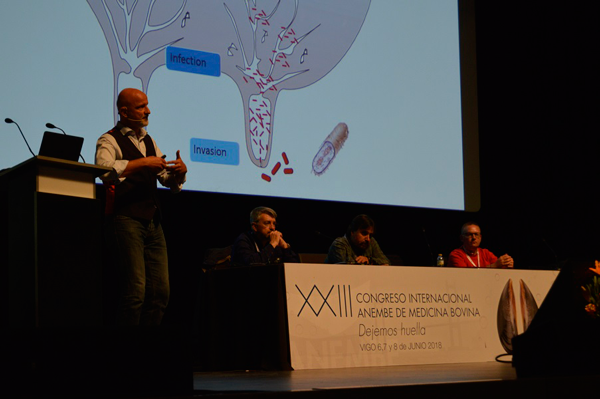
To close the day, Luis Miguel Jiménez, veterinarian and milk quality advisor at Servet Talavera, spoke about “What Do Europe’s Milk Quality Experts Say About Drying Off?”
In his presentation, Luis Miguel Jiménez explained the consensus of these experts on udder health, which has been documented in a paper establishing the criteria by which a farm is classified as high or low risk. All experts unanimously agree on one point: the use of internal teat sealants is essential in all farms and for all animals, regardless of their risk level.
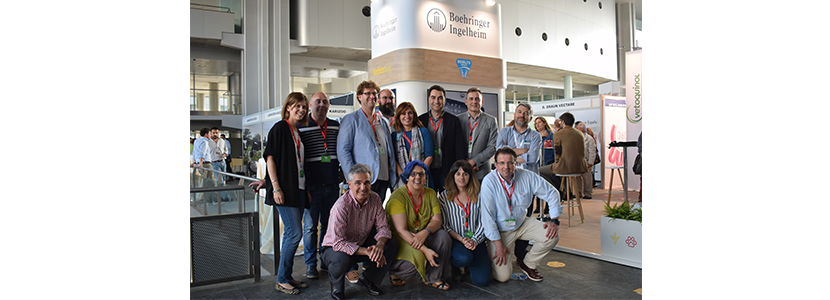
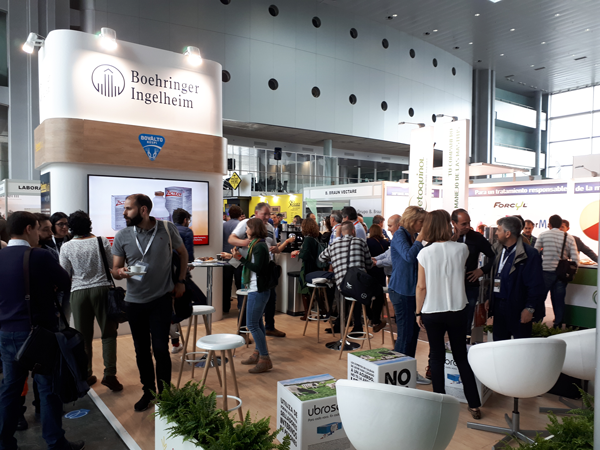
Alongside the symposium, Boehringer Ingelheim was present in the commercial area of the Anembe Congress with a stand showcasing firsthand their innovations and strengths that consolidate the company as one of the world leaders in Animal Health.
For more information visit the Boehringer Ingelheim website