


 Latinoamérica
 Europa
Treatment and Control of Mastitis in Cattle with Immunotherapy


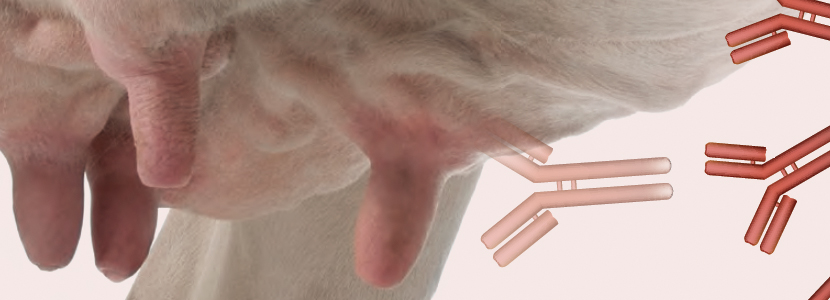






The immune response against infectious agents involves a complex interaction between different types of cells and their products, culminating in the elimination of the infectious agent or the death of the animal. In the specific case of dairy cattle, mastitis remains a disease with high incidence and the greatest productive and economic detriment in herds.
There are times during the animal’s productive cycle, such as during the peripartum period, when susceptibility to this disease is greater. The rational use of antibiotics, especially during drying off, has greatly helped to contain the disease. Current consumer demands indicate that cows must produce quality food (milk and meat) without antibiotic residues, prioritizing prevention and animal welfare in their management.
In high-producing animals, the decrease in immune system functionality makes cows more vulnerable to pathogens. This increases the risk of infections, affecting the profitability of dairy farms, which have traditionally been addressed through the administration of antibiotics and are now focusing on stimulating the immune system mechanisms that act in the mammary gland through the administration of vaccines and/or immunomodulators, with the aim of reducing antibiotic use.
The application of immunotherapy in cattle constitutes an innovative strategy that enhances the activity of the immune system and, therefore, animal health, resulting in the protection of the animal’s full productive potential and the herd as a whole, favoring higher productive yields.
Lipopolysaccharides (LPS) have been used as immune response modulators in recent years.
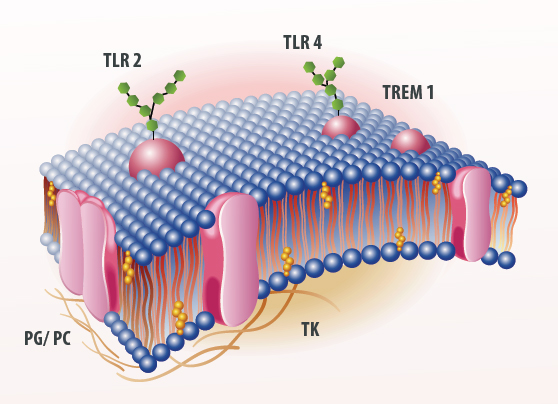
FORTINMUNE BOV® belongs to a new generation of lipopolysaccharides, derived from the genus Ochrobactrum intermedium, whose mechanism of action is based on the stimulation of specific membrane receptors of macrophages, Toll-like or TLR, generating a potent cell-based immune response and constituting a link between innate and adaptive immunity.
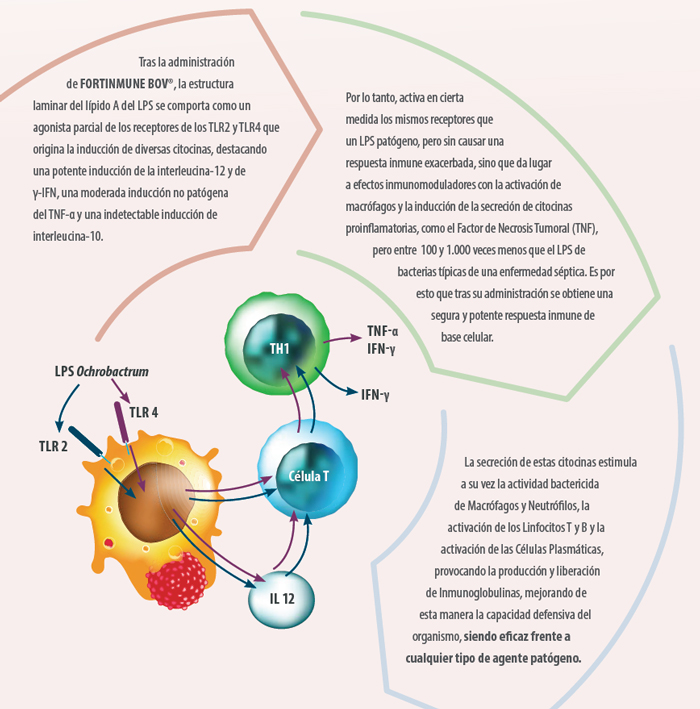
The ultimate goal of immunotherapy within milk quality and mastitis control programs is to enhance the animal’s defensive systems by stimulating the cellular immune response, reducing the establishment of new infections and their severity, making its application economically interesting, even if it only results in an increase in the number of spontaneous cures and a decrease in the somatic cell count (SCC). Under normal conditions, the immune system in the bovine mammary gland is relatively inactive, and its defense largely depends on the macrophages present in the mammary mucosa, local synthesis of immunoglobulins, and the influx of neutrophils via the bloodstream.
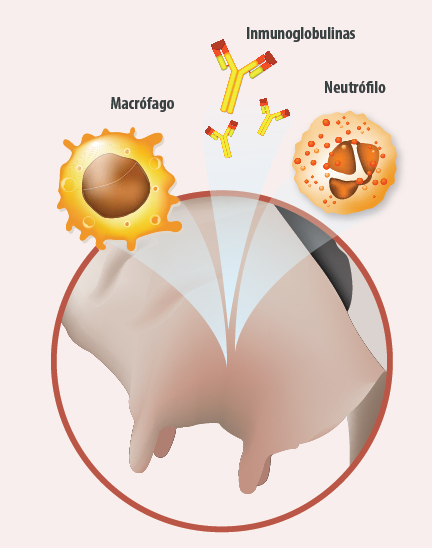
Neutrophils are considered the first line of defense of the organism and are the first cell type to respond in situations of inflammation. They reach the udder attracted by the presence of infectious agents and products generated in inflammation, disrupting the balance with other defensive cells. They have a short lifespan and limited capacity for repeated phagocytosis, requiring a large number of them and establishing a constant flow from the blood to the udder. The vascular system does not favor their elimination through the bloodstream once they are inactive, so once detached from the alveolar walls, they are eliminated in large quantities with the milk, causing an increase in SCC.
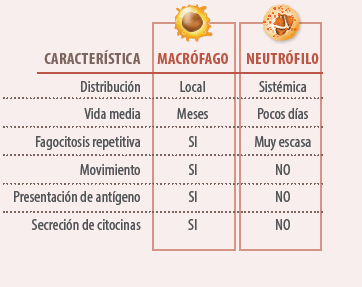
Table 1. Properties of Macrophages and Neutrophils
With the application of these control programs, the number of infections by Staphylococcus aureus has been reduced, although it remains a frequent cause of clinical and subclinical mastitis, with high prevalence and difficult eradication on farms.
PRACTICAL CASE
Mastitis, both clinical and subclinical, can be reduced with the application of FORTINMUNE BOV® due to its immunotherapeutic effect. In a dairy cattle farm with a high rate of cows infected by S. aureus, 15 cows are selected:
- 5 cows not infected by S. aureus, control animals
- 10 infected cows treated with two doses of 5 ml of FORTINMUNE BOV® 15 days apart.
In subsequent milk samples from cattle, a study of cell populations is conducted using cytometry, and interleukins are measured using ELISA. The results are normalized relative to the uninfected control animals.
CELL POPULATIONS
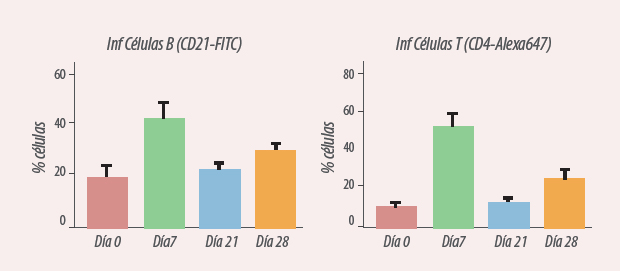
a. Significant increase in T and B Cells on day 7 post-treatment
b. Significant increase in Macrophages and Neutrophils on days 21 and 28 post-treatment.
CYTOKINE EXPRESSION
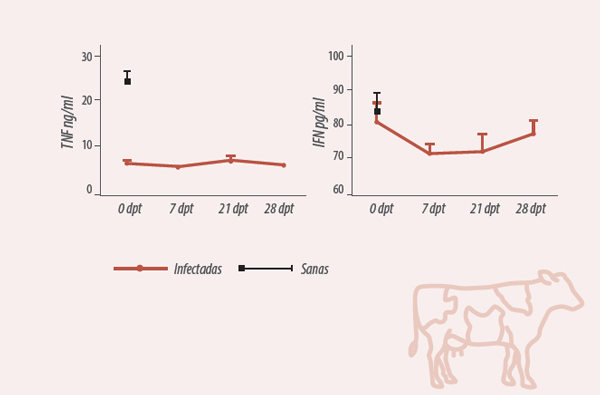
Stable levels of both IFN-γ and TNF-α are observed during the study period.
EFFICACY AGAINST OTHER GERMS
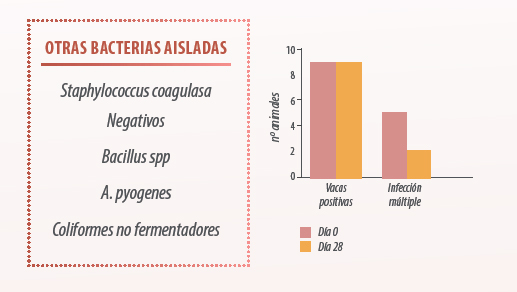
In 45% of the samples taken, a second bacterium was isolated, which disappeared in 80% of them.
CLINICAL SYMPTOMS
No clinical symptoms were observed during the study period.
SOMATIC CELL COUNT
Decreases in 66.7% of the animals, with an average decrease of over 11%.
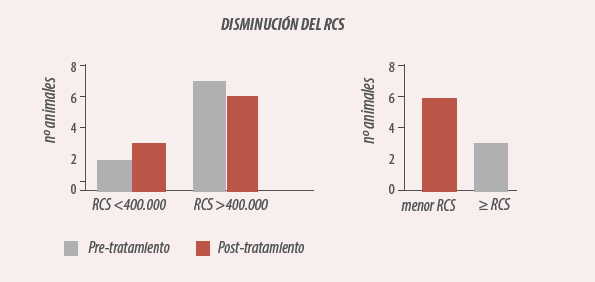
The administration of FORTINMUNE BOV® in cows with mastitis provides a rapid and potent cellular immune response that leads to a decrease in co-infections, Somatic Cell Count (SCC), and a lower inflammatory degree in mastitis caused by S. aureus:
- Increase in immune cells at the same times as a cellular response would occur, favoring the fight against pathogens.
- Limited and stable levels of interleukins indicate a lower degree of inflammation of the mammary gland.
- Elimination of co-infections and absence of clinical symptoms during the study.
- Decrease in SCC.