



 Latinoamérica
 Europa
The situation of the raw materials market in September




 Av. de Bruselas, 13 Alcobendas (Madrid) 28108
  91 66 35 000

The situation of the raw materials market in September
Volatility in the markets following the drought in Central Europe
The excessive heat has wreaked havoc in the countries of northwestern Europe and the British Isles. It has not only affected cereal crops, which we will discuss later, but the absence of pastures in countries where they traditionally abound is forcing these countries to import fibrous raw materials in unprecedented volumes.
Imports of Palm Kernel Meal in Ireland are usually 100,000 tons annually, and currently, in just 6 months, they have already accumulated more than 200,000 tons.
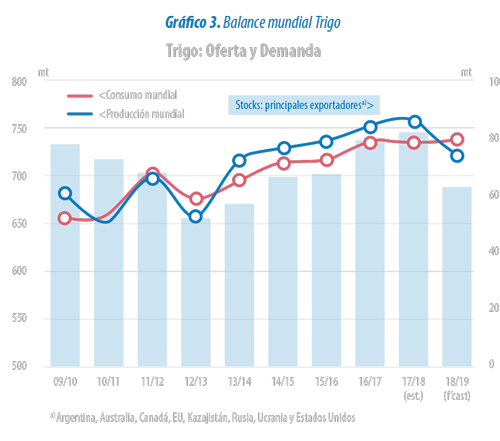
 The excessive heat and lack of pastures in countries where they traditionally abound have led to sharp price increases in all cereals, led by Wheat
The demand (which did not expect this increase) has reacted unevenly. On one hand, the countries directly affected have resolved their needs by buying their positions on the global market immediately, however in Spain, where we also have a great harvest, the coverage for the September/December period is really low.
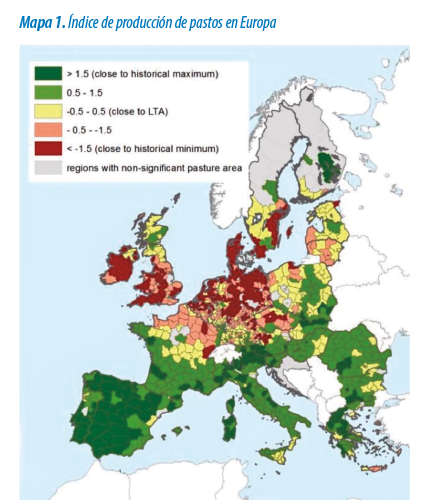

 From July 20/22, data began to emerge about the negative impact it was having on the countries of central Europe and, specifically, the reduction in cereal production in countries like the UK, Germany, Denmark, Poland, and France. At that point in the harvest (September), these were data that caused a strong upward market reaction, mainly for Wheat, which has dragged the rest of the cereals.
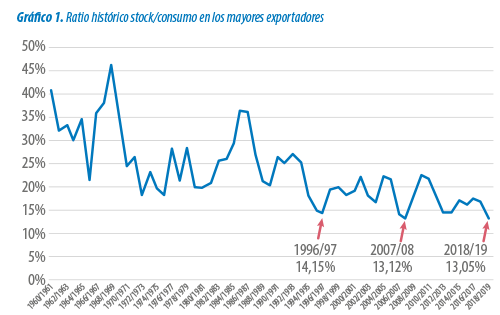
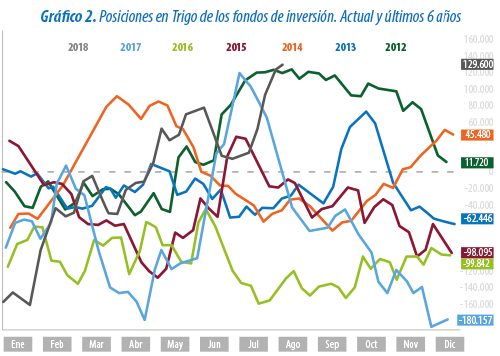
Therefore, supported by the lowest Stock vs Consumption data –Graph 1–, investment fund positions in Chicago have gone very long.
In Spain, despite the large harvest, prices and sales retention are influenced by the import market, dragging prices to the highest levels seen in 2018, around August 10.
 During the two central weeks of the month, we have entered dates of little commercial activity, which is causing more selling liquidity and prices have started to fall, although not yet significantly.

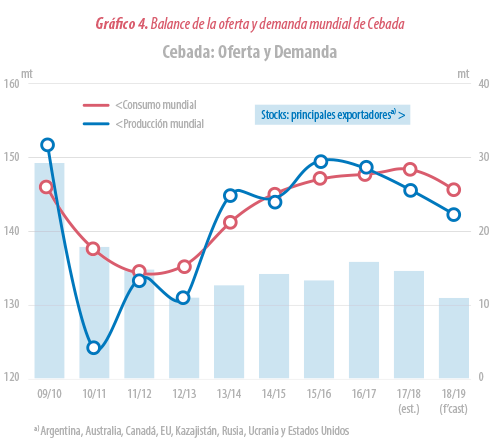
In the case of Barley, we can see in the global balance that during the past and present campaign production has been below demand and, consequently, global stocks have been reduced, despite the large harvest in Spain, where we went from 5.2 million last year to approximately 10 million according to estimates from cooperatives like ACCOE and CESFAC.

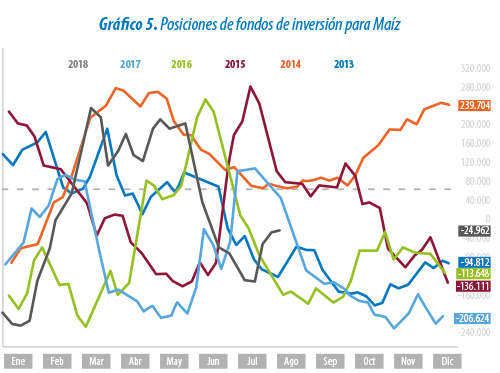
 Regarding Corn, there is tension in the Peninsula due to the low unsold physical stocks, both in ports and domestically. It is expected that the arrival of Brazilian-origin Corn at the ports may alleviate the situation in the short term.
It will be regularized during the last week of August and the first week of September. In Spain, all areas will arrive late compared to their usual production dates due to the delay in sowing (due to the rainy spring weather).
It is expected that throughout the months of October-November a large harvest will be achieved in Eastern Europe that will surely affect international replacement prices for our country.

The weather in the U.S. is respecting the evolution of the soybean crop. So far, the Good/Excellent ratings have been revised down by only 1% compared to the highest estimates.
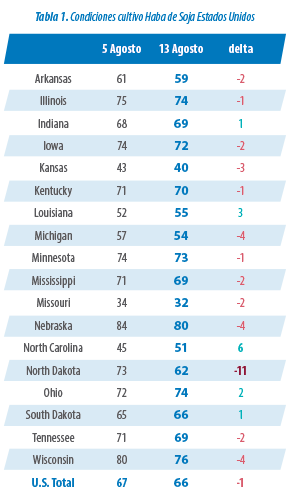
We have been following the weather in different states and have found that during the last two weeks there have been no excessive temperatures but also no rain, so soil water reserves are lower than the usual average.
However, except in North Dakota, in most producing states the plant condition seems optimal.
Investment funds in Beans remain short and in Meal have slightly increased their positions. If the harvest finishes correctly, we will have a more balanced balance and, with it, some recovery of the stocks lost with Argentina’s deficit last March. We would return to levels very similar to those of two campaigns ago.
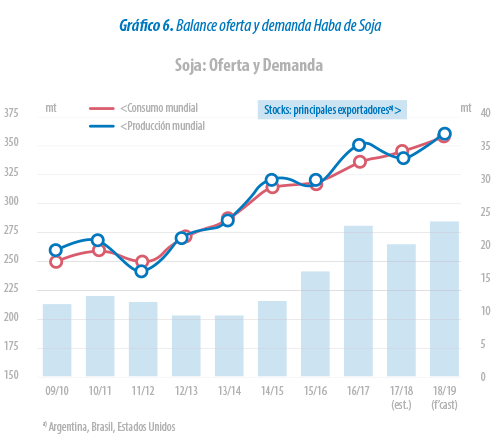 China continues to stock up from Brazil and with it the old campaign stock in the U.S. has risen significantly compared to recent years. Logically, FOB prices (Graph 7) have changed completely, rising in Brazil and falling in the U.S. For Europe, premiums remain high to balance international replacement.
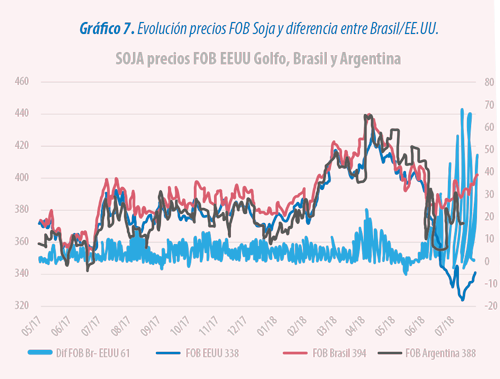
 The commented change in situation has caused the price scenario to be significantly higher than a month ago.
The wheat in port is at levels above 215 €/ton, although it is strange not to see any correction yet, especially in Eastern Europe, where the pressure on sprouted wheat and feed has not yet been felt.
In the interior of the peninsula, despite the sales retention, prices remain below import replacement, although little is being traded. In Burgos/Palencia, the approximate levels of 192/194 €/ton origins make them competitive, even for coastal areas.
In general, throughout September there should be a greater selling intention in Cereal positions. Certainly, for now, further price increases seem excessive, especially considering the prices for Corn, which maintain a too wide difference compared to the other two main cereals.
Soybean will be affected by a dollar around 1.14, raising its relative price (although some speak of 1.11 as the next barrier to seek). For now, it remains at stable quotations as it has been all summer. Surely if the harvests evolve as the numbers now suggest, we should see better net price levels in port lower towards the end of the year.
The alternative proteins, highly demanded by China, maintain nutritionally less competitive prices compared to last month. We assume that manufacturing will tend to increase Soybean Meal consumption at the expense of Rapeseed, Sunflower, Corn DDG, Palm Kernel, and substitutes.
For Fibrous products, seasonal demand and the rise in Wheat and Barley are causing increases in most of them for September. Wheat Bran points to an increase of more than 10 €/ton.
ESSWIEBR00106h