


 Latinoamérica
 Europa
SCRUM, a model that connects university and field and boosts veterinary job placement












| The ruminant sector is currently experiencing a particularly complex situation marked by the shortage of veterinarians interested in working in rural areas, a global problem linked to the lack of interest in animal production veterinary medicine. |
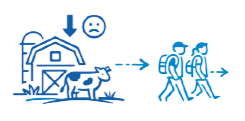 While most students orient their future towards companion animals, the productive sector —and particularly the ruminant sector— is facing increasing difficulties in attracting professionals, compromising the sustainability of farms and generational renewal. While most students orient their future towards companion animals, the productive sector —and particularly the ruminant sector— is facing increasing difficulties in attracting professionals, compromising the sustainability of farms and generational renewal. |
Added to this is the need for more practical and applied training.
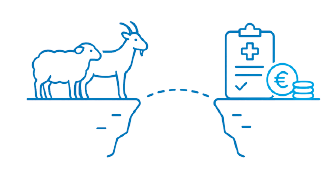 The production veterinary requires the ability to address complex clinical cases comprehensively —from anamnesis and clinical examination to complementary tests and anatomopathological diagnosis— something difficult to acquire without direct and continuous contact with real cases.
In parallel, small ruminants represent a sector with economic limitations that hinder access to in-depth field diagnostics, creating a gap between health needs and available resources.
| In this context, the Ruminant Clinical Service (SCRUM) of the Faculty of Veterinary Medicine of Zaragoza was established in 2014, driven by a team with previous field experience and a clear vocation for public service.
Its objective is twofold:
|
 To offer advanced diagnostic support to the sector free of charge —thanks to the collaboration of professional associations, nutrition companies, and the pharmaceutical industry—.
| The teaching impact of SCRUM has been especially relevant in a degree program with approximately 150 students per course.
|
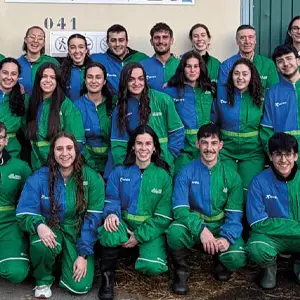
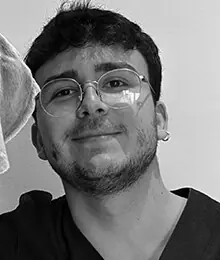
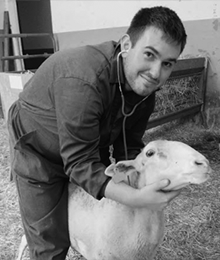
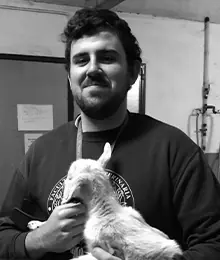
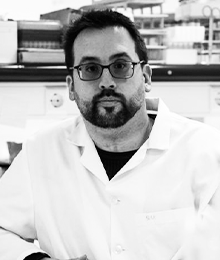
 In the third year, 80-90 students apply to participate in the voluntary SCRUM internships, motivated by the contact with real clinical cases.
These students participate for two years in a program structured in three areas —clinical, pathological anatomy, and laboratory—, actively integrating into the team and the complete diagnostic process.
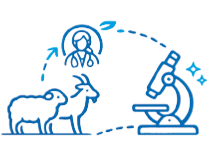 In this way, SCRUM not only improves access to high-level diagnostics in the small ruminant sector, but it has also established itself as an effective tool to generate vocations towards ruminant veterinary medicine, connecting the university with the reality of the field.
| WHAT IS SCRUM? |
The Ruminant Clinical Service (SCRUM), created at the Faculty of Veterinary Medicine of the University of Zaragoza, in 2014, was established with a clinical and educational purpose, on one hand, with the aim of providing diagnostic support to the ruminant sector, and, on the other, to obtain an educational benefit for students.
The service receives clinical cases referred by field veterinarians, cull animals from collaborating farms and cooperatives, as well as national and international telematic clinical consultations, which are actively integrated into teaching.
 This diversity of sources allows work with a broad, real, and representative case study of the sector.
| From its inception, it was designed as a service oriented to the sector and based on collaboration.
This approach has allowed the consolidation of a stable working network with clinical veterinarians, farmers, cooperatives, and companies in the sector, facilitating their integration into daily practice and ensuring the applicability of the results obtained. |
 With the aim of avoiding any form of unfair competition, clinical cases are only accepted if they come through veterinarians, reinforcing their role as interlocutors and ensuring coordination with the farm’s health manager.
 In parallel, collaboration with farms and cooperatives allows for the availability of cull animals that present common field pathologies, especially useful for the practical training of students.
| SERVICE OPERATION |
The activity of SCRUM is based on a constant volume of work, with the reception of around 400–450 animals per year, which ensures a broad and continuous caseload.
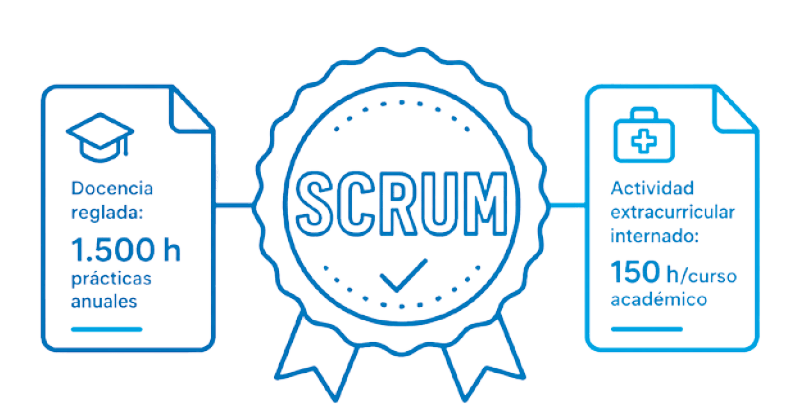
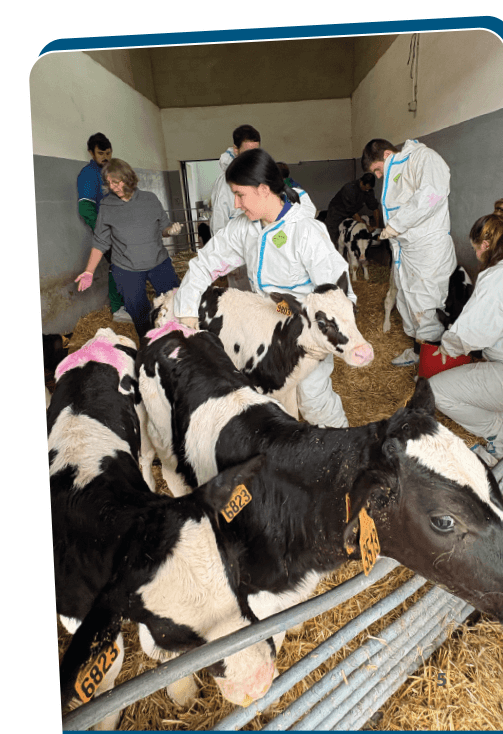
These animals are integrated into the regulated teaching of the Veterinary Degree from the first to the fifth year, generating more than 1,500 hours of annual practice. Added to this is the extracurricular activity of the internship, in which students actively participate in the operation of the service, dedicating more than 150 hours per academic year to the resolution of clinical cases and daily work with the animals.
In this context, the internal students assume a high degree of involvement and responsibility, participating in the continuous care system of the service, with one week of on-call duty per month that includes weekends, holidays (including the Christmas period), and summer.
| This organization allows them to face real situations at different times and conditions, reinforcing their autonomy, commitment, and ability to respond to clinical problems. |
The operation of SCRUM is based on an active learning model in which students participate directly in the resolution of real clinical cases.
Each case is approached comprehensively, from the anamnesis and clinical examination to the interpretation of complementary tests and the anatomical-pathological diagnosis, allowing the student to understand the complete decision-making process.
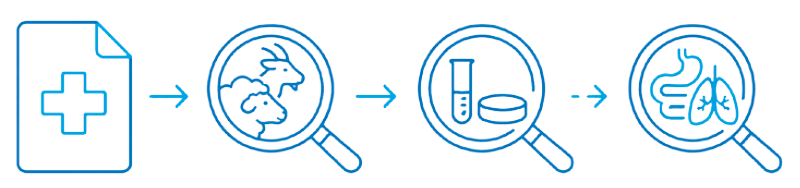
Besides technical skills, the model places special emphasis on the development of transversal skills, key for professional practice.
Students work in teams in a coordinated manner and make periodic presentations of clinical cases, both in weekly internal sessions—where they receive direct feedback from the faculty—and at national and international conferences and congresses.
 This approach reinforces skills such as scientific communication, synthesis capacity, and confidence in public speaking, aspects increasingly demanded in veterinary practice.
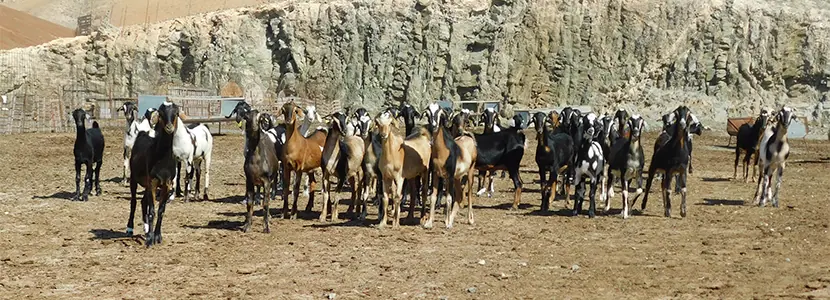
The model relies especially on the use of small ruminants, particularly sheep, as a teaching tool.
It is an ideal model due to its manageability, work safety for all involved, and the wide variety of pathologies it presents under real production conditions.
It allows for the development of clinical activity in a training environment that promotes progressive learning and decision-making by the student.

All this facilitates the integration of theoretical and practical knowledge, as previously described (Ramos et al., 2013).
In this context, SCRUM is integrated into a previously consolidated and recognized training environment as a training centre (training centre) by the European colleges of small ruminants and pathological anatomy (ECSRHM and ECVP), which reinforces its international projection.
| In this framework, the service annually receives professors, veterinarians, and foreign students who undertake training stays of varying durations, both through these programs and through initiatives like Erasmus or other scholarships.
This dynamic directly contributes to the internationalization of the teaching environment and promotes the use of English in daily academic and clinical practice. |
| IMPACT ON VETERINARY TRAINING AND EMPLOYABILITY |
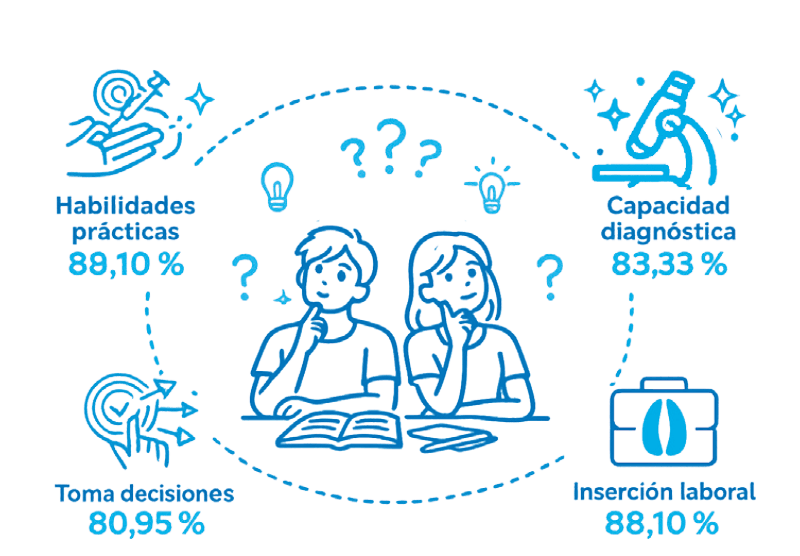
From SCRUM, a follow-up is conducted on graduates who have participated in the internship, whose results show a clear improvement in technical skills such as practical skills (88.10%), diagnostic ability (83.33%), and decision-making (80.95%), along with a rapid job placement, with 88.10% of graduates employed in less than three months.
After more than 11 years of internship, experience shows that students respond excellently to the demands of the service, assuming responsibility, involvement, and workload under real conditions.
 This fact is especially relevant in a context where there is a widespread perception —not always aligned with reality— about the lack of commitment of young people to this type of professional activity. This fact is especially relevant in a context where there is a widespread perception —not always aligned with reality— about the lack of commitment of young people to this type of professional activity. |
| CONCLUSIONS |
SCRUM is a demanding model, which requires a high degree of involvement and continuous effort from students and faculty.
Its operation is based on the integration between the university and the sector, relying on the use of real clinical cases and on collaboration with veterinarians and farmers.

 The continuity of the system is largely supported by the positive evaluation of students, graduates, and field professionals, who highlight its usefulness both in training and in solving health problems on farms.
| After more than a decade of experience, the accumulated experience suggests that this approach can be a useful tool to strengthen practical training in ruminant veterinary medicine and improve the connection with the professional reality of the sector. In this sense, the international interest generated has resulted in the adaptation of some of its elements in other faculties, especially through professionals and students who have completed training stays in the service. |
REFERENCE
Ramos, J. J., Lacasta, D., Ferrer, L. M., & Arcaute, M. R. D. (2013). A novel educational approach: Using sheep as a model in teaching veterinary pathology. Small Ruminant Research, 110(2-3), 133-137. https://doi.org/10.1016/j.smallrumres.2012.11.021
You may be interested in: Delia Lacasta: Innovation and dedication in the service of ruminants