


 Latinoamérica
 Europa
Genetic and Health Improvement of the Majorera Goat Breed: A Present Reality


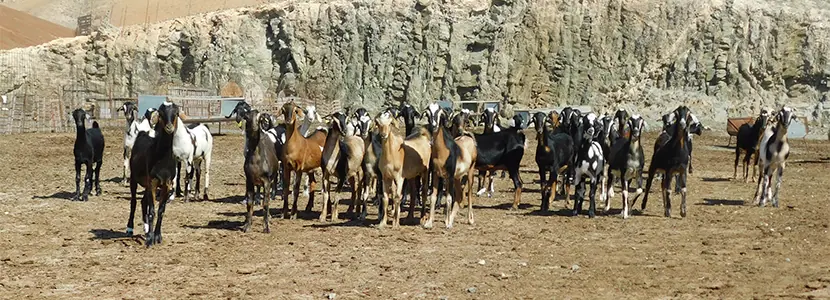











The Majorera goat breed is currently the most important and with the largest population in the Canary Islands.
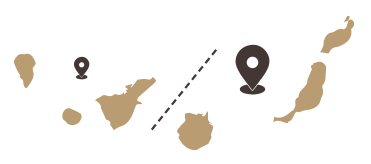 With high production and hardiness, it is mainly distributed in the province of Las Palmas, although it also has significant populations on some islands in the province of S.C. de Tenerife.
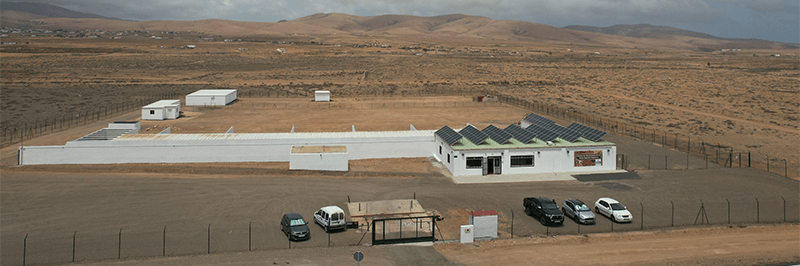
 The work in genetic improvement developed by the National Federation of Breeders of the Majorera Goat Breed (FECAMA) over the past 14 years has recently received a strong boost with the opening of the stud center in Puerto del Rosario, whose inauguration has allowed the first artificial inseminations in Majorera goats to be carried out since 2024.
For the past 5 years, FECAMA has also implemented health programs aimed at controlling the most important diseases affecting goats, which has posed a true technical challenge from various perspectives, as, beyond the existing information regarding the development of national control programs —brucellosis and tuberculosis—, the data was scarce.
 Therefore, infectious diseases have always constituted one of the most important problems for the viability and profitability of dairy goat herds, a fact aggravated by the absence of control programs against many of them, despite their high dissemination and endemic nature.
 In this context, the genetic improvement of breeds and farms has in the health control a fundamental pillar.
The introduction of sires and any other animal into semen collection centers must be carried out following strict work protocols that ensure the absence of animals positive to the infections included in them and, more importantly, the safety of the semen doses produced from them.
 Since the health control of each “batch of doses” produced is economically and technically unfeasible, avoiding the entry of infected animals and continuously monitoring the presence of these infectious agents is essential for the success of the programs.
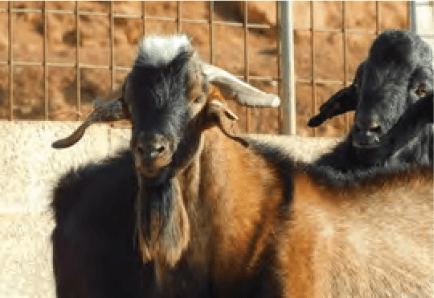
| This article explains the technical basis and work protocols in the field of genetics and health developed, implemented, and operational on the farms of FECAMA, which have already started to supply sires to the sire center located in Fuerteventura. |
In this regard, we could cite the following 4 fundamental factors that we will develop later:
 The continuous health surveillance and monitoring on the farms.
 The implementation of directed crossings based on prior health selection of sires and dams on the farms.
 The management measures adopted on the farms.
 The health control of the candidates to enter the breeding center.

MONITORING AND SURVEILLANCE OF INFECTIOUS DISEASES IN FECAMA FARMS
The monitoring and surveillance of diseases is, without a doubt, one of the pillars of the work program.
While the range of infections that we must consider of interest for the breeding centers is very extensive, diagnostic and surveillance efforts have been mainly established on the four infections that, leaving aside brucellosis (Brucella melitensis), have the greatest significance in the field of small ruminants.
 The diagnosis and control measures against tuberculosis -of which the Canary Islands are considered free-, paratuberculosis, contagious agalactia, and small ruminant lentivirus are, therefore, the infections to which special attention is paid in the work program.
| FECAMA, together with the Ruminant Health research group from the University of Murcia (LABSARUM), has first developed and then begun to apply a novel global health control program aimed at combating all these pathologies simultaneously, discarding the concept of working on specific plans aimed at diagnosing and controlling one or some of them. |

Two aspects are fundamental in this development:
1 Continuous surveillance and screening strategy
It begins with the development of a tuberculosis test for the entire herd which is subsequently combined with the analysis of samples from 25% of the herd for the rest of the pathologies.
The results obtained and the characteristics of the herd determine the application of an individual, sustainable work plan adapted to the management and productive conditions of each farm, as there are no two farms where the diagnostic and control approach is the same.
2 Comprehensive control of farm movements
Associated with the transmission of many chronic infections in goats, uncontrolled movements on farms must be avoided to achieve satisfactory animal health improvement.
In the same vein, all aspects that may affect the program and are related to farm infrastructure and biosecurity measures are analyzed and reinforced.
| The goal is clear: the improvement of herd health to increase the possibilities of selecting “health-optimal” candidate sires for their incorporation and testing at the Puerto del Rosario sire center (Fuerteventura). |

DIRECTED CROSSBREEDING BASED ON OPTIMALLY HEALTHY PARENTS
Once the health measures are implemented on the farms and, after selecting the potential parents of the future candidates for sires based on their morphological, genetic, and productive characteristics, a new complete health check prior to natural mating provides the necessary information to make the final selection of the parents, ensuring that they are optimal from a health perspective.
| Among the health checks and conditions that should have already been carried out at this stage on the future parents, we can include:
|
 This innovative working method, developed by LABSARUM in combination with FECAMA technicians, could allow for the availability of valid negative individuals to obtain candidate sires, even on farms where the prevalence of one or more of the infections under control could be high.
Even in the case of individuals with a high genetic value and, depending on the epidemiological characteristics of the detected infection (associated etiology, transmission routes, and excretion sources), this working methodology would allow for the establishment of a special surveillance and control protocol for parents diagnosed as positive for any of the pathologies under control.
 However, this should be considered a resource to be used only in very specific cases of animals with high genetic value.
MANAGEMENT MEASURES ADOPTED ON FARMS
Advancing in this work program would not be possible without the management of the animals carried out on the farms, especially at times related to the development of directed matings, calving, and the subsequent work with the young stock.
Starting with the diagnosis and control of infections, the measures implemented include the separation of positive animals and/or their removal from the herds in the shortest possible time, always taking into account the overall health conditions of the group.
Special monitoring of the animals involved in directed crossings during gestation and, above all, the management of the young stock after calving are fundamental elements to be developed on the farms.
Among them, the following are particularly important:
 The removal of the goat kid immediately after birth, avoiding physical contact with the mother, which constitutes a risk source for the transmission of various infectious diseases.
The colostrum feeding with heat-treated colostrum, in order to eliminate or reduce its infectious load.
The implementation of artificial rearing in goat kids.
The physical separation of future candidates from the rest of the herd, mainly from adult livestock, until their transfer to the facilities of the breeding center for the corresponding health analyses during the quarantine period.
| All this development has led to structural changes in various farms and/or in different areas of them, such as the colostrum and/or artificial rearing room, the improvement of biosecurity perimeters or the removal of inappropriate materials for the development of hygiene and disinfection protocols, among other aspects. |
HEALTH CONTROL OF CANDIDATES TO ENTER THE BREEDING CENTER
The final step before the entry of the sires into the training and semen production phase of their testing is a strict health protocol that includes clinical and laboratory analysis, both direct and indirect, of the mentioned pathologies and others, following official requirements or those established by FECAMA.
For this, it is essential to have the new facilities of the sires center, located in the Majorero municipality of Puerto del Rosario and equipped with the strictest biosecurity measures.
Designed by the LABSARUM team, it features a double fenced perimeter and a protocol for isolation and working with the animals that ensures no contact with the outside and the prevention of the transmission of infectious diseases to the group inside.
Passing this quarantine and the tests they undergo is a fundamental step for the definitive incorporation of the sires to the center where they will continue to be constantly monitored to ensure the necessary health excellence in these individuals.
CONCLUSIONS
The launch of the sires center and the genetic improvement programs of the Majorera goat breed constitutes an opportunity that, under the current conditions of the sector, should not be missed.
For the success of this project, it is essential to intensify the surveillance and control of some infectious diseases widely spread in Spanish goat herds, which requires the development and application of innovative diagnostic and control strategies in all areas of work, starting with the farms themselves and ending with the animals that, after overcoming a long and demanding selection and analysis process, finally become part of the permanent group of animals —sires or females— located in the semen collection center.
Photos courtesy of FECAMA.