


 Latinoamérica
 Europa
Sustain Sheep: sheep genetics at the service of sustainability


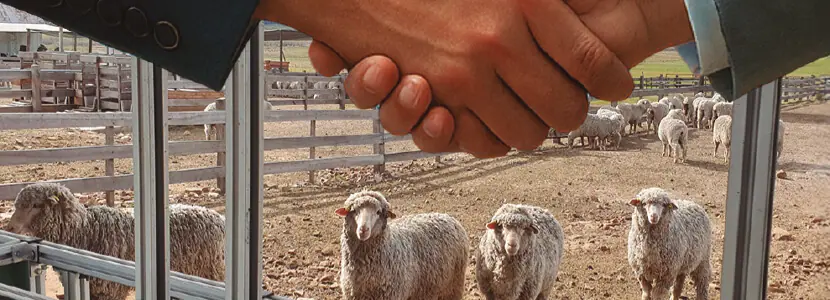









The livestock production faces one of the greatest challenges of the 21st century: reducing its environmental impact without compromising productivity or profitability.
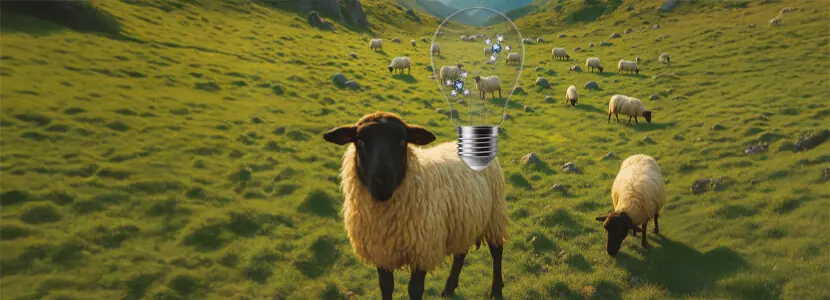
In this context, the international project Sustain Sheep proposes an innovative and long-term solution: using genetics to reduce enteric methane emissions in sheep, one of the main greenhouse gases (GHG) associated with agricultural activity.
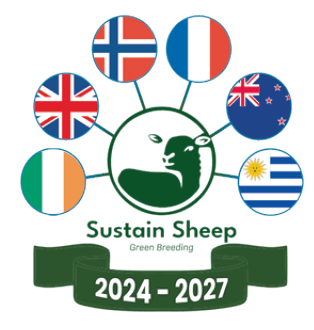
With a duration of four years (2024–2027) and the collaboration of eight institutions from six countries (Ireland, United Kingdom, Norway, France, New Zealand, and Uruguay), Sustain Sheep seeks to integrate genetic merit for low environmental impact into national sheep selection schemes.
 The objective is to develop practical and scientifically robust genetic tools that allow selection of more efficient animals with lower emissions, without losing sight of productivity, product quality, and economic viability. The objective is to develop practical and scientifically robust genetic tools that allow selection of more efficient animals with lower emissions, without losing sight of productivity, product quality, and economic viability. |
WHY GENETICS?
Genetic selection is a powerful tool, as its effects are:
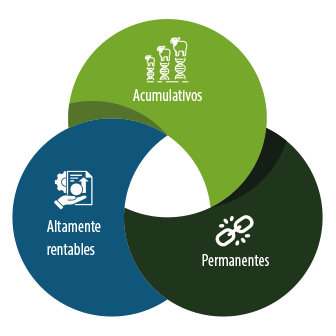
| Several studies have shown that it is possible to reduce methane emissions per animal through the selection of traits such as feed efficiency or directly by measured emissions.
|
 However, the adoption of these strategies has been limited because their
 Nevertheless, genetic improvement represents a particularly interesting avenue for moving towards more sustainable production.
 Unlike other technologies, it can be more easily integrated into commercial herds without the need to modify processes or invest in new infrastructure, it “simply” requires selecting the most suitable breeders.
| Sustain Sheep seeks to overcome this barrier through:
|
SHARED TECHNOLOGY, GLOBAL KNOWLEDGE
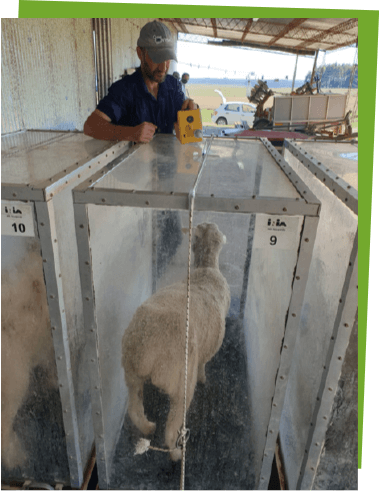
One of the strengths of the project is that all participating countries are working with the same measurement technology, the portable accumulation chambers (PACs), which allow quantifying methane emissions from individual animals in field conditions.
This standardization facilitates comparison between countries and the construction of an unprecedented international database.
The project builds on the results of previous initiatives such as GrassToGas and SMARTER, which laid the groundwork for understanding the genetic variability of emissions and the feasibility of including these traits in breeding programs.
 Additionally, it is articulated with new international collaborations such as the Clean Breeding project, framed within the Global Methane Hub initiative.
AN INTEGRAL APPROACH: SCIENCE, POLICY, AND COMMUNICATION
Sustain Sheep is led by the Teagasc institute of Ireland and is structured into four major components (or Work Packages, WP):
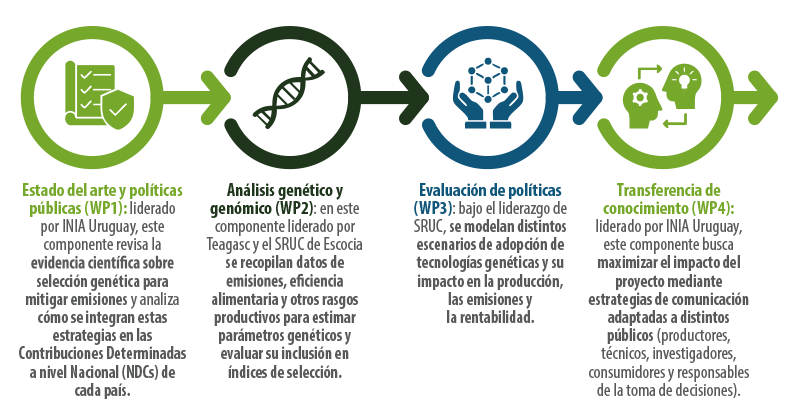
| Within this component, an international survey is being conducted to assess the level of knowledge and perception about the use of genetic tools to mitigate methane emissions in sheep.
|
URUGUAY: APPLIED SCIENCE FROM THE SOUTH
The National Institute of Agricultural Research (INIA) represents Uruguay in the Sustain Sheep project. The Uruguayan team, led by doctors Ignacio De Barbieri, Elly Navajas, and Gabriel Ciappesoni, plays a leading role in two key areas:
 Coordination of the state of the art (WP1)
A global review is coordinated on the role of sheep genetics in methane mitigation, including the evaluation of public policies and NDCs.
 This task involves integrating information from multiple countries and generating reference documents to guide future decisions.
 Genetic and genomic analysis (WP2)
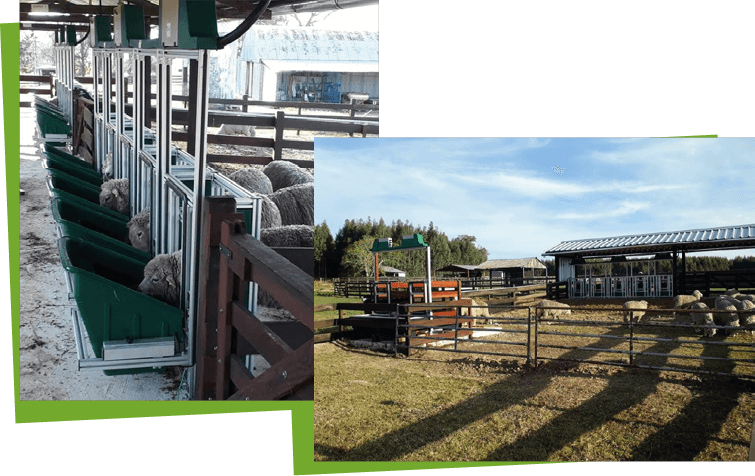
INIA provides valuable records of individual methane emissions, as well as feed intake and conversion efficiency.
These data come from its Intensive Phenotyping Platform, located at INIA La Magnolia, about 400 km from Montevideo.
 It evaluates animals from INIA’s informative sheep nuclei, as well as from commercial studs (breeding farms) of the Merino Australian, Corriedale, Merino Dohne, and Texel breeds, which evaluate rams annually.
| Records are used to estimate genetic parameters, such as the heritability of these traits and their correlation with other traits of productive interest (meat and wool production and quality, reproduction, resistance to gastrointestinal parasites, among others). |
Additionally, INIA collaborates in the analysis of indirect indicators or proxies that allow predicting methane emissions in a more economical and practical way.
| In Uruguay, INIA and the Uruguayan Wool Secretariat (SUL) annually publish the genetic evaluation of twelve sheep breeds. |

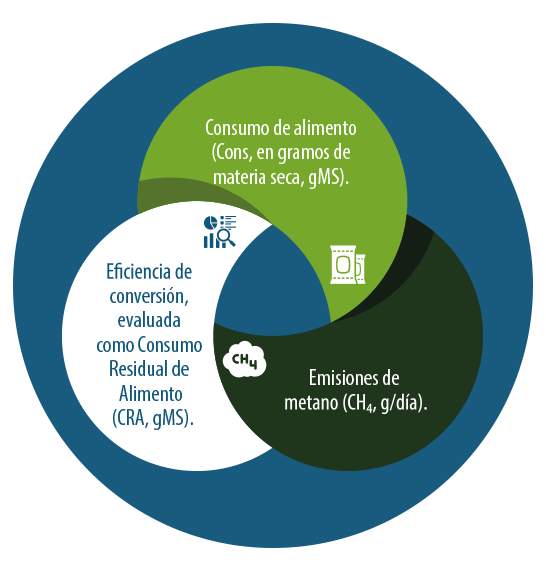
Since 2024, genomic evaluation in the Australian Merino breed is available, which incorporates these new environmental traits. The genetic merit is published, expressed as Expected Progeny Difference (EPD) for the following traits:
Having this evaluation is key, especially in the production of high-quality wool (super or ultrafine Merino) in Uruguay.
Genetic improvement, which allows reduction of emissions/kg of wool, is part of the vision of a regenerative livestock farming, valued by international brands, mainly of European origin, that prioritize environmental and social sustainability.
 Leadership of the communication and transfer strategy (WP4)
Uruguay leads the communication strategy of the project, which includes:
- The development of scientific and outreach articles.
- The management of social networks.
- The organization of workshops, field days, an international thesis expo, and a hybrid course aimed at students and technicians.
| The goal is clear: to ensure that the generated knowledge reaches decision-makers, both in the field and in public policies. |
EXPECTED IMPACT
Sustain Sheep not only aims to reduce methane emissions per animal, but also:
 Improve the efficiency of the production system.
Increase the competitiveness of the sheep sector.
Strengthen its image in front of increasingly demanding consumers in terms of sustainability.
The results of the project will allow:
 Incorporate new traits into genetic selection programs.
Develop policies that encourage the adoption of environmentally efficient genetics.
Generate tools for countries to report progress on their climate commitments.
Effectively communicate the benefits of genetics for sustainability.
CONCLUSION
| Sustain Sheep represents a unique opportunity to position sheep genetics as a strategic ally in mitigating climate change. Uruguay, thanks to its track record in applied research and its commitment to sustainability, plays a key role in this global effort.
|
 Science, when articulated with public policies and communicated effectively, has the power to transform realities.
BIBLIOGRAPHY AND LINKS OF INTEREST
WEB: https://www.greenerahub.eu/sustain-sheep
NEWSLETTER: https://anyflip.com/huyna/jlzz/
PODCAST SPOTIFY Sustainable sheep genetics: Sustain Sheep https://open.spotify.com/episode/6TU4HN09cHM2WGzD4UbKqj?si=7fe65fe5b303444a
Le Graverand, Q.; Lambe, N.; McGovern, F.; Navajas, E.A.; Johnson, P.; McHugh, N.; De Barbieri, I.; Ciappesoni, G.; Rowe, S.; Åby, B.A.; Conington, J.; Marie-Etancelin, C.; Tortereau, F. 2025. Comparison of country-specific predictions of feed intake and methane emissions in sheep using different proxies. Livestock Science, volume 296, https://doi.org/10.1016/j.livsci.2025.105716
Blumetto, O.; De Barbieri, I.; Navajas, E.; Baethgen, W.; Becoña, G.; Ciappesoni, G. Regenerative livestock farming in Uruguay. 2023, INIA. http://www.ainfo.inia.uy/digital/bitstream/item/17283/1/Ganaderia-regenerativa-2023.pdf