


 Latinoamérica
 Europa
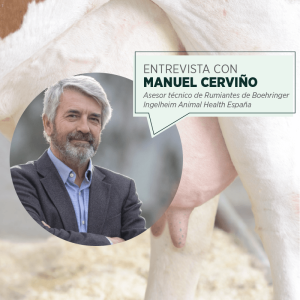
Lenzelta®: The New Preventive Approach to Reduce the Impact of Mastitis – Interview with Manuel Cerviño



 Prat de la Riba nº 50 Sant Cugat del Vallès (Barcelona) 08174
  +34 93 404 51 00
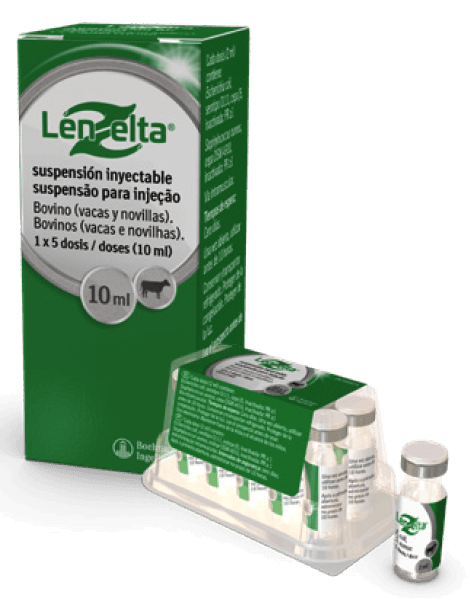
Boehringer Ingelheim presents Lenzelta®, a new addition that completes the portfolio for mastitis control: one of the most important challenges on farms due to its impact on animal health and economic repercussions.
 Manuel Cerviño, technical advisor for Ruminants at Boehringer Ingelheim Animal Health Spain, breaks down the key points of a launch that aims to become a benchmark in udder health care. Manuel Cerviño, technical advisor for Ruminants at Boehringer Ingelheim Animal Health Spain, breaks down the key points of a launch that aims to become a benchmark in udder health care. |
 What is Lenzelta®?
 Lenzelta® is a new vaccine indicated to reduce the incidence and severity of mastitis caused by Escherichia coli and Staphylococcus aureus in cattle, providing protection during the main months of lactation through a simple regimen of 2 doses applied at drying off.
Why a vaccine against mastitis?
At Boehringer Ingelheim, we are committed to this launch for two reasons.
1 We have been leading udder health knowledge for over 20 years, and now, in line with our focus on prevention, it is entirely logical to launch a vaccine for this segment.
2 Mastitis is the most costly disease in dairy cattle, not only due to direct losses (decreased milk production, discarded milk, therapeutic treatments, labor…), but also due to the invisible costs associated with reduced production, penalties for increased somatic cell count, and the premature culling of animals.
| Mastitis is a multifactorial disease, and therefore, many factors are involved in its control.
|
 When management is already correct, vaccination becomes the key component that strengthens the immune system and helps improve results sustainably.
What type of mastitis does it act against?
Lenzelta® acts against mastitis caused by two of the main pathogens involved in the economic losses of the sector:
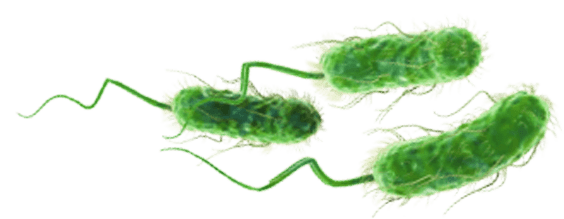
 E. coli: ubiquitous environmental bacterium, responsible for acute or hyperacute mastitis, with a strong productive impact and systemic risk.
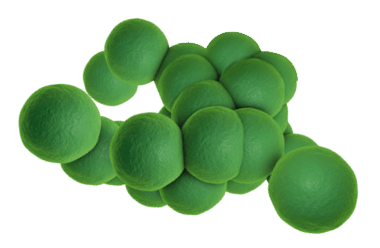
 Staphylococcus aureus: contagious bacterium, more associated with chronic and subclinical mastitis, more insidious and difficult to control, with sustained economic losses and transmission during milking.
Why does Boehringer Ingelheim bet on this launch and why is it in a position to do so?
The reason, as we mentioned, is linked to the very trajectory and values of Boehringer Ingelheim.
Our company is a leader in udder health and milk quality, with solid experience in vaccines and preventive programs.
Lenzelta® combines these two elements in a single product, under the umbrella of experience and a technical approach. Without a doubt, Lenzelta® reinforces the image of Boehringer Ingelheim as an expert laboratory in vaccination and milk quality.
Boehringer Ingelheim has a wide portfolio of products for milk quality. Is Lenzelta® the icing on the cake?
Yes, that’s how we see it. Lenzelta® completes Boehringer Ingelheim’s udder health strategy, consolidating a comprehensive approach based on:
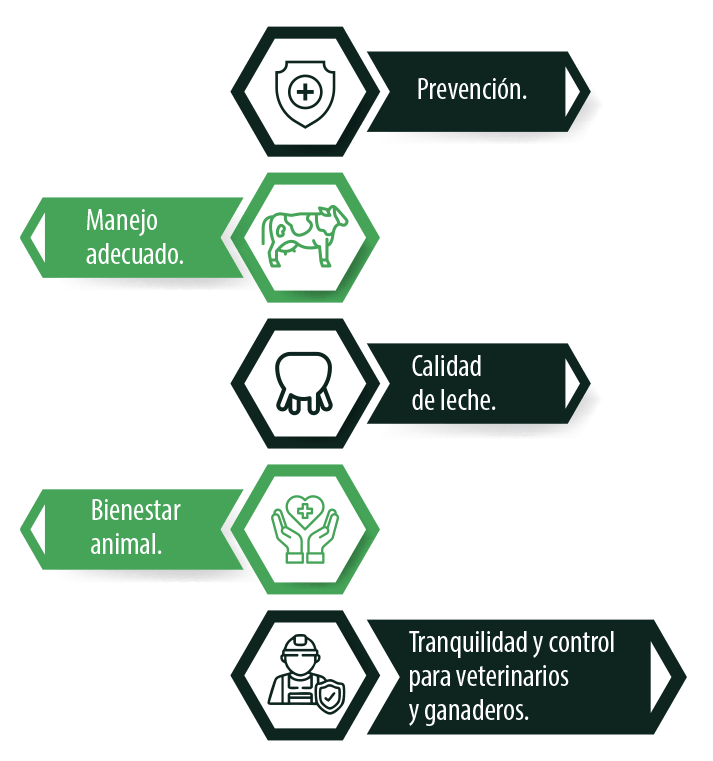
| Lenzelta® does not replace anything: it creates a clear synergy between the products in our portfolio. |
What are the strengths and characteristics of Lenzelta®?
 Only 2 doses at drying off, 3 weeks apart.
Proven protection for up to 6 months, the most critical period of lactation.
No boosters required during lactation, nor periodic blanket applications.
Reduces the incidence and severity of mastitis cases.
Systematic use in the herd reduces the somatic cell count in the tank.
High safety profile.
Solid data from challenge studies under controlled conditions and studies in real field conditions.
Protocol simple, practical, and compatible with existing routines.
Backed by the experience and reliability of Boehringer Ingelheim in udder prevention and health.
| What new features does it offer?
Lenzelta® offers a realistic and honest approach: it does not promise to eliminate mastitis, but rather reduce its impact.
|
 It reinforces the concept of immunological prevention against pathogens with very different behaviors and simplifies vaccination; a vaccination that is carried out during the drying off, without interfering with lactation.
The vaccine is key, but not enough. What other measures should be applied?
Mastitis is a disease linked to milk yield, with an infectious basis and multifactorial origin. In this context, Lenzelta® is a fundamental piece of the puzzle, which involves the control of different types of mastitis, but it is not the only one.
Correct management guidelines, hygiene, proper milking routines, stress control, animal welfare, planned feeding, etc., create the appropriate environment in which a well-directed immune stimulation, induced with the application of Lenzelta®, offers its maximum potential, and with them the best control of udder disease.
 We want to convey a clear message: the vaccine strengthens the system, but does not replace management. The results achieved with Lenzelta® will be greater, the better the management.
 I don’t want to miss the opportunity to recommend to producers the excellent service provided by our milk quality technicians. They undoubtedly represent a guarantee in improving udder health, and the best environment to apply Lenzelta®. I don’t want to miss the opportunity to recommend to producers the excellent service provided by our milk quality technicians. They undoubtedly represent a guarantee in improving udder health, and the best environment to apply Lenzelta®. |
What is the application guideline for this vaccine?
Our recommendation is clear in this regard: Lenzelta® is designed to be applied during the dry period, and it is not necessary to use it during lactation.
This represents a great advantage, as it avoids:
 The risk of increasing the SCC as a consequence of udder stimulation. The risk of increasing the SCC as a consequence of udder stimulation.
|
 |
These are two risks that, with Lenzelta®, are not necessary to take. |
The vaccine is administered exclusively during the dry period and the design of Lenzelta® contemplates the application via intramuscular route of two doses of 2 ml.
 The first 45 days before the expected calving date, and the second 3 weeks later. And that’s it! Of course, this application protocol must be repeated in each lactation, to presumably achieve better results each time.
It goes without saying that the correct management and hygiene measures during its application must be considered, as with any vaccine, being important:
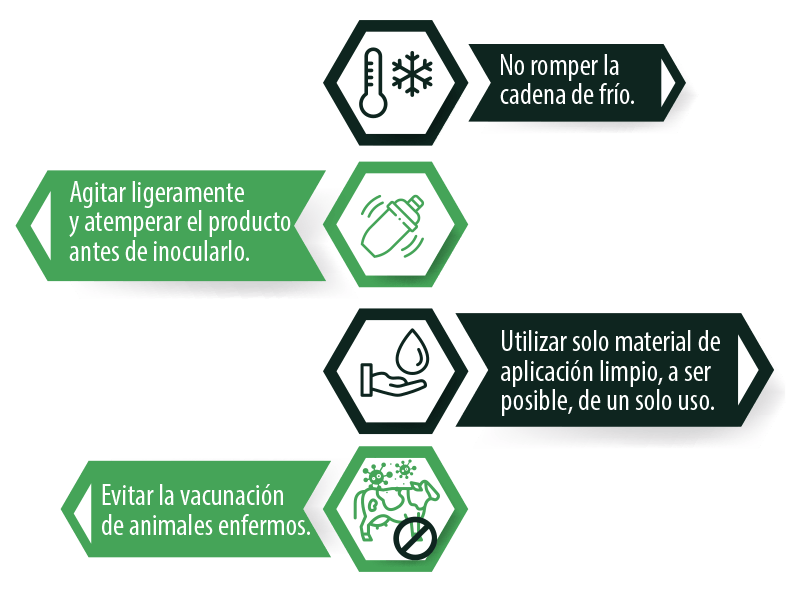
 The simplicity of the protocol is one of the strengths of Lenzelta®. The simplicity of the protocol is one of the strengths of Lenzelta®. |
What are the main challenges of vaccination against mastitis?
The biggest challenge is managing expectations: Lenzelta® is prevention, not an emergency solution.
 It is necessary to avoid use on farms that seek to “vaccinate to fix everything”. Lenzelta® can be at the center of the strategy, but by itself it is not enough. It must be understood that success depends on consistency and a comprehensive approach.
Another challenge would be addressing the incorrect use of the protocol (timing, unsuitable animals) and those who expect immediate results, as the real assessment should be made in the medium term.
These are the keys to the new vaccine! WATCH VIDEO