


 Latinoamérica
 Europa
Influence of Lactation Stage on Behavioral Response to Heat Stress








|
Heat stress alters the behavior of dairy cows as a mechanism to reduce thermal load.
|
 This study analyzed how the lactation stage influences this response, highlighting that cows at the end of lactation show greater heat sensitivity than those in earlier stages.
HEAT STRESS AND BEHAVIOR IN DAIRY COWS
Climate change and the consequent increase in heat stress episodes represent one of the main challenges for modern dairy production.
The progressive increase in temperatures and the greater frequency of extreme weather events directly affect the welfare, health, and productivity of dairy cows. Among its consequences are:
 Reduction in milk yield and quality.
Reproductive alterations.
Metabolic changes.
Reduced immune response capacity.
 Dairy cattle are especially sensitive to high temperatures and environmental humidity due to the significant amount of heat produced as a consequence of the metabolic activity associated with milk production. Dairy cattle are especially sensitive to high temperatures and environmental humidity due to the significant amount of heat produced as a consequence of the metabolic activity associated with milk production. |
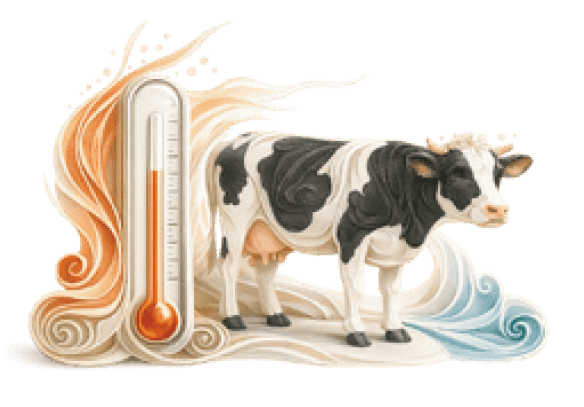 When the internally generated heat is added to unfavorable environmental conditions, the animal’s ability to maintain its thermal balance may be compromised, causing an increase in body temperature.
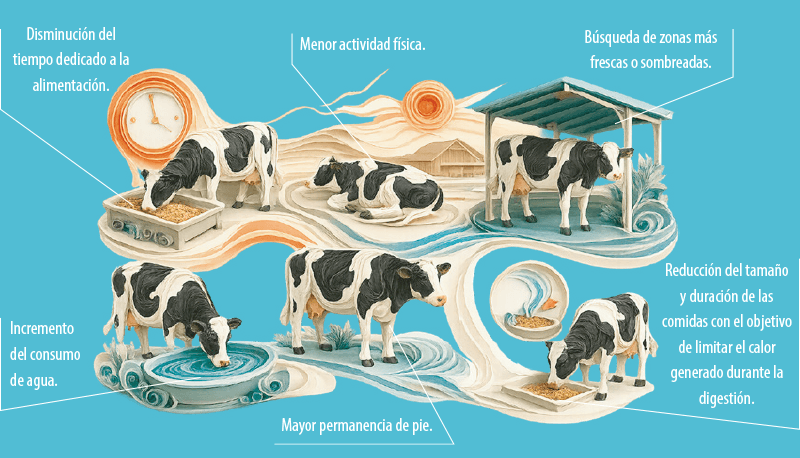
Behavioral modifications are some of the first observable responses to thermal stress. When temperatures rise, cows adapt their habits to reduce body heat load.
To assess this risk, the temperature-humidity index (THI) is commonly used, combining both parameters into a single indicator of climate stress.
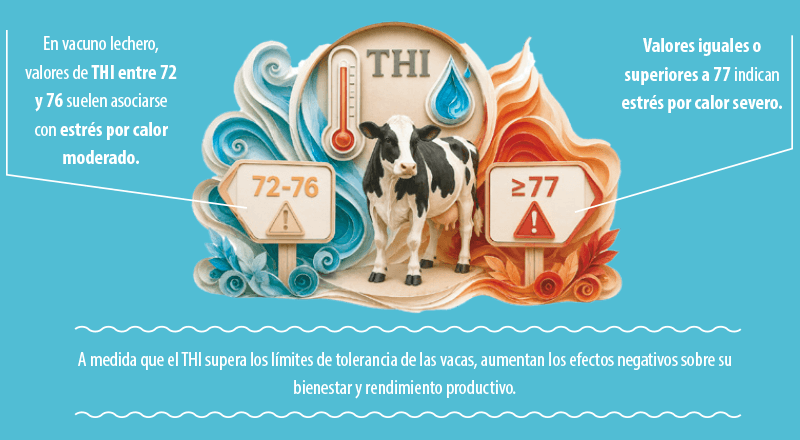
It is widely accepted that thermal stress affects cows at any stage of lactation, but there is some controversy over which stage is most vulnerable.
| In this context, the present study evaluated how heat stress and lactation stage interact to modify the behavior of Holstein Friesian cows, with the aim of improving management strategies on dairy farms. |
MONITORING BEHAVIOR UNDER THERMAL STRESS
The study was conducted during the summer of 2024 on a commercial dairy farm with 60 Holstein Friesian cows distributed into three groups according to their lactation stage:
 Early lactation (≤60 days in milk).
Mid lactation (61-180 days).
Late lactation (>180 days).
 All cows were housed in a free-stall barn with natural ventilation and no active cooling systems, replicating typical production conditions.
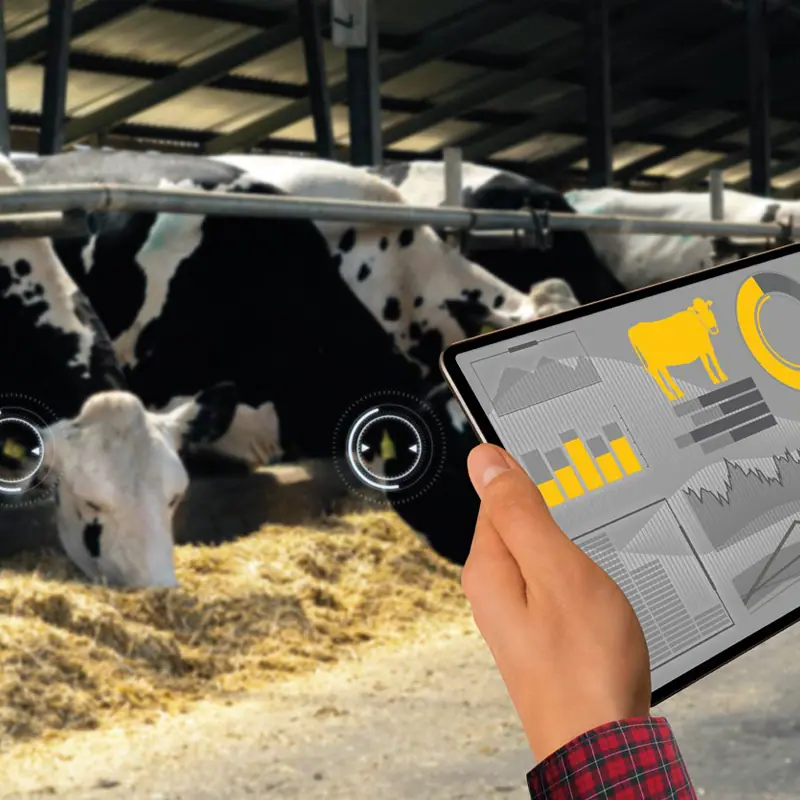
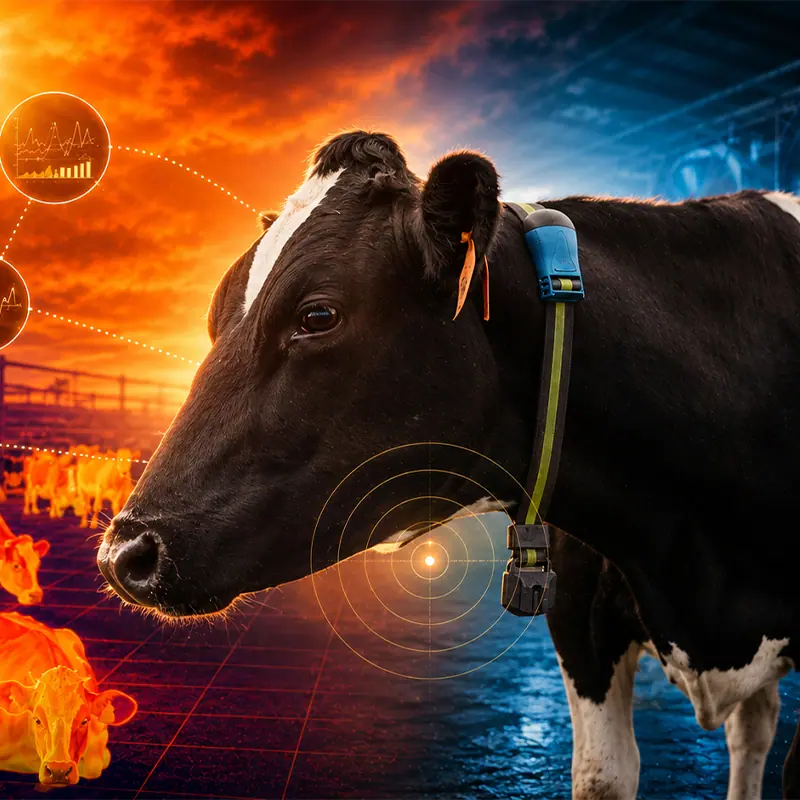
For one month, the time spent on feeding, rumination, and inactivity was continuously recorded using electronic collars for automatic monitoring, a widely validated technology for tracking bovine behavior.
 A total of 1,680 behavioral records were collected.

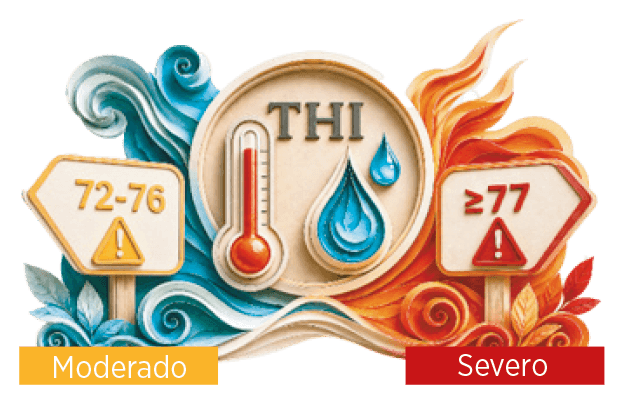
| Simultaneously, temperature and humidity inside the barn were monitored daily to calculate the temperature-humidity index (THI), classifying the data into two levels of thermal stress. |
Advanced statistical models were applied to analyze how heat stress level and lactation stage interact in modifying cow behavior.
HEAT CHANGES COW BEHAVIOR
The results showed marked differences in cow behavior when heat stress shifted from moderate to severe.
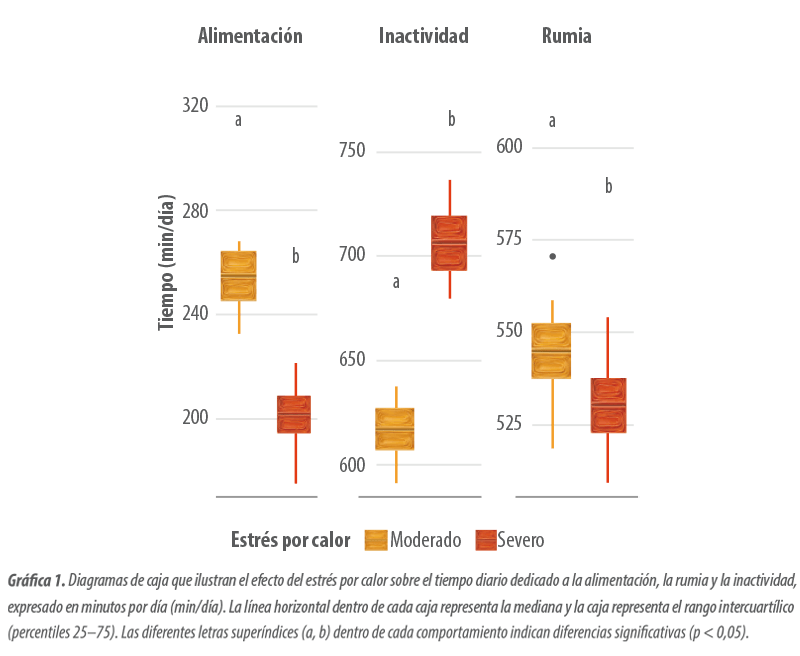
Cows spent less time feeding and ruminating, while periods of inactivity increased significantly (Graph 1). Under severe thermal stress conditions:
Feeding time was reduced by 53.5 minutes per day compared to moderate stress situations.
Rumination decreased to a lesser extent, with a reduction of 17.9 minutes daily.
Inactivity increased by 77 minutes per day, reflecting a lower overall activity of the animals.
|
|
 The analysis of THI as a continuous variable confirmed this trend.
 Feeding is the first activity to be affected
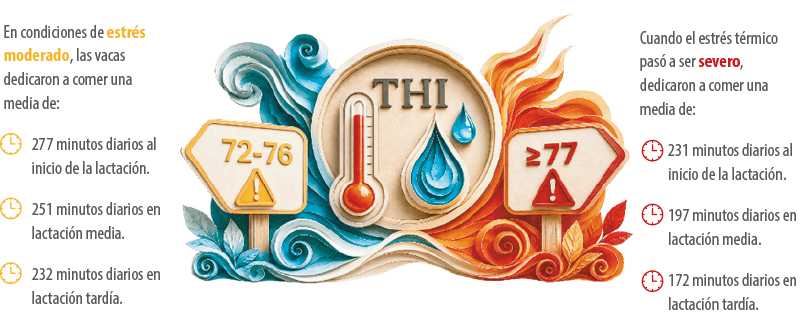
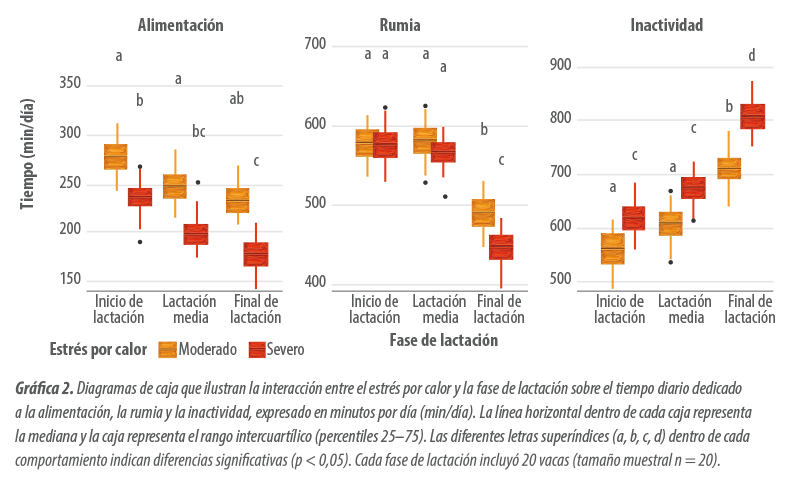
The time spent feeding decreased significantly in all lactation stages as the intensity of heat stress increased (Graph 2).
|
|

Feeding is the first activity to be affected
The effect of thermal stress on rumination was different depending on the cows’ productive stage (Graph 2).
Cows in early lactation maintained rumination time almost unchanged even under severe thermal stress conditions, remaining around 575 minutes daily.
In mid-lactation cows, a slight reduction was observed, although not reaching statistical significance.
Cows in advanced lactation stages showed a clearly different response. In this group, rumination decreased from 486 to 449 minutes daily when heat stress shifted from moderate to severe, representing a reduction of 37.4 minutes per day.
|
|
 Rumination appears to be especially sensitive to heat in late lactation cows, while in earlier stages it remains relatively stable.
More heat, more inactive time
Inactivity increased significantly in all lactation stages as thermal stress intensified (Graph 2).
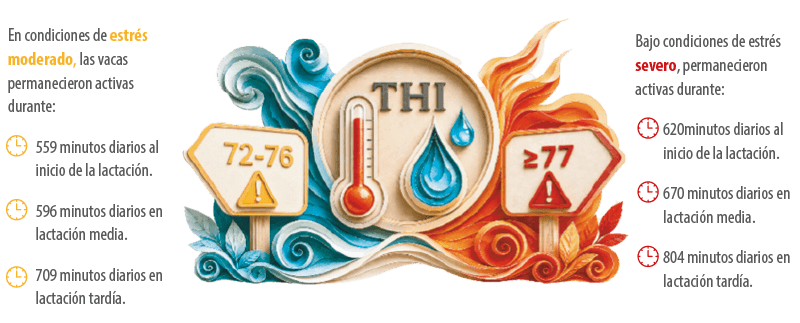
Again, cows at the end of lactation showed the most marked response, with an increase of 94.7 minutes of inactivity per day.
 In comparison, cows in early and mid-lactation increased their inactivity time by 61.1 and 74.1 minutes per day, respectively.
|
|
THI reveals greater sensitivity in late lactation cows
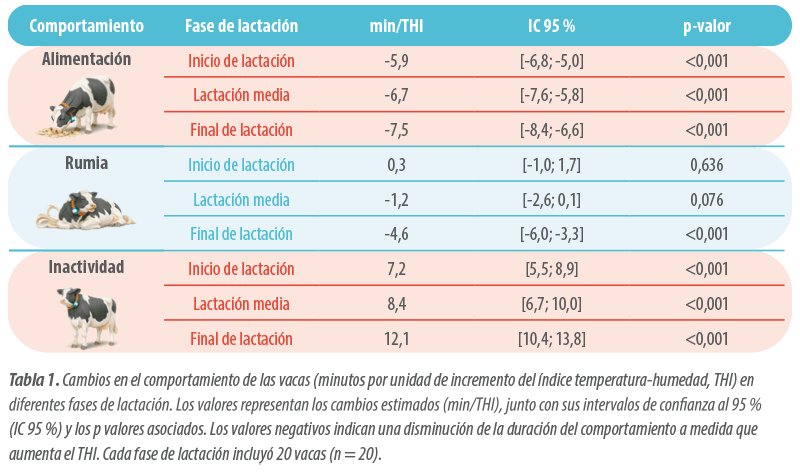
The analysis of the effect of THI on behavior confirmed that the response to thermal stress intensifies as lactation progresses (Table 1).
 The reduction in feeding time was progressively more intense from the beginning to the end of lactation.
 Rumination was only significantly affected in late lactation cows.
 Inactivity increased in all stages, reaching its highest increase in animals at the end of lactation.
|
|
 These results reinforce the idea that cows in advanced lactation stages present greater vulnerability to thermal stress.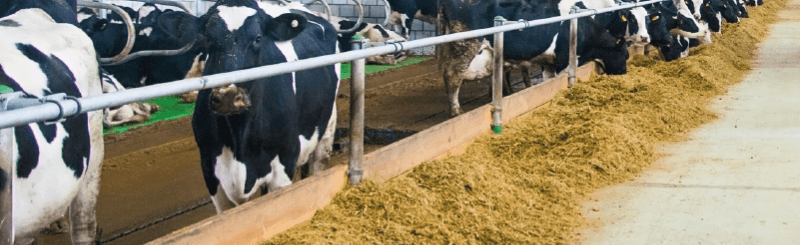
WHY DOES COW BEHAVIOR CHANGE WHEN HEAT INCREASES?
Less feeding and less rumination: a strategy to generate less heat
Heat stress significantly modifies the behavior of dairy cows.
 As the severity of thermal stress increases, cows reduce the time spent feeding and ruminating, while increasing periods of inactivity.
The reduction in feeding and rumination can be interpreted as a strategy to limit the internal heat production associated with digestion and ruminal fermentation.
Inactivity increases to save energy and dissipate heat
The increase in inactivity was one of the most evident behavioral changes observed in the study.
Movement represents a significant energy expenditure and a considerable part of that energy ends up being transformed into heat. Therefore, reducing activity is an effective strategy to limit the production of additional metabolic heat.
Cows modify their posture to favor thermal dissipation.
Standing increases the body surface exposed to air and facilitates heat loss through convection, radiation, and evaporation.
Thus, reducing physical activity and increasing resting time are part of an adaptive response aimed at maintaining body temperature within limits compatible with animal welfare.
Cows at the end of lactation show greater sensitivity to thermal stress
One of the most relevant findings of the study was the interaction between heat stress and lactation stage.
All cows modified their behavior when THI increased, but the changes were more pronounced in animals at the end of lactation.
 These cows showed the greatest reductions in time spent feeding and ruminating, as well as the largest increases in inactivity. These cows showed the greatest reductions in time spent feeding and ruminating, as well as the largest increases in inactivity. |
In contrast, cows in early and mid-lactation maintained their activities related to feed intake to a greater extent.
One possible explanation is that cows in the early stages of lactation have high energy needs to maintain milk production.
This physiological demand forces them to maintain feed intake even under adverse environmental conditions.
Cows at the end of lactation, on the other hand, have lower productive requirements and can more easily reduce activities that generate metabolic heat.
BEYOND PRODUCTION: LATE LACTATION COWS ALSO NEED PROTECTION FROM HEAT
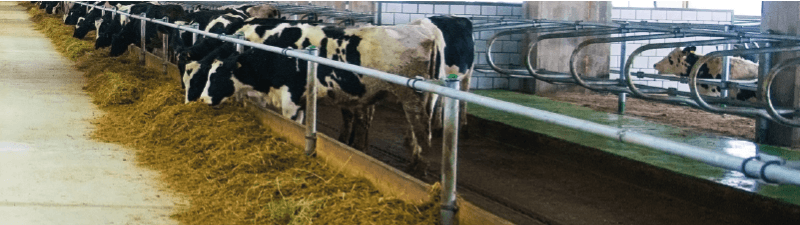
As the intensity of thermal stress (THI ≥77) increases, the time spent feeding and ruminating decreases, while inactivity increases, reflecting the animals’ efforts to reduce internal heat production and maintain their thermal balance.
Cows at the end of lactation show greater sensitivity to thermal stress, with more pronounced reductions in feeding and rumination time, as well as greater increases in inactivity.
 These findings suggest that late lactation cows may require specific attention within heat stress mitigation programs.
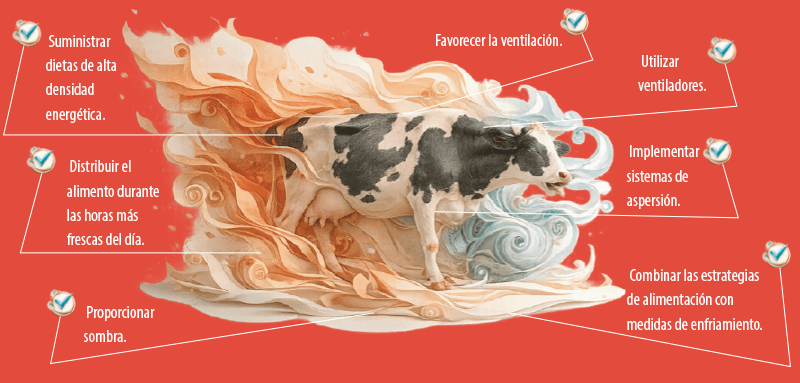
To reduce the impact of thermal stress, especially in cows at the end of lactation, various management measures can be implemented:
|
|
 The late lactation stage, often considered less critical from a productive standpoint, also deserves special attention during periods of high temperatures. Future research will allow a better understanding of how thermal stress and lactation stage interact, facilitating the development of more effective management strategies on dairy farms.
Article translated and adapted from: Article translated and adapted from: Baccouri W, Wanjala G, Tóth V, Komlósi I, Mikó E. The effect of different levels of heat stress on the behaviour of cows at different stage of lactation. Journal of Thermal Biology. 2025;134:104334. https://doi.org/10.1016/j.
jtherbio.2025.104334 (CC BY 4.0)