


 Latinoamérica
 Europa
Control and management of animal welfare in cattle and sheep using thermography









BODY TEMPERATURE: REFLECTION OF HEALTH AND WELFARE
Knowing the physical health and welfare of the herd is a primary objective in current livestock farming, and with temperature being a key indicator, there arises the need to study the most accurate methods to evaluate it, as well as those best adapted to the needs of the livestock and the farmer.
Body temperature is a physiological parameter of vital interest, as a temperature increase can be a:
 Indicator for the early detection of infectious diseases (e.g.: bovine viral diarrhea or foot-and-mouth disease) and inflammatory (e.g.: laminitis or mastitis).
General indicator of stress.
Additionally, it is worth highlighting the economic importance that the variance of this parameter represents for the farmer, as both its decrease and increase can alter the productivity of the animal.
 Animals with hyperthermia or hypothermia are animals that are depressed and spend more time lying down, which leads to less frequent visits to the trough and decreased intake, resulting in a low feed conversion ratio and milk production (in the case of dairy cattle).
Methods of measuring temperature in livestock
Currently, thanks to continuous technological development, not only is the traditional method of measuring core temperature (the rectal thermometer) available, but systems have been implemented that allow monitoring without the need to immobilize the animal.
In this way, the most relevant temperature measurement methods are:
 Digital thermometer
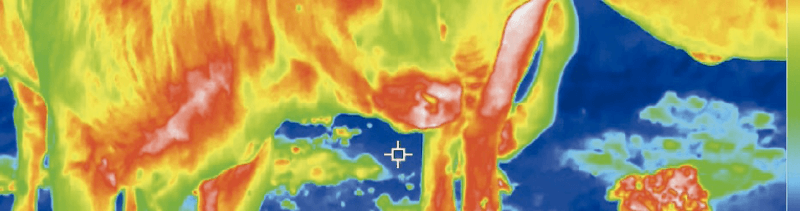
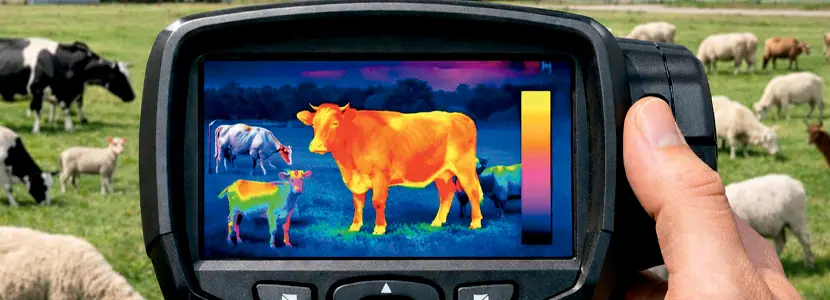
Infrared thermography camera
Infrared thermometer
DIGITAL THERMOMETER
The digital thermometer has been used in both human and veterinary medicine for over a decade as a clinical instrument that is easy to use and read and also more safe and fast than its predecessor, as it does not contain mercury and allows temperature reading in less than a minute.
However, it has its limitations, as taking the temperature in animals is done by inserting the digital thermometer rectally, which necessitates their immobilization, creating two problematic circumstances.
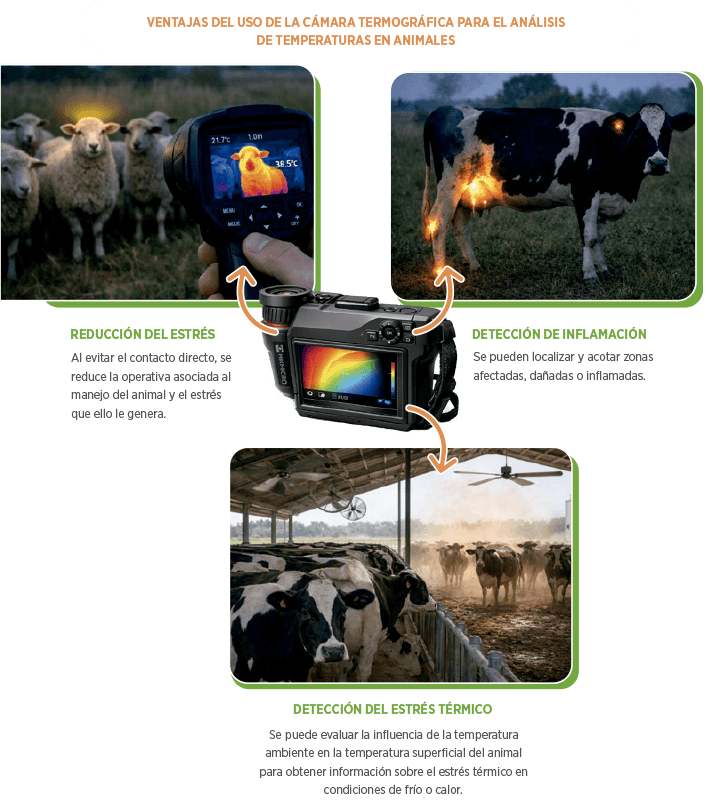
 The fact of being in contact with the animal and immobilizing it can generate a stress response, potentially causing stress-induced hyperthermia, therefore, the process itself hinders an accurate reading of the results.
The time it takes to perform the measurement also affects accuracy, as there are animals with complicated management whose physical restraint is difficult.
INFRARED THERMOGRAPHY CAMERA
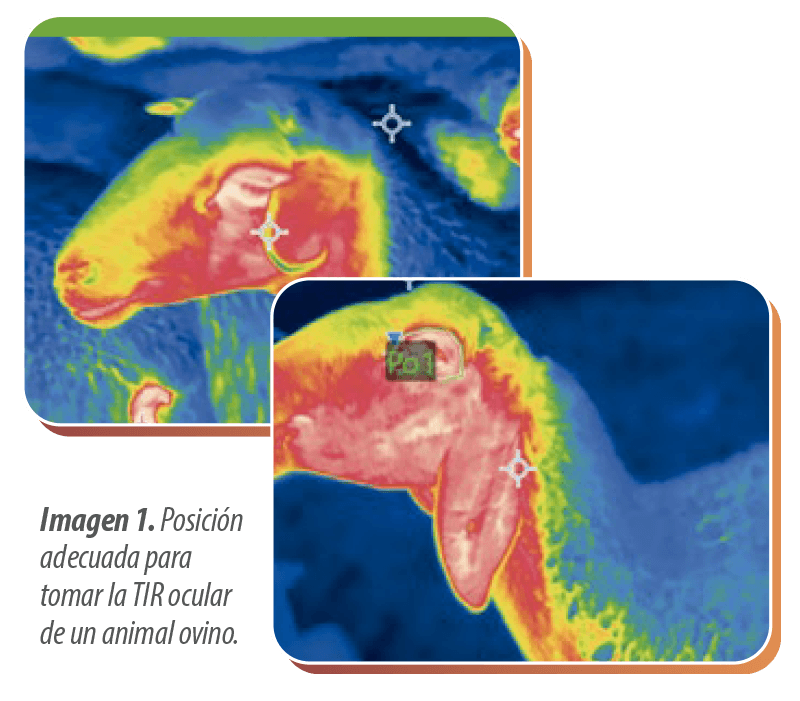
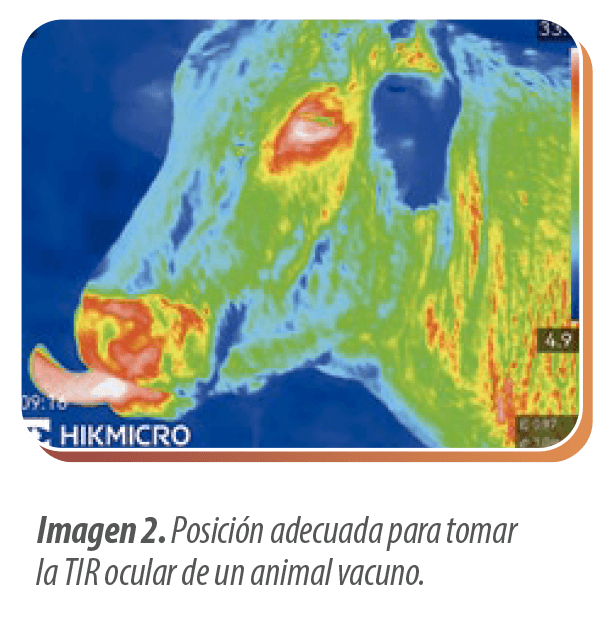
 Commercially, in the field of veterinary medicine, some of the infrared technology devices available are infrared thermography cameras (IRT).
Applications of thermography in animal production
These systems have been used, and increasingly, in the diagnosis of orthopedic diseases, as well as for research in various areas of the animal production field:
In milking to evaluate the presence of mastitis.
In the field of animal welfare evaluating thermal stress in common management practices.
As a non-invasive tool for the evaluation of metabolism and nutrition, as well as the production and emission of methane.
To evaluate feed efficiency, where it is demonstrated that meat production is more efficient with less heat loss and methane production, with more efficient animals showing a lower body surface temperature than less efficient ones.
Detection of diseases that may cause febrile symptoms.
Application in the study of diseases and the environment surrounding the individual that contribute to the prevention of pathological states by detecting anomalies in thermographic patterns. This will avoid having to resort to certain treatments if thermography reveals that the area suspected of being affected is not the condition initially thought.
Detection of ectoparasites on the animal’s surface.
Early detection of oestrus or evaluation of the estrous cycle.
THERMOGRAPHY AS A TOOL FOR EVALUATING ANIMAL HEALTH AND WELFARE
The Cooperative of Sheep and Cattle of Navarra (COOVA), together with the Public University of Navarra (UPNA) and UCAN (Union of Agricultural Cooperatives of Navarra) has launched the rural development pilot project titled “Control and Management of Animal Welfare in cattle and sheep through the use of Thermography” encompassed in the measure “Aid for pilot projects in cooperation for agricultural innovation.”
The call is included within the framework of intervention 7162 (Cooperation groups for innovation not related to AEI-Agri that support the implementation of pilot projects in agricultural productivity and sustainability) of the Strategic Plan of the CAP 2023-2027.
 The project is framed within the call for the year 2023 and has been developed in the time period of the second half of the year 2024 and the year 2025.
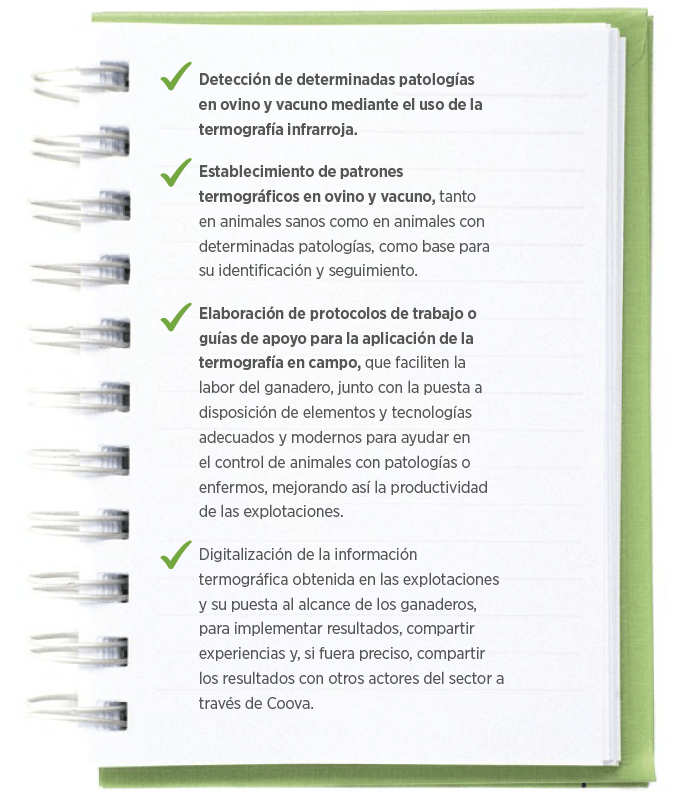
The objective of the project is the development and implementation of a monitoring system for the health status of sheep, goats, and cattle, using thermographic techniques.
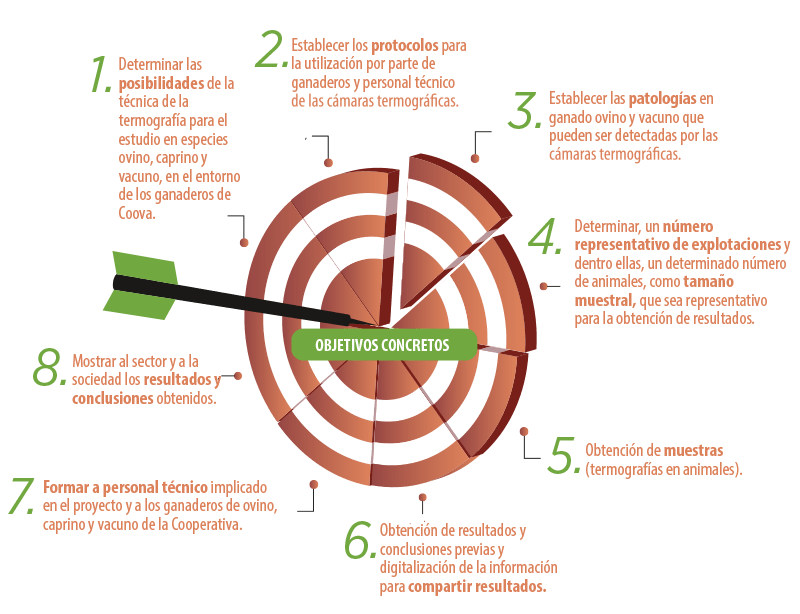
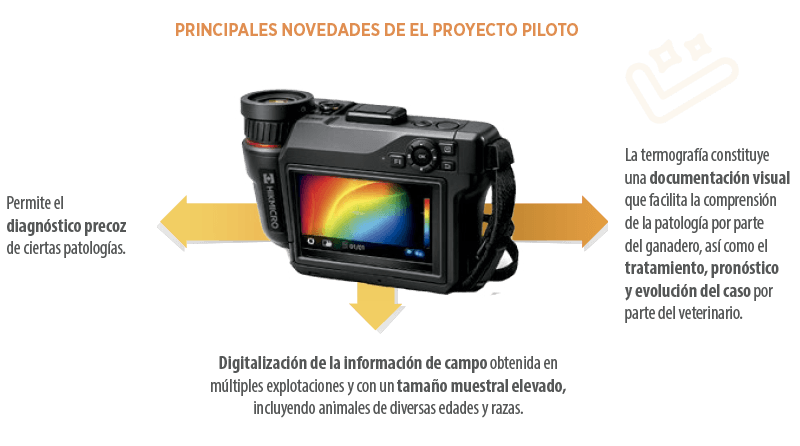
| This project has sought to highlight the applications of optical thermography in sheep, goats, and cattle, first conducting a literature review on this topic, then showing results of the applications through tests conducted with the thermographic camera and relating these applications to animal welfare by not having the animals undergo invasive processes for the diagnosis of certain pathologies or management, as well as by reducing the human-animal interaction itself, taking into account the five basic pillars on which animal welfare is based. |

KEYS FOR RELIABLE THERMOGRAPHIC EVALUATION
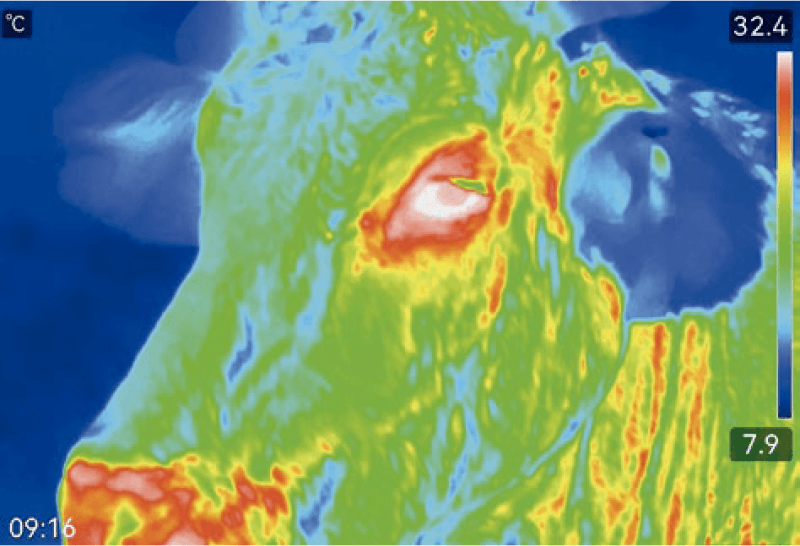
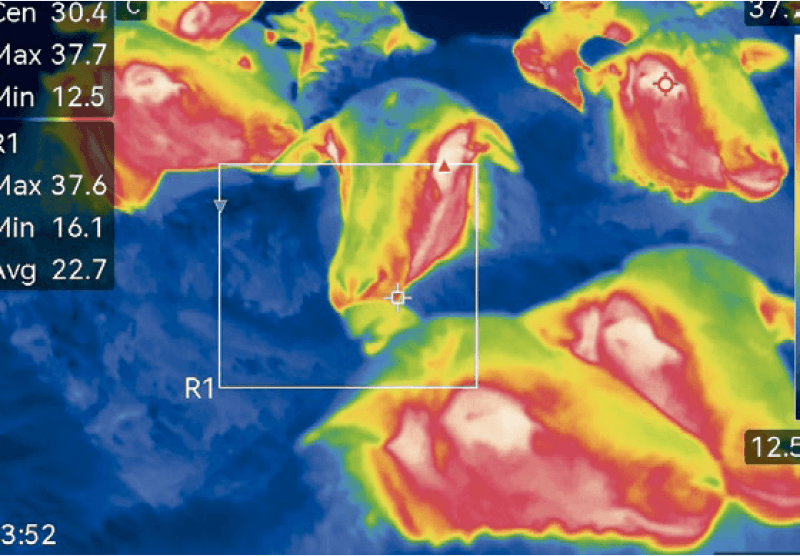
 Based on the temperature differences detected by the camera between different areas of the body, it is possible to identify animals with fever and analyze which areas show thermal increases or decreases, which can help detect inflammatory processes.
 Likewise, obtaining thermographs while the animal is moving is a very interesting option, instead of limiting oneself only to static shots.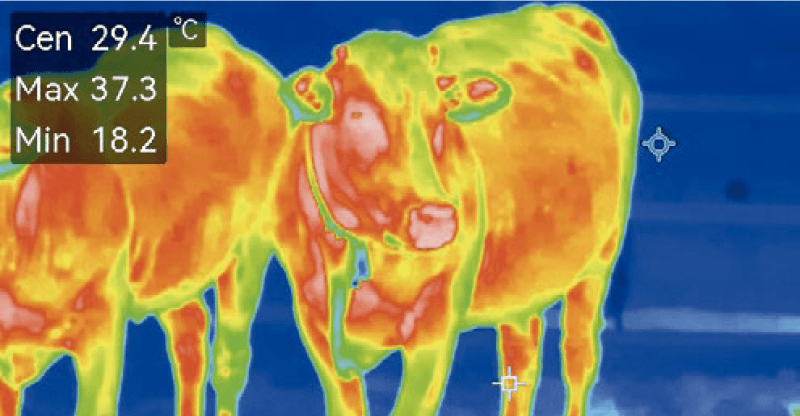
 Focus.