


 Latinoamérica
 Europa
High-Speed Ventilation and Heat Stress: Is It Enough to Cool Cows?


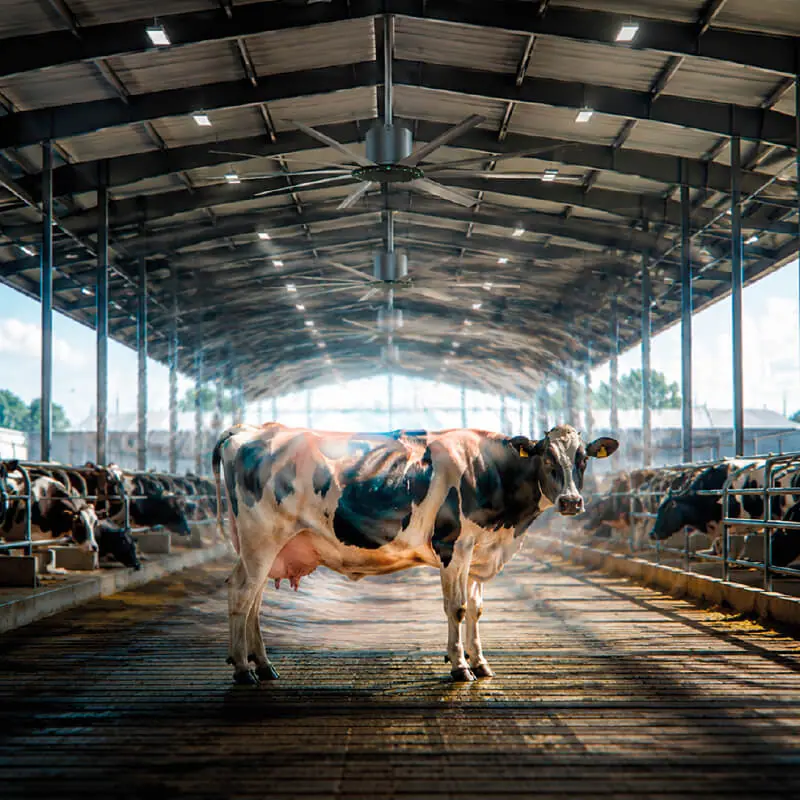







Heat stress poses a significant challenge for dairy cows, especially in warm climates, as it affects their physiology, behavior, and milk production.
 A study conducted in Hungary and published by Jurkovich et al. (2026) in Journal of Thermal Biology (The effects of improving barn cooling on the behaviour, physiological responses, gene expression, and milk yield of dairy cows) investigated the effect of increasing air speed in facilities through the use of modern fans on the behavior and performance of the cows.

|
|
 The study was conducted:
 It evaluated the effectiveness of modern ventilation systems equipped with automatic temperature-based control to:
 Relieve heat stress and improve the welfare and productivity of the cows.
Two high-performance groups were compared:
Experimental group
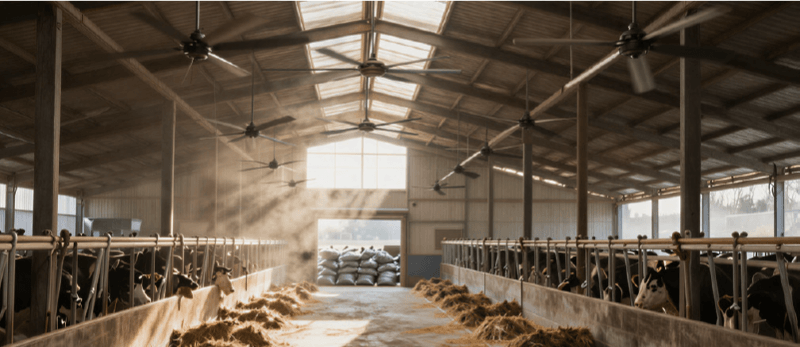
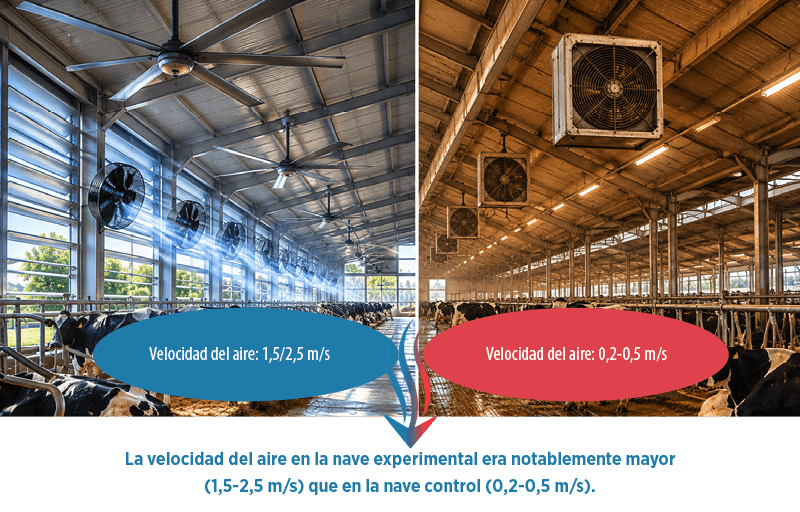
100 cows housed in a barn with newly installed circulation fans, temperature-dependent and with shutters, providing a high airspeed.
Control group
100 cows housed in a barn with box fans providing a low airspeed.
 Environmental conditions were monitored using data loggers that recorded temperature and humidity, allowing for the calculation of the temperature-humidity index (THI).
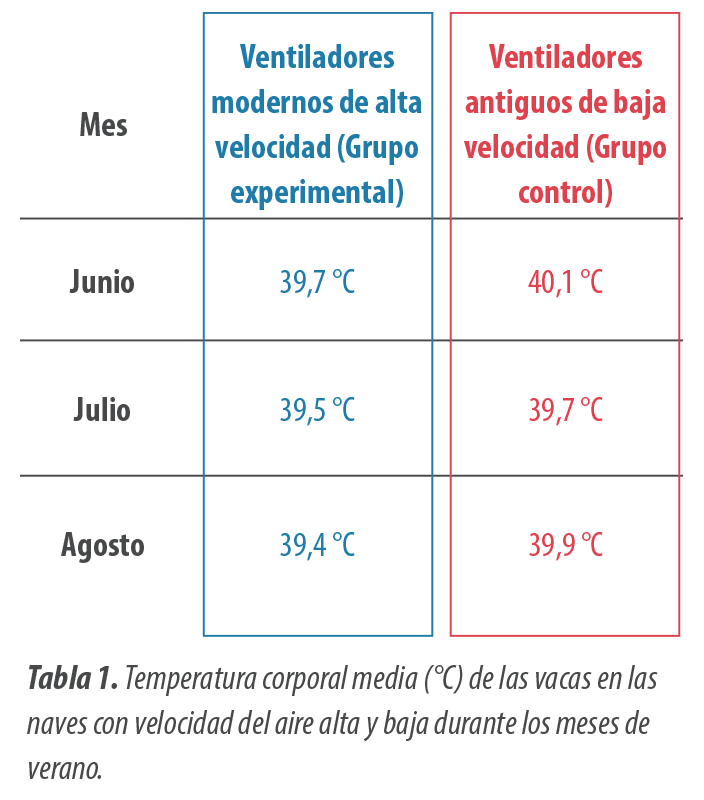
 The body temperature of the cows was measured intravaginally once a month during the summer (Table 1).
Additionally, the time that the animals spent lying down, eating, and ruminating was recorded. The daily milk yield data were obtained from the farm’s database.
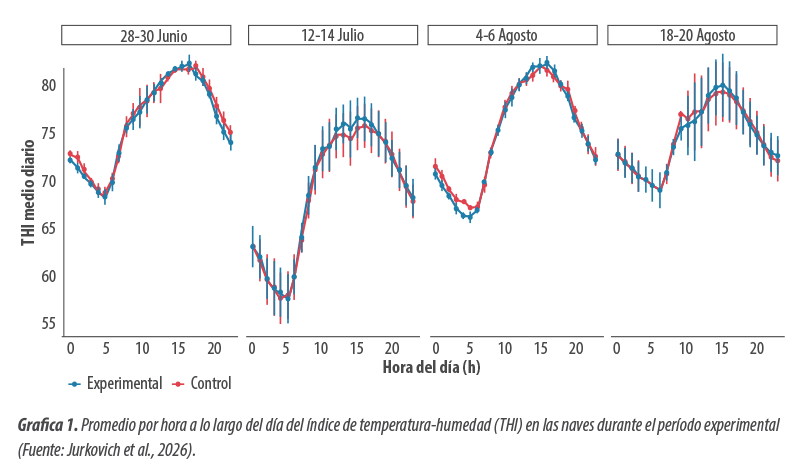
The THI values in both barns exceeded the thermal stress threshold (THI > 68) during most of the summer experimental period (Graph 1).
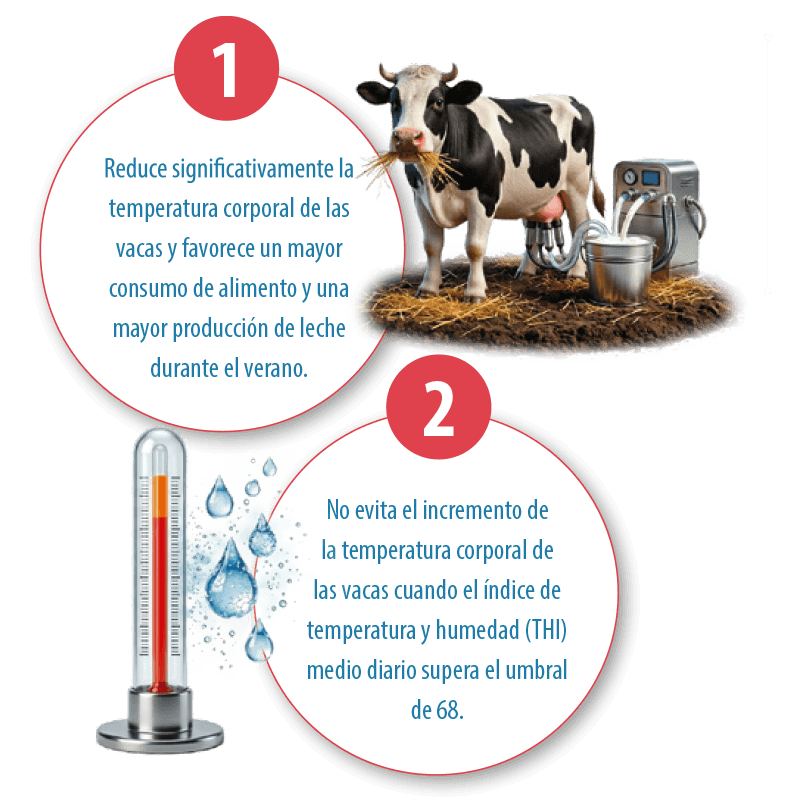
 The body temperature of cows housed in the barn with high airspeed was significantly lower (P < 0.05) than that observed in cows in the barn with low airspeed. The body temperature of cows housed in the barn with high airspeed was significantly lower (P < 0.05) than that observed in cows in the barn with low airspeed.
However, in both groups, the body temperature remained above the value considered normal (< 39.2 °C) in all measurements. |
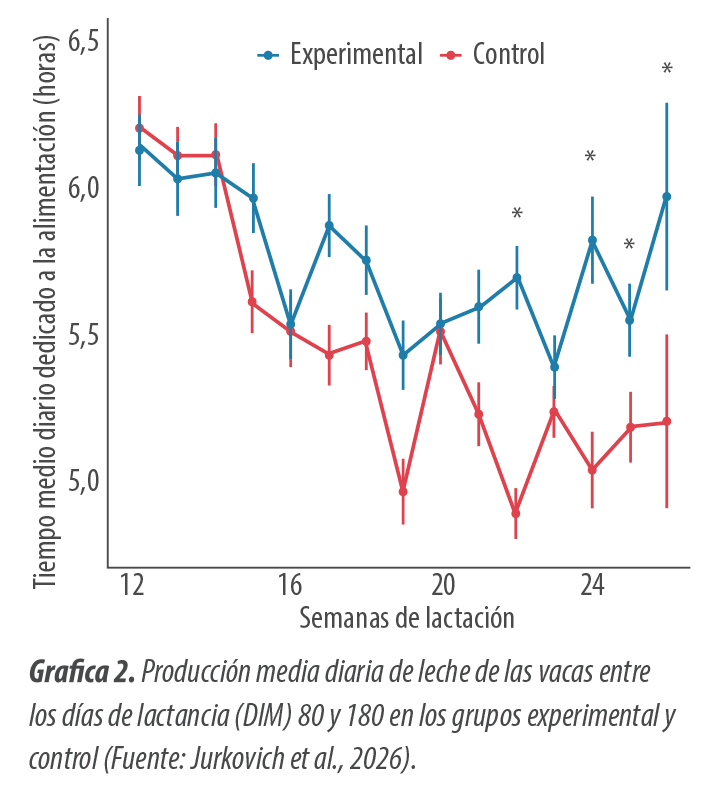
Resting time did not vary significantly, but the time spent on feeding and rumination increased in the experimental group throughout the study period.
 Likewise, the milk yield was approximately 3 L/day higher (P < 0.05) in this group. The daily milk yield during the summer months in both groups is shown in Graph 2.
 The results of this experiment allow us to draw two important conclusions about the effect of increasing air speed in the barns by replacing the old box fans that generate speeds below 0.5 m/s with modern circular fans capable of reaching speeds close to 2.5 m/s:
| Accumulated experience indicates that the combination of spraying and high-speed forced ventilation for a total of 6 hours a day can keep the body temperature of cows within normal ranges throughout the summer.
Moreover, this cooling system could provide a higher milk yield than observed in the present study, in which only high-speed fans were used without combining with direct spraying on the animals.
|
 Therefore, the exclusive use of high-speed fans seems to offer few advantages compared to their combination with spraying systems on the animals.