


 Latinoamérica
 Europa
Europe on Alert Due to Outbreaks of Contagious Nodular Dermatosis in Cattle: Spain Strengthens Preventive Surveillance









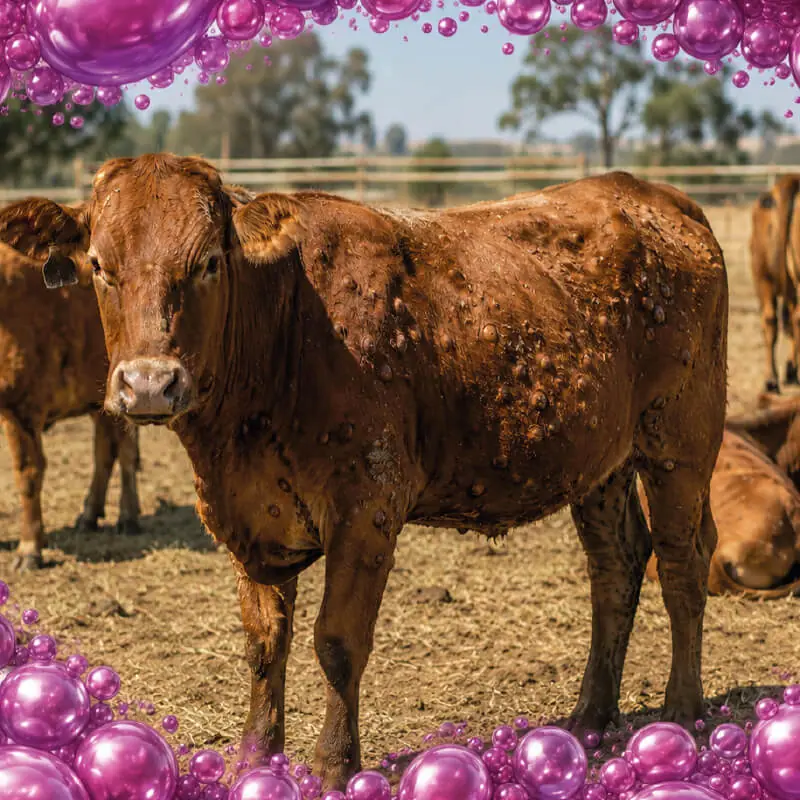
The recent outbreaks of Contagious Nodular Dermatosis (CND) reported in France and Italy have triggered health alerts across Europe. Although Spain remains officially free of this viral disease, authorities have activated enhanced surveillance protocols, especially in border areas and regions with high livestock density.
 The first outbreak was reported at the end of June in the French region of Bourgogne-Franche-Comté, in the department of Saône-et-Loire. Shortly after, Italian health authorities confirmed another outbreak in the Piedmont region, in the northwest of the country. In both cases, the Official Veterinary Services adopted immediate measures: immobilization of farms, clinical and serological sampling, as well as vaccination campaigns to contain the spread.
Contagious Nodular Dermatosis is a viral disease of cattle, caused by a virus of the genus Capripoxvirus, and does not affect humans. Its transmission occurs mainly through vectors such as mosquitoes, flies, or horseflies, which facilitates its spread during the warm months. Although its mortality rate is usually low, its productive and economic consequences are considerable: fever, extensive skin lesions, infertility, weight loss, and a drop in milk and meat production.
| Given the geographical proximity of these outbreaks, the Ministry of Agriculture has recommended that farmers and veterinarians take extreme precautions. There is a particular emphasis on the early detection of compatible symptoms, the limitation of animal movements, the use of repellents, hygiene in facilities, and the control of vector insects. The importance of reporting any suspicion to the official animal health system is also emphasized. |
At the regional level, some professional organizations and veterinary services in communities such as Castilla y León have already begun to disseminate technical recommendations to reinforce biosecurity on farms. Although no cases have been detected in Spanish territory, it is considered crucial to act in advance to prevent the entry of the virus.
The last precedent of LSD outbreaks in Europe dates back to 2016-2017, when the disease spread across several Balkan countries, necessitating intense vaccination campaigns. Now, the reappearance in central-southern Europe once again tests the response capacity of the community animal health system.
With the high summer temperatures and intense circulation of vectors, the coming months will be crucial to prevent this disease from crossing the Pyrenees and entering the Iberian Peninsula.
You may be interested in: Zoonotic diseases on the rise in the European Union
References:
-
Agronews Castilla y León (5 de julio de 2025). Animal Health: alarms are raised in Europe due to new outbreaks of lumpy skin disease. Available at: https://www.agronewscastillayleon.com/agricultura-dermatosis-foco
-
ASAJA Palencia (4 de julio de 2025). The Ministry calls for vigilance and gives advice as lumpy skin disease appears in the EU. Available at: https://www.asajacyl.com/palencia/asaja-palencia-informa/el-ministerio-pide-vigilancia-y-da-consejos-al-aparecer-en-la-ue-la-dermatosis-nodular-contagiosa-del-bovino
-
Agrodigital (3 de julio de 2025). Outbreak of lumpy skin disease in France and Italy in June 2025. Available at: https://www.agrodigital.com/2025/07/03/brote-dermatosis-nodular-francia-italia-2025/
-
European Food Safety Authority (EFSA). Lumpy Skin Disease: Scientific reports and disease monitoring (consulted in June 2025). Available at: https://www.efsa.europa.eu
-
World Organisation for Animal Health (WOAH, formerly OIE). Lumpy Skin Disease – Fact Sheet and Updates. Available at: https://www.woah.org