


 Latinoamérica
 Europa
Heat Stress in Dairy Cattle: Group Monitoring to Optimize Investment in Cooling Measures



 Polígono Industrial El Montalvo C/ Zeppelin, 6 – Parcela 38 Carbajosa de La Sagrada Salamanca 37008
  +(34) 923 190 345

From physiology to economic decision-making: why intake and rumination decrease, why dry cows also matter, and how behavioral data help prioritize cooling measures.
Heat stress is one of the main causes of economic losses in the dairy sector, and these losses are proportional to:
 The degree of exposure (days and hours per year above the threshold).
The level of production.
Certain management and nutrition practices.
| In this context, animal-based behavior monitoring (intake, rumination, panting) allows quantifying the impact of heat stress on each productive group and, thus, prioritizing investment in cooling measures at the times and groups of animals that need it most. |
THE TRUE EXTENT OF THE IMPACT: BEYOND THE LACTATING COW
Historically, heat stress management has focused on the high-producing cow, where the impact is visible and rapid. However, heat affects all phases of the production cycle, with consequences that extend far beyond the summer.
THE FORGOTTEN GROUP: THE DRY COW AND INTERGENERATIONAL EFFECTS
Various studies have shown that cooling the dry cow is not a luxury, but an investment with deferred and prolonged returns.
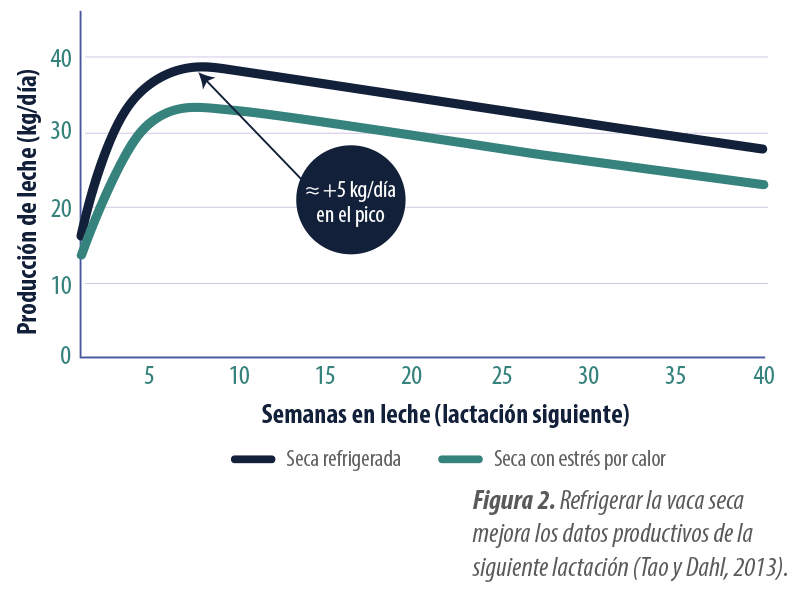
 The reference study (Tao and Dahl, 2013) showed that heat stress during late gestation/dry period reduces the production of the subsequent lactation, even when the cow has cooling measures once calved.
 Cooling throughout the entire dry period reverses much of that negative postpartum effect and improves immune status throughout the life cycle (Dahl, Tao and Laporta, 2020).
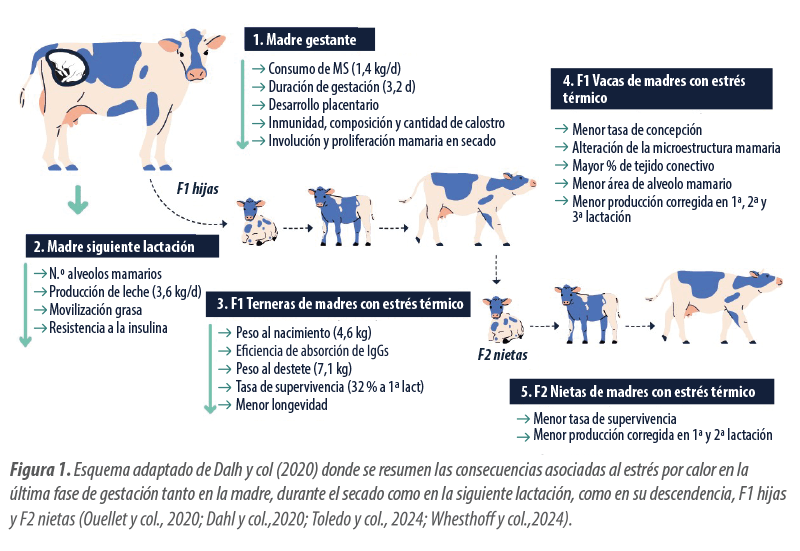
The most novel part is the fetal programming.
Intrauterine hyperthermia during late gestation leaves an epigenetic mark on the offspring that results, among other effects, in:
 Lower birth weight and poorer passive transfer of immunity.
Altered mammary gland development that compromises future production.
Modifications of the hypothalamic-pituitary-adrenal axis.
(Guadagnin et al., 2024)
Recent studies also document that in utero heat alters placental structure and function and compromises body growth and mammary development from weaning to puberty (Ouellet et al., 2020; Dahl, Tao and Laporta, 2020; Westhoff et al., 2024).
The finding with the greatest practical implication is the transgenerational nature (Figure 1).
| That is, the heat experienced today by a dry cow can penalize the productivity and heat tolerance of several generations of its offspring. This effect is not immediately observed, but it conditions the future profitability of the herd (Figure 2). |
REPRODUCTIVE IMPACT AND ECONOMIC EFFICIENCY
Fertility is one of the most expensive components of heat (30–60% decrease and a drop in oestrus detection around 50%).
The group from the University of Florida frames this cost within reproductive efficiency and its impact on feed efficiency:
Poorer reproductive efficiency lengthens the interval between calvings, shifts cows towards less productive days in milk, and increases replacement costs, reducing the income over feed cost (IOFC).
In their most recent analyses (Chebel et al., 2025) they quantify how reproductive performance directly modulates profitability per stall. This reproductive penalty can be directly linked to monitored behavior.
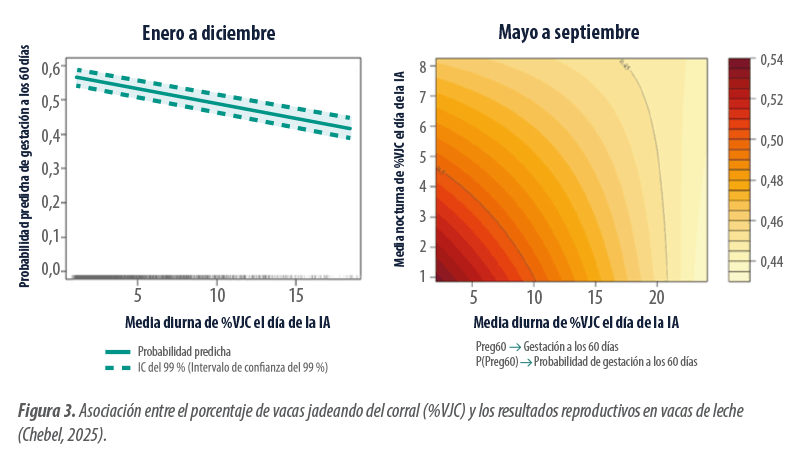
 In the analysis by Chebel et al. (2025), the percentage of cows panting at the pen level (%VJC) on the day of insemination was inversely associated with the probability of pregnancy.
| Restricting the analysis to the summer months (May–September) reveals a relevant nuance for management: the probability of pregnancy depends on both daytime panting and nighttime panting (nighttime median of %VJC), such that the worst fertility is concentrated in pens with elevated panting both day and night. |
The implication is twofold:
1 Panting is not only an indicator of milk loss, but a quantitative predictor of fertility that we can use on the farm to anticipate reproductive results.
2 Night cooling matters, because the heat accumulated during the night also compromises conception, something that the average punctual THI does not identify.
Professor Ricardo Chebel also works on two very applicable aspects:
 Automation and precision technologies to manage each cow according to its needs (reducing the use of hormones).
Cooling of the young stock.
| A randomized trial (Montevecchio et al., 2024) evaluated the cooling of calves from the lactating phase using ceiling fans and its effect on growth and first lactation —one of the few specific pieces of evidence in young animals, complementary to the positive pressure ventilation systems validated by the Wisconsin group for calves. |
HOW CAN WE ASSESS THE IMPACT OF HEAT STRESS AND COOLING STRATEGIES?
The approach of Israel Flamenbaum (Cow Cooling Solutions) is based on the animal’s thermal balance:
The cow produces metabolic heat (more as its production increases) and has evaporative and non-evaporative dissipation pathways. When heat production exceeds dissipation capacity, a surplus appears that must be actively eliminated.
| This is where cooling through a combination of wetting and forced ventilation comes in. The reference recommendation is intensive cooling in several sessions totaling about six accumulated hours per day. |
To evaluate if a farm manages the summer well, Flamenbaum popularized the “summer:winter ratio” index, which compares the performance of the three summer months (Jul–Sep) with that of three winter months (Jan–Mar), taking winter as the baseline.
The best farms maintain production ratios close to 0.99 (barely losing in summer), while the worst drop to ~0.88 and also suffer significant drops in summer conception rates.
 It is a very useful benchmarking tool for setting objectives and comparing one’s own farm with its area and production level. It is a very useful benchmarking tool for setting objectives and comparing one’s own farm with its area and production level. |

FROM PERCEPTION TO DATA: MONITORING HEAT STRESS
To activate cooling systems we usually use the temperature-humidity index (THI) [THI = 0.8·T + RH·(T−14.4) + 46.4], with reference thresholds:
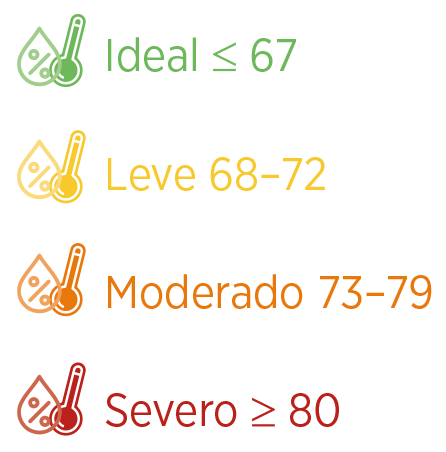
The THI is useful, but it measures environmental risk, not the impact on the animal: it does not incorporate housing (ventilation, roof insulation) or the productive phase. Two groups under the same THI may be suffering very differently.
| The robust alternative is animal-based monitoring.
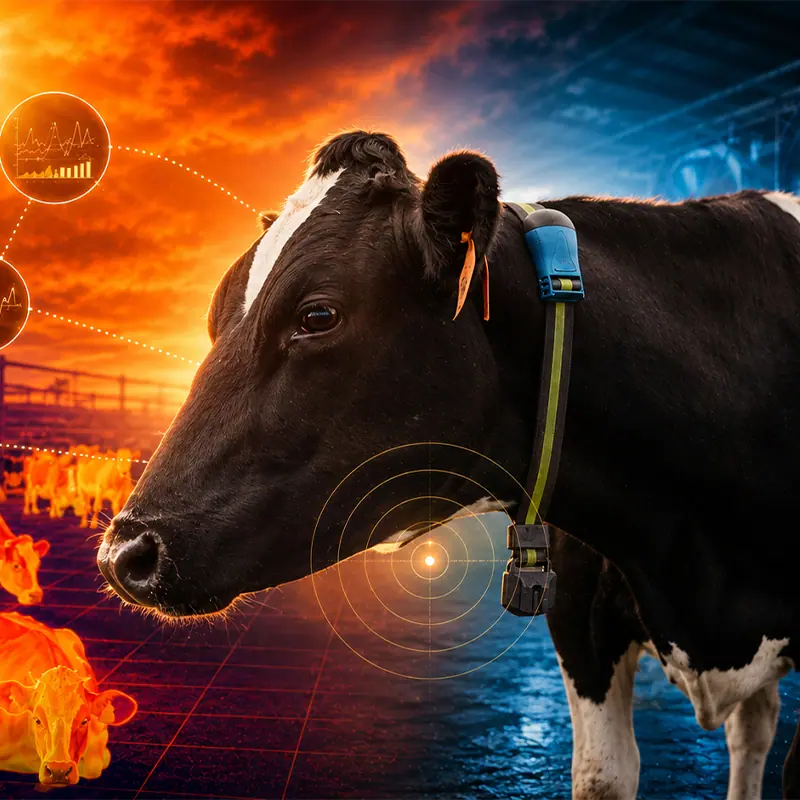
The panting index is a validated indicator of heat stress (Bar et al., 2019; Islam et al., 2020) and automated monitoring systems, such as SenseHub® Dairy, allow objective detection of these behavioral changes in real time, quantifying the presence of heat stress in the group.
|
 The system also monitors rumination, intake, and activity, allowing for a complete picture in real time and retrospectively.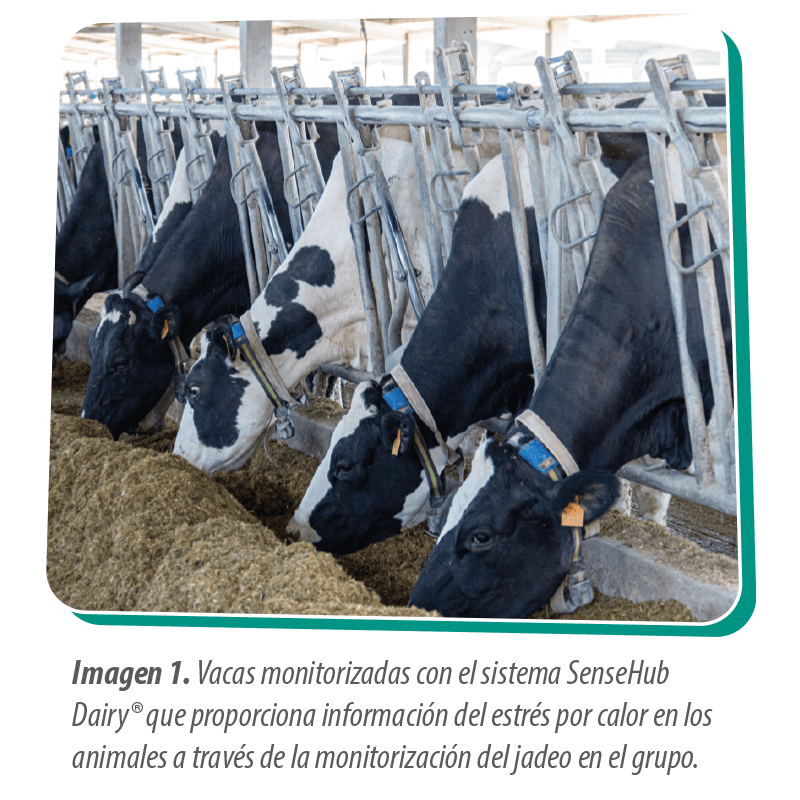
Un trabajo reciente de Chebel et al. (2026) cuantifica ese umbral mediante el análisis del punto de corte (break-point) en la relación entre el porcentaje de vacas con jadeo (%VJC) y el THI (n = 8.779; R² = 0.712).
Por debajo de un THI de 79.3 la relación era casi plana: el ambiente sube el valor THI, pero el jadeo apenas responde.
Por encima de ese umbral, la pendiente se multiplica por más de doce (Figure 4), de modo que cada punto adicional de THI dispara el porcentaje de vacas jadeando.
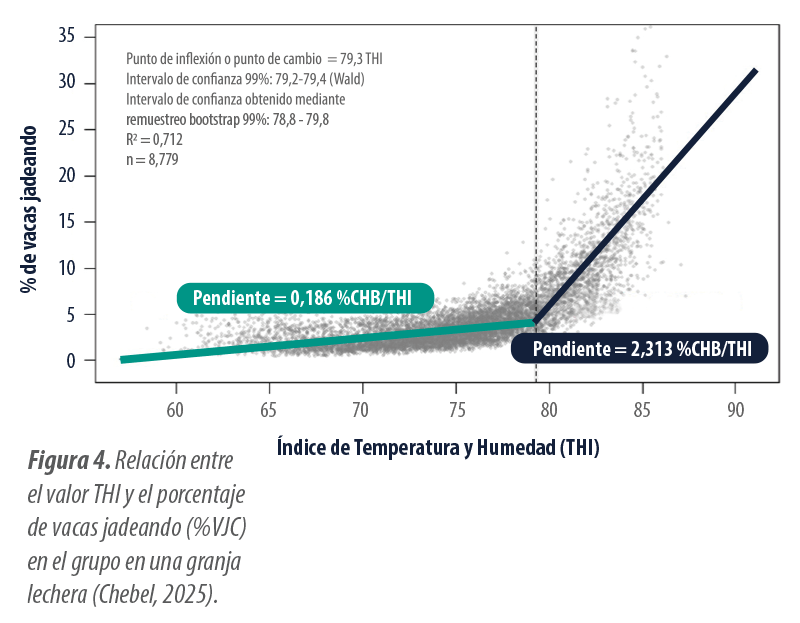
| The message reinforces the previous idea: there is a real inflection point, measured on the animal, from which the impact ceases to be linear and accelerates.
|

IDENTIFY GROUPS AND TIMES OF HIGHEST RISK
The main operational advantage is being able to compare groups within the same farm and under the same THI.
The Figures 5-7 show the daily minutes of intake, rumination, and panting in the different groups of the same farm (Fernández et al., 2024).
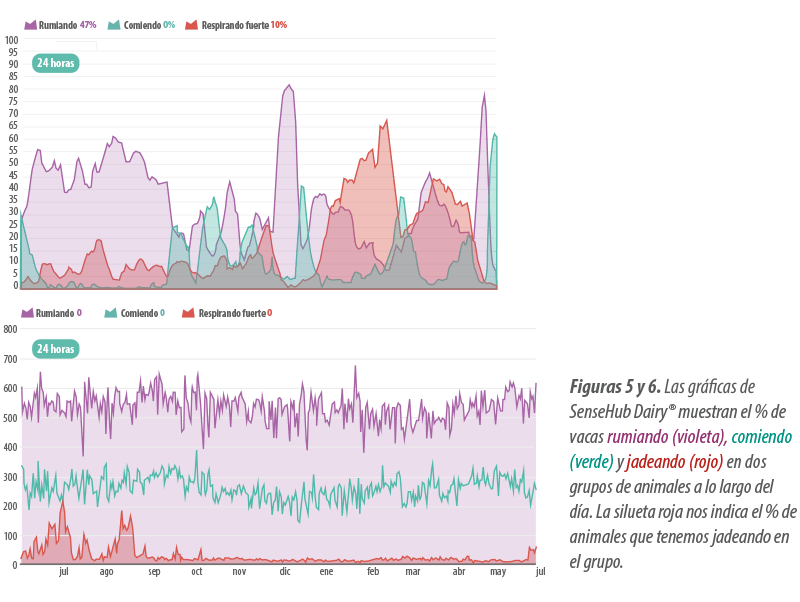
The daily routine graphs allow us to answer different questions:
 At what times does heat stress impact the most?
How long does the effect of cooling last?
At what times do they eat and ruminate?
Are the feed push-ups effective?
| Additionally, the long-term trend graphs (by month of the year) allow us to evaluate their seasonality. |
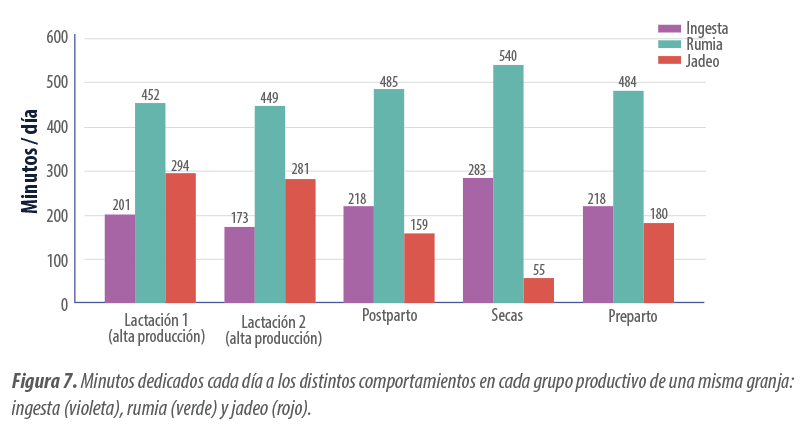
On the other hand, the analysis of the data by group (Figure 7), allows us to visualize where the problem is concentrated. Thus, in the farm of the study by Fernandez et al. (2024) we could see how:
 The high production groups (Lactation 1 and 2) had the highest panting time (294 and 281 min/day) and the lowest intake and rumination. This is consistent with the metabolic axis: more production → more metabolic heat → greater vulnerability. They are, therefore, the primary target for investment in cooling measures.
The dry cows showed the lowest panting time (55 min/day) and the highest rumination (540 min/day): the group appears to be “comfortable.” A point to consider when interpreting this is that in the study farm the dry cows received 4 hours of cooling daily divided into 6 sessions, in a cooling room: which mitigated the effects of environmental heat stress.
The pre-calving group showed intermediate panting (180 min/day) despite not being in lactation: it is a risk group that often has few cooling measures, and the one most interesting to monitor in light of fetal programming.

DIRECTING INVESTMENT IN COOLING MEASURES TOWARDS POINTS OF MAXIMUM RETURN
The decision to invest in cooling measures is based on a simple economic balance.
A return model (Flamenbaum, 2010) compares a situation with and without cooling and integrates the benefits (more milk per cow per year, better feed efficiency, better fertility, and fewer culls) against the costs (equipment, electricity, water, and labor).
| In the spreadsheet example of the project, for a herd of 200 cows, the cooling measures were associated with improvements of around +1,000 L/cow per year and an improvement in feed efficiency in summer. |
 The actual profitability, however, is very specific to each farm. It depends on:
The number of days/year above the threshold.
The level of production.
The cost of energy.
This is where monitoring transforms a generic decision into a prioritized decision. Instead of investing “equally across the entire farm,” behavioral data allows:
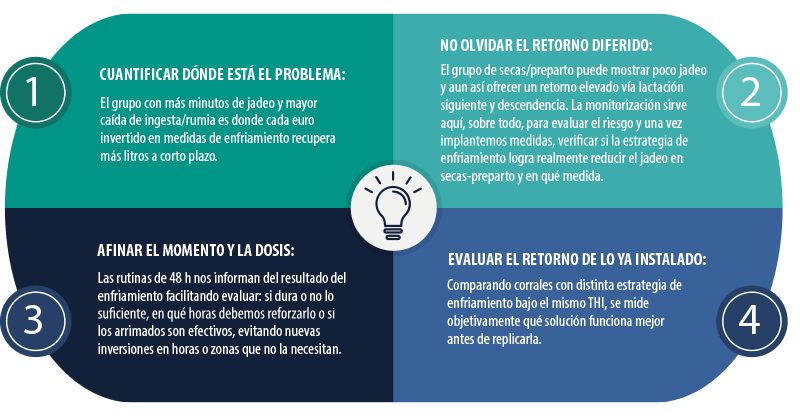
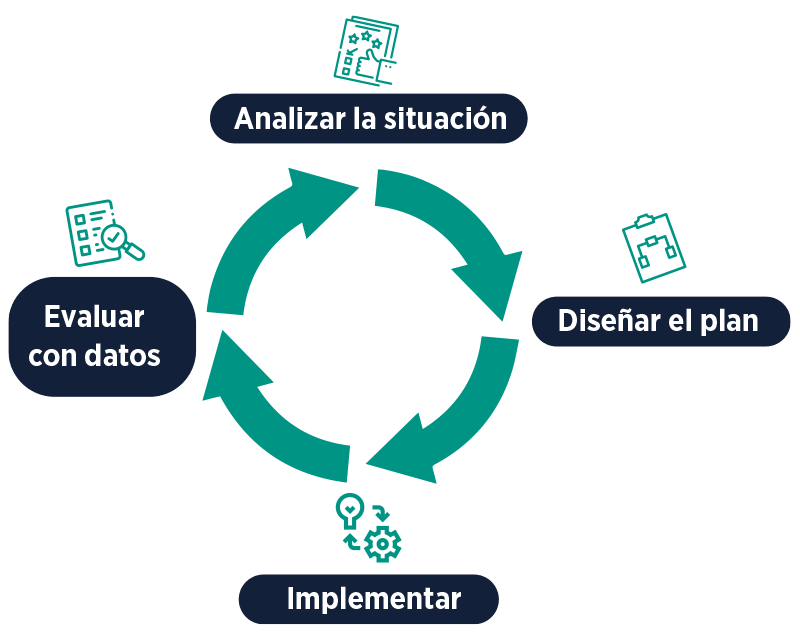
This is the cycle of continuous improvement that, repeating each season, closes the loop:
CONCLUSIONS
The key message is twofold:
Heat costs beyond the drop in production and fertility, as it affects more animals than it seems (dry cow and its offspring).
The animal-based monitoring turns direct information of the impact on the animal into actionable information at the group level, and that information is what allows investment in implementing or reinforcing cooling measures, where there is the most need and the greatest return.
Read more about MSD Animal Health

BIBLIOGRAPHY
Bar, D, Kaim , M., Flamenbaum, I., Hanochi, B. Toaff-Rosenstein, R.L. (2019). Technical note: Accelerometer-based recording of heavy breathing in lactating and dry cows as an automated measure of heat load. J. Dairy Sci. 102:3480–3486.
Chebel, R.C. (2026). Webinar online: Precision management in dairy cattle: Targeted reproductive strategies and monitoring of heat stress.
Chebel R,C., Gonzalez, T, Montevecchio, A.B., Klibs N, De Vries A, Bisnotto RS (2025) Targeted reproductive management for lactating Holstein cows: Economic return. Journal of Dairy Science 108: 1584-1601.
Chebel, RC, Mirzaei, A. Peixoto, PM, Factor, L., Montevecchio, AB, Bisinotto, RS, De Vries, A, Galvao, KN, Bilby TR, Jones K (2025) Targeted reproductive management for lactating Holstein cows: Reproductive and economic outcomes of Double-Ovsynch compared with a targeted approach based on resumption of estrus. J Dairy Sci 108(7):7144-7164.
Dahl, G.E. (2018). Impact and Mitigation of Heat Stress for Mastitis Control. Vet Clin North Am Food Anim Pract 34:473–478.
Dahl, G.E., Tao, S. and Laporta, J. (2020). Heat Stress Impacts Immune Status in Cows Across the Life Cycle. Front Vet Sci 7:116.
Davidson, B.D. et al. (2020). Distribution of Daily Time of Cows Between Intake, Rumination and Panting; Heat Lactation Programming in Late Gestation.
Fernández Rodríguez, A., Nuñez Casas, J., Elvira, L., Estellés, F., Villagrá, A. and Tejero, C. (2024). SenseHub & Heat Stress. World Buiatrics Congress (WBC) Cancun, Mexico.
Fernández Rodríguez, A., Nuñez Casas, J., Elvira, L., Estellés, F., Villagrá, A. and Tejero, C. (2024). Identification and Visualization of Heat Stress Effects by Productive Groups with SenseHub® Dairy. Oral Communication at the ANEMBE Congress.
Flamenbaum, I. and Galon, N. (2010). Management of heat stress to improve fertility in dairy cows in Israel. J Reprod Dev 56(Suppl):S36–S41.
Flamenbaum, I., Malekkhahi, M. and De Vries, A. Economic benefit of intensive cooling in high-production farms. Vaca Pinta 52: 130-134.
Guadagnin, A.R., Peñagaricano, F., Dahl, G.E. and Laporta, J. (2024). Programming effects of intrauterine hyperthermia on adrenal gland development. J Dairy Sci 107(8):6308–6321.
Islam, M.A. Lomax, S., Doughty, AK., Islam, M.R. and Clarck, C.E.E. (2020). Automated Monitoring of Panting for Feedlot Cattle: Sensor System Accuracy and Individual Variability. Animals: 10, 1518;
Laporta, J., Khatib, H., Zachut, M. (2024). Review: Phenotypic and molecular evidence of inter- and trans-generational effects of heat stress in livestock mammals and humans. Animals 18 Suppl 2:101121.
Ouellet, V, Laporta, J. Dahl GE (2020) Late gestation heat stress in dairy cows: Effects on dam and daughter. Theriogenology 150: 471-479.
Tao, S. and Dahl, G.E. (2013). Invited review: Heat stress effects during late gestation on dry cows and their calves. J Dairy Sci 96:4079–4093.
Toledo, L Cattaneo, L, Santos, JE, Dahl GE (2024) Birth season affects cow longevity. J.Dairy Sci 5:674–678.
Westhoff TA, Borchardt S, Mann S (2024) Invited review: Nutritional and management factors that influence colostrum production and composition in dairy cows. J. Dairy Sci. 107:4109–4128.