


 Latinoamérica
 Europa
From Milk to Meat: The Value of Industrial Crossbreeding in Holstein Cows


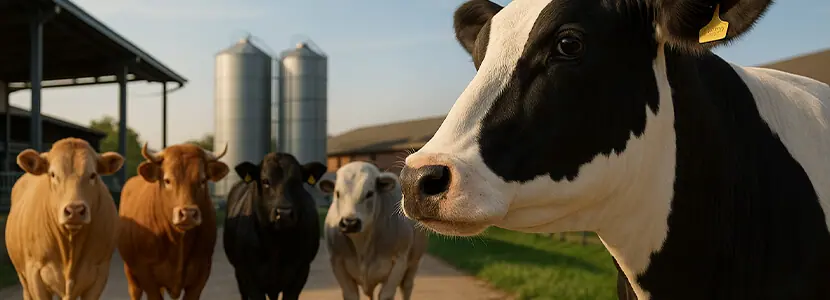





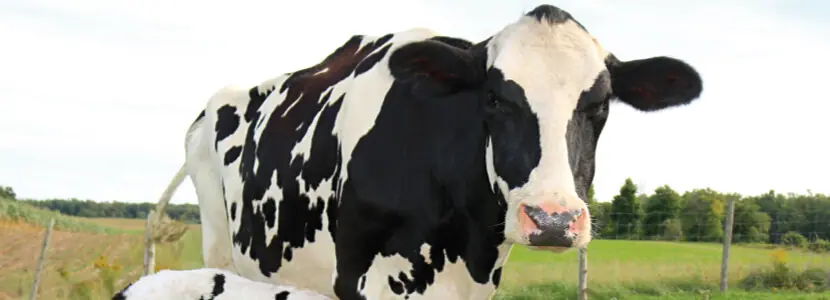
The industrial crossbreeding is a common practice in dairy cattle farms, consisting of the use of beef breed bull semen to inseminate Holstein cows, aiming for offspring with higher meat yield and, therefore, a higher market price.
 The profitability of dairy farms, especially regarding the value of meat, is based on crossing Holstein cows, which are highly productive in milk, with bulls of breeds specialized in meat production.
The scarce supply throughout Europe of animals destined for slaughter, along with the decrease in the census of suckler cows and stable consumption, has led to high prices, both in suckling and grazing calves as well as in fattened animals, which represents a significant source of income for dairy farms.
 These beef crossbreeds have increased in recent years due to genetic improvement programs based on the use of genomics in which a high percentage of cows (~30%) are inseminated with sexed semen, while in heifers these percentages are even higher.
EVOLUTION OF CENSUS, CONSUMPTION AND PRICES IN THE BEEF SECTOR
Decline of the census in Spain and the European Union
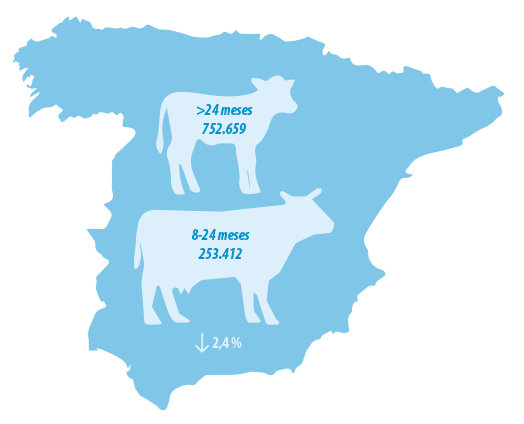 In the EU, the census of females over 24 months has decreased by 3.4% in dairy cows and by 2.2% in beef cows.
In Spain, according to the latest census data published in the Panel Situación Sector Lácteo de España, there are 752,659 females over 24 months and 253,412 heifers between 8 and 24 months, representing a decrease of 2.4% compared to last year.
In Spain there are: Total: 6.44 million (–0.3% compared to the previous year)<12 months: +2% (+46,251 animals)12–24 months: –0.9% (–8,444 animals)Nursing cows: –1.2% (–27,015 animals)Dairy cows: –2.4% (–18,331 animals)Others: –6.2% (–14,117 animals) Total: 6.44 million (–0.3% compared to the previous year)<12 months: +2% (+46,251 animals)12–24 months: –0.9% (–8,444 animals)Nursing cows: –1.2% (–27,015 animals)Dairy cows: –2.4% (–18,331 animals)Others: –6.2% (–14,117 animals) |
Stable consumption and slight increase in production
 According to data from the MAPA Food Consumption Panel, in 2024 the beef consumption in households reached 182,829 tons, representing a 1.5% increase compared to the previous year.
 The total beef production in Spain during 2024 experienced a 2.6% increase, with 2,466,064 heads slaughtered (0.7% more than the previous year).
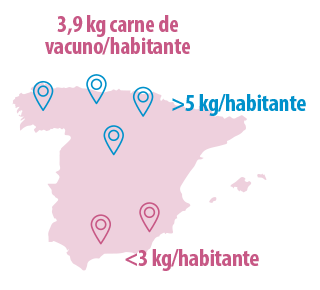 The per capita beef consumption in Spanish households stood at 3.9 kg per inhabitant.
Regions such as Basque Country, Asturias, Galicia, and Castile and León stood out with more than 5 kg per inhabitant, while Andalusia and Murcia recorded values below 3 kg per inhabitant.
Price increase and economic value of the sector
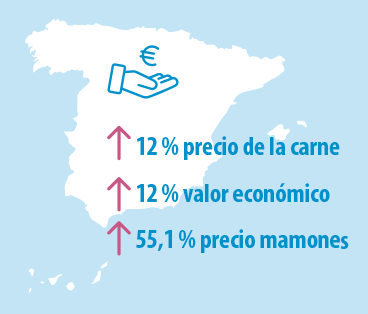 The price of meat in Spain recorded a year-on-year increase of 12%, approaching historic record levels.
The beef sector generated an economic value of 4,452 million euros in 2024, 12% more than the previous year.
As for the suckling calves, the price has increased by around 55.1% compared to the same week in 2024.
| Overall, the data reflects a reduction in the census of adult cows, both dairy and suckler, across Europe.
Despite this, the consumption of beef in Spain has remained steady and even increased by 1.5%, which, combined with the lower availability of animals, has driven a strong rise in prices. In this context, the value of calves has skyrocketed and the price of meat has reached levels close to historical records. |

HETEROSIS AND ITS UTILIZATION IN INDUSTRIAL CROSSBREEDING
 Industrial crossbreeding is nothing more than the mating of animals of different breeds with the aim of obtaining heterosis or hybrid vigor, which translates into offspring with better productive indices.
Heterosis is defined as the production superiority shown by crossbred animals compared to the average of the purebred animals of the participating breeds when raised contemporaneously and under the same production conditions.
This phenomenon has been exploited for decades in agriculture and in different animal species.
Industrial crossbreeding allows: Taking advantage of the effects of heterosis.Utilizing the existing genetic differences between pure breeds.Combining favorable characteristics in crossbred animals.Providing flexibility to production systems Taking advantage of the effects of heterosis.Utilizing the existing genetic differences between pure breeds.Combining favorable characteristics in crossbred animals.Providing flexibility to production systems |
Among the main productive aspects sought to be improved through industrial crossbreeding are carcass quality, weight gain, fertility, precocity, marbling, and tenderness.
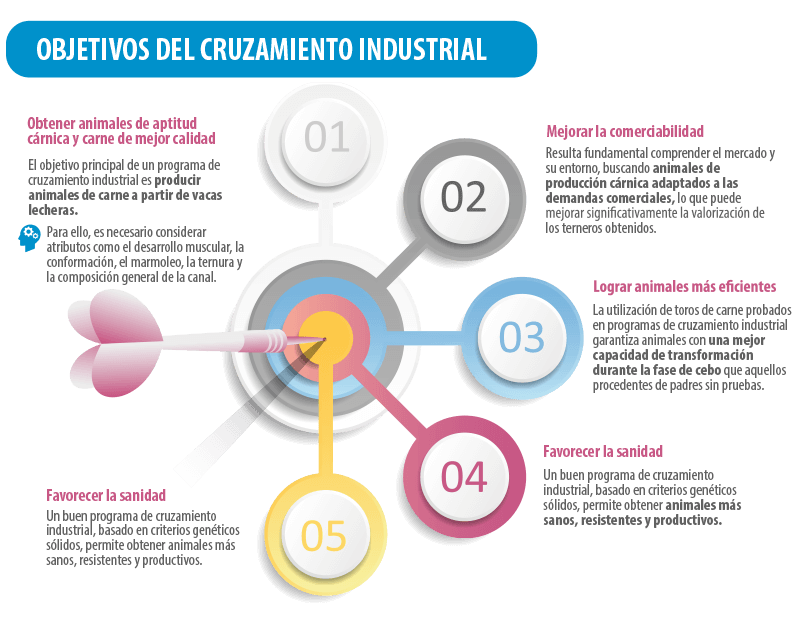

DEFINITION OF INDUSTRIAL CROSSBREEDING OBJECTIVES
When deciding what type of industrial crossbreeding to implement, it is essential to clearly establish the objectives and consider several factors that will influence the outcome.
 Farm Objectives
The main objective is to ensure the necessary rearing for replacement and the selection of the best dams, preferably through genomic testing. Additionally, the crossbreeding should contribute to generating an additional source of income through the sale of calves.
 Selection of Sires
The choice of sires is key to ensuring the quality of the offspring. Therefore, it is advisable to have advice on genetics and mating programs.
In this regard, the following aspects should be considered:
 Ease of calving: it is necessary to consider the genetic indices of the selected sires, as a poor choice can lead to difficult calvings and significant losses.
Fertility: bulls with good fertility should be used to avoid delays in successful insemination, as these translate into losses in milk yield.
Gestation duration: the average in pregnant Friesian cows with bulls of the same breed is 279.16 days.
However, when inseminated with bulls of other breeds, gestation can be prolonged, delaying the interval between calvings, extending lactation, and increasing the risk of dystocia due to the larger size of the offspring.
Adaptation to the environment: if it is decided to fatten the crossbred animals, it is important to assess the availability of forages and facilities that meet the requirements of Animal Welfare.
TYPES OF INDUSTRIAL CROSSBREEDING
Industrial crossbreeding has been established in Spain as a key tool to improve the profitability of dairy farms and take advantage of hybrid vigor.
 Depending on the production objectives and the breeds used, different types of crosses with native or beef-specialized breeds are distinguished.
Crosses with native breeds
This type of crossbreeding has been implemented for many years in Spain, and in each autonomous community, the use of local breeds adapted to their environment is promoted.
Crosses with Rubia Gallega, Asturiana de los Valles, Avileña, and other native breeds are common.
Breeders’ associations actively work on crossbreeding programs with Friesian cows, selecting the most suitable genetics to improve meat production and quality.
MAIN ADVANTAGES
Profitability and valorization: crossbred calves with native breeds reach a higher price in the feedlot market than purebred Friesian males.
Improvement of meat quality: the carcass shows better conformation, greater muscle development, and superior meat yield.
Hybrid vigor: the offspring shows greater vigor and overall performance.
Ease of calving and gestation duration: the genetic indices of the sires must be carefully evaluated to avoid difficult calvings or prolonged gestations.
Adaptation and hardiness: crosses with local breeds provide greater hardiness and adaptability to extensive management systems.
GENERAL CHARACTERISTICS OF THE OFFSPRING
 Conformation: improves significantly compared to pure Friesian, with greater muscle development and carcass yield.
Meat quality: meats from crosses with native breeds have a more intense flavor and a texture more appreciated by the consumer.
Crosses with specialized breeds
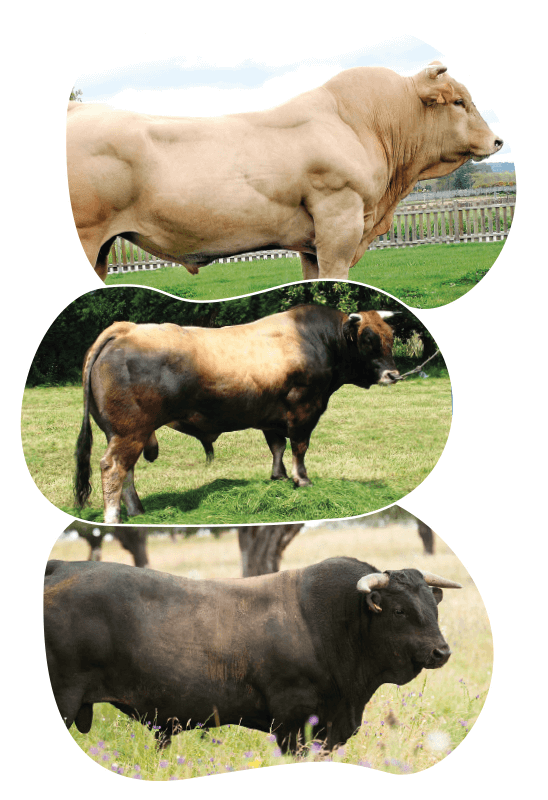
In addition to native breeds, in Spain, crossbreeding with high-performance international beef breeds is common, such as Limousin, Aberdeen Angus, and Belgian Blue, each with specific advantages.
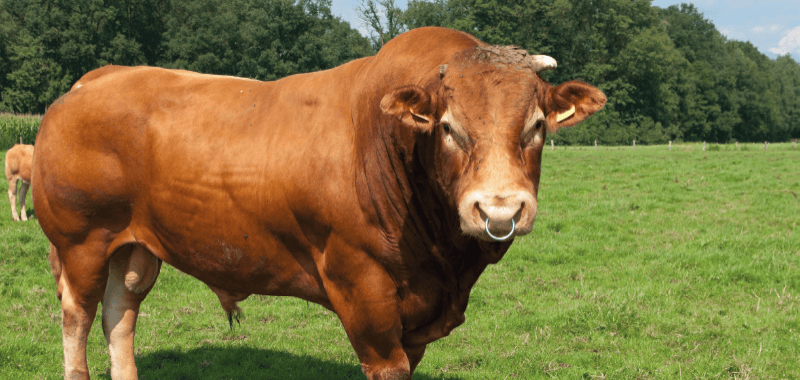
HOLSTEIN × LIMOUSIN CROSS
The Limousin breed, originating from the southwest of France, has been selected for its high carcass quality, excellent muscle development, and good conformation.
The cross with Holstein combines dairy productivity with the meat qualities and hybrid vigor characteristic of the Limousin.
OUTSTANDING FEATURES
Rapid growth: hybrids show great development potential and good feed conversion.
Adaptability: they inherit the rusticity of the Limousin, being resistant and suitable for different climates.
Hybrid vigor: improvement in performance, growth, and overall resistance.
Gestation duration: it may be slightly extended, although good genetic selection mitigates this effect.
Valuation of calves: greater growth potential and carcass yield, which increases their market value.
Carcass quality: lean meat, high quality, and excellent yield.
Ease of calving: the Limousin breed has been selected to produce calves with manageable birth weight, reducing dystocia.
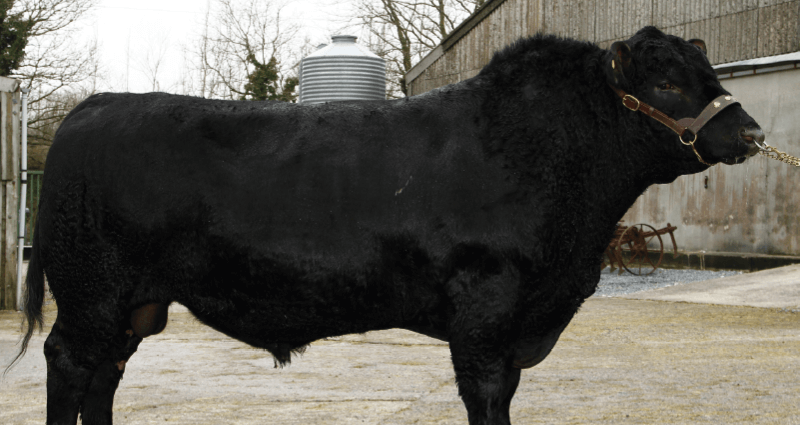
FRISIAN × ABERDEEN ANGUS CROSS
The Aberdeen Angus breed, originating from Scotland, is recognized for its adaptability, early maturity, and excellent meat quality.
The cross with Frisian combines the dairy capacity with the meat conformation of the Angus breed, resulting in animals of great commercial value.
OUTSTANDING CHARACTERISTICS
Growth and conformation: offspring larger than pure Angus, with good musculature and developed loin.
Meat quality: high-quality meat with excellent marbling and tenderness, fine and balanced intramuscular fat.
Fattening efficiency: better feed conversion, requiring less feed per kg of meat produced.
Ease of calving: easy calvings that reduce the need for veterinary assistance.
Gestation duration: slightly shorter, which allows cows to return to dairy production sooner and shortens the interval between calvings.
Maturity and marbling: Angus genetics provide early maturity and superior marbling, traits highly valued by the industry.
Resistance: improved tolerance to heat and parasites, as observed in other industrial crosses.
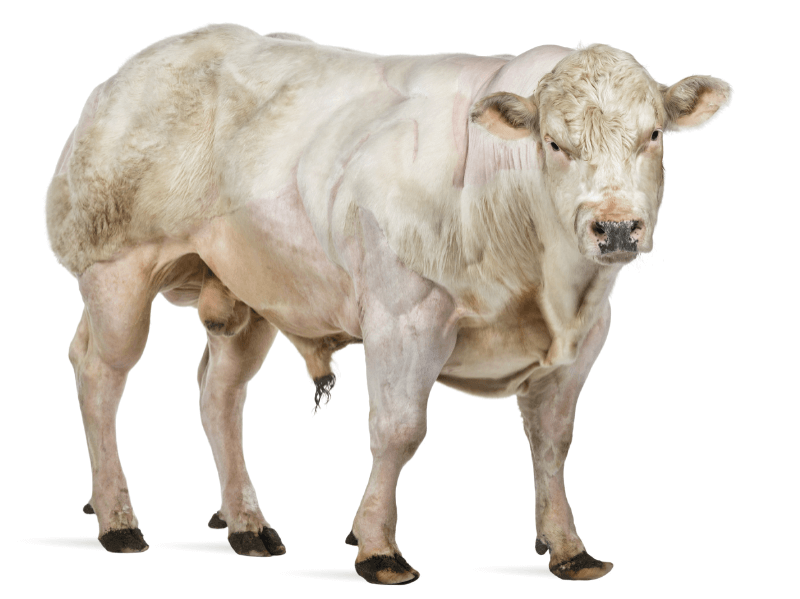
HOLSTEIN × BELGIAN BLUE CROSS
The Belgian Blue is characterized by its extreme musculature, a product of a natural mutation in the myostatin gene, which inhibits normal muscle development.
Its cross with Holstein cows aims to maximize carcass yield and meat quality, although it requires careful management of reproduction.
HIGHLIGHTED FEATURES
Muscle development: hybrids inherit the “double muscling” typical of the breed.
Rapid growth: they reach market weight in less time, improving efficiency and reducing emissions per animal.
Carcass yield: higher than other breeds, generating high economic value.
Meat quality: lean, tasty, and quick-cooking meat with low fat content.
Ease of calving: sires with good indices should be selected to avoid difficult calvings.
Profitability: the value of crossbred calves can triple that of conventional dairy calves.
Terminal cross: these animals are usually intended exclusively for slaughter, avoiding their reproductive use due to the risk of dystocia in future generations.

CONCLUSIONS
In short, implementing an industrial crossbreeding program requires planning, advice, and a solid genetic foundation.
It is essential to design a well-structured mating program, supported by genetic criteria and the use of genomics, selecting breeds that adapt both to the farm conditions and to the environment and market demands.
At the same time, ease of calving, gestation length, and fertility of the sires must be considered, as these are determining factors for reproductive and productive success.
Finally, analyzing the economic profitability and incorporating sustainability criteria in the selection are essential steps to ensure, in the long term, the efficiency and viability of the system.
You may be interested in: Feeding cows with autonomous carts