


 Latinoamérica
 Europa







The Biology of Ruminant Animals: Evolution, Digestive Physiology, Microbiome, and Advanced Clinical Practices
The development of modern livestock farming and the understanding of terrestrial ecosystems require an in-depth analysis of one of the most fascinating and biologically successful taxonomic groups on the planet: ruminant animals. The ability of these mammals to transform lignocellulosic biomass – compounds indigestible for the vast majority of higher vertebrates – into high biological value protein (meat and milk) has been a fundamental pillar for human civilization. In the context of contemporary veterinary medicine, animal science, and ecology, the study of ruminants transcends simple anatomy to delve into evolutionary genomics, symbiotic microbiology, and advanced clinical nutrition.
Phylogeny and Evolution: The Lineage of Artiodactyls
To understand the astonishing physiological machinery of a ruminant, it is imperative to analyze its position in the phylogenetic tree of life. Ruminants are classified within the order Artiodactyla (the artiodactyls), a group of ungulate mammals characterized by having limbs whose weight axis passes between the third and fourth digits, having an even number of digits and keratinized hooves. However, the true magnitude of their evolutionary heritage has been recently revealed through molecular systematics.
The Paradigm of the Cetruminantia Clade
For decades, classical taxonomy based its classifications on morphological similarities. However, high-performance genomic analyses have irrefutably demonstrated that the traditional Artiodactyla order is paraphyletic if cetaceans (whales, dolphins, and porpoises) are not included. This revelation has led to the consolidation of the Cetartiodactyla clade, within which an even more specific subgroup is inscribed: Cetruminantia.
The clade Cetruminantia groups the suborder Ruminantia and its sister group, Whippomorpha (or Cetancodontamorpha), which includes hippos and cetaceans. This implies, from an astonishing evolutionary perspective, that a dairy cow or an Iberian deer share a more recent common ancestor with a blue whale and a hippo than with other terrestrial ungulates like the horse, the tapir, or the pig.
Fossil records calibrated with molecular clocks indicate that the divergence of these lineages occurred approximately 60 million years ago, in the late Paleocene. The oldest fossil unequivocally recognized as a basal ruminant is the Amphitragulus, dated to about 56 million years ago (early Eocene), whose fragmentary remains have been excavated in sites in Europe and Asia. These archaic forms laid the morphological foundations for the later development of the multi-chambered stomach that would define the group’s success.
Taxonomic Classification of the Suborder Ruminantia
The immense biological diversity of the suborder Ruminantia is currently structured into two main infraorders, which document the evolutionary transition from small forest dwellers to the large herbivores of open plains.
Infraorder Tragulina
This infraorder represents the most basal and primitive branch of living ruminants. During the Eocene and Oligocene, this group experienced great diversification, represented by now-extinct families such as Gelocidae, Hypertragulidae, and Archaeomerycidae. Fossils from the family Gelocidae (like the genus Gelocus), which lived between 36 and 3.6 million years ago, show incipient adaptations in their elongated limbs for rapid locomotion in environments that were beginning to open towards grasslands, possessing fundamental intermediate anatomical traits.
Currently, the infraorder Tragulina is represented solely by the family Tragulidae (mouse deer or tragulids). These mammals, tiny in size and predominantly nocturnal in habits, inhabit the dense tropical forests of Central Africa and Southeast Asia. A defining characteristic is the total absence of cranial appendages (horns or antlers). Instead, males have developed elongated and sharp upper canines, resembling small fangs, used in ritual combat for territory and mating. Additionally, their digestive system, although ruminant, is somewhat less functionally specialized than that of more modern species.
Infraorder Pecora
The infraorder Pecora, whose name derives from the Latin pecus (horned cattle), encompasses the overwhelming majority of contemporary ruminants. The evolutionary explosion of pecorans coincides with the global expansion of grasslands and savannas during the Miocene. The adaptation to diets rich in lignified grasses required an extreme optimization of pre-gastric fermentation, coupled with the development of cranial appendages projected from the frontal bones, a trait that defines almost all of its families.
The adaptive radiation of the infraorder Pecora is organized into five living families, whose differences lie in the morphology of their cranial appendages and ecological adaptations:
| Taxonomic Family | Morphological Description and Cranial Appendages | Representative Species Examples |
| Bovidae |
It is the largest family (more than 135 species). They have true horns, consisting of a core of dermal bone covered by a sheath of hardened keratin. These horns do not branch, are never shed, and are usually present in both sexes, although they are more robust in males. |
Cows, bulls (Bos taurus), sheep (Ovis aries), goats (Capra hircus), buffalo, bison, and antelopes. |
| Cervidae |
Includes cervids. They develop antlers, which are purely bony structures, deciduous (shed and regenerate annually), and typically branched. During their growth, they are covered by a highly vascularized tissue called “velvet.” Generally, they are exclusive to males, with the notable exception of the reindeer or caribou. |
Red deer (Cervus elaphus), moose, roe deer, reindeer, and pudus. |
| Giraffidae |
Characterized by ossicones, permanent bony prominences that are covered with skin and hair continuous with the rest of the skull, present in both sexes. |
Giraffes and okapis. |
| Antilocapridae |
Endemic family of North America with a single surviving species. They have unique horns composed of a permanent bony core over which a keratinous sheath grows, which branches and is shed annually. |
Pronghorn (Antilocapra americana). |
| Moschidae |
Known as musk deer, they lack cranial appendages. Like the basal tragulids, males of this family have saber-shaped upper canines. |
Asian musk deer. |
This phylogenetic diversity demonstrates that rumination was not an evolutionary dead end, but rather a masterful metabolic innovation that allowed these animals to exploit ecological niches inaccessible to other mammals, ensuring their dominance in terrestrial landscapes.
Ruminants vs. Pseudoruminants: Evolutionary Convergence and Comparative Anatomy
In agronomic and popular literature, there is often confusion regarding certain ungulates that, although they chew the cud repeatedly, do not phylogenetically belong to the suborder Ruminantia. The paradigmatic case is the suborder Tylopoda, whose only living family is Camelidae, encompassing camels, dromedaries, llamas, alpacas, guanacos, and vicuñas.
Camelids are often functionally categorized as “pseudoruminants.” Although they have developed a pregastric fermentation mechanism to digest fibrous forages in extremely arid or high-altitude environments—a clear example of convergent evolution—their gastric anatomy differs significantly from the true ruminant model.
The critical structural divergence lies in the compartmentalization of the stomach. The digestive system of a true ruminant consists of four well-defined chambers (reticulum, rumen, omasum, and abomasum). In stark contrast, the digestive apparatus of camelid pseudoruminants consists of only three compartments. They lack a complete anatomical and functional analogue to the omasum (the book of ruminants), presenting instead a glandular transition region before the true stomach. Additionally, tylopods are differentiated by bearing their weight on plantar pads rather than strict keratinized hooves and by possessing a deeply split and mobile upper lip. This taxonomic separation is vital for the correct application of veterinary pharmacology and clinical nutrition.
The Functional Architecture of the Polygastric Digestive System
The morphological milestone that defines the group is the profound modification of their upper gastrointestinal tract. Ruminants do not possess “four independent stomachs,” but rather a single embryonic stomach that differentiates and expands into four specialized compartments. The first three (reticulum, rumen, and omasum) are known as forestomachs or prestomachs. They are lined by a stratified squamous aglandular epithelium and their function is the storage, physical maceration, microbial fermentation, and absorption of the resulting organic acids. The fourth compartment (abomasum) is the glandular or true stomach, where enzymatic digestion analogous to that of monogastric animals takes place.
1. The Reticulum (The Honeycomb)
The reticulum is the most cranial compartment, topographically positioned against the diaphragm muscle. Its internal mucous membrane is unmistakable, presenting interlaced crests that form polygonal cells, resembling a honeycomb. Functionally, the reticulum is a pumping engine and a precision sieve. Its strong bipolar contractions are responsible for the dynamics of pregastric fluids, classifying food by particle size and specific gravity.
Long and low-density forage particles, which still retain intact intracellular structures, float and are driven towards the dorsal sac of the rumen for further maceration, or are propelled back towards the cardia to initiate the rumination cycle. In contrast, dense and finely ground particles, along with the microorganism-laden fluid, sink and are pushed through the reticulo-omasal orifice towards the next digestive stages.
Given its declive location and its collecting function, the reticulum is the impact point of a severe surgical pathology: traumatic reticuloperitonitis. Ruminants, especially cattle, have non-selective feeding habits; they often ingest metallic foreign bodies (wires, nails). These objects fall into the reticulum, and the organ’s vigorous muscle contractions can drive the metal through the anterior reticular wall, perforating the diaphragm and infecting the adjacent peritoneal cavity or pericardial sac, which demands urgent veterinary intervention.
2. The Rumen (The Primary Fermentation Chamber)
The rumen is the largest compartment, an immense anaerobic fermentation chamber that virtually dominates the entire left half of the abdominal cavity. In an adult bovine, its volumetric capacity can range between 150 and over 200 liters, which provides a food retention time of several days, crucial for the degradation of complex polymers.
Internally, the rumen is segmented by thick transverse and longitudinal muscular pillars that define various sacs (dorsal, ventral, caudodorsal, and caudoventral). These pillars contract following a rhythmic cycle governed by the parasympathetic nervous system (vagus nerve), continuously mixing the digesta to inoculate the newly ingested forage with resident microorganisms and facilitate the contact of fermented substrates with the absorptive wall.
The rumen mucosa is densely lined with papillae, tongue-shaped projections that exponentially multiply the absorption surface. The ruminal epithelium, keratinized and devoid of mucus or enzyme-secreting glands, is highly vascularized. Its main role is not secretion, but the active and passive transfer of primary fermentation metabolites: volatile fatty acids (VFA), ammonia, and certain electrolytes directly into the portal bloodstream. The morphological development of these papillae is highly plastic and directly depends on the presence and concentration of VFAs (particularly butyric acid); energy-poor rations cause papillary atrophy, while grain-rich diets promote their hyperplasia.
3. The Omasum (The Book)
The fluidized and finely reduced food leaves the reticulum and enters the omasum, a spherical and hard organ located to the right of the sagittal plane. The internal architecture of the omasum is remarkable: its lumen is occupied by about a hundred wide and flat muscular laminae, hanging from the roof of the organ interspersed in different lengths, resembling the pages of a book.
The essential function of the omasum is to act as a press and a massive water absorption area. As the digesta flows between the laminae, which are covered by small keratinized papillae, the musculature of the organ contracts, squeezing the content. This process recovers water, sodium, phosphorus, and endogenous bicarbonate, in addition to absorbing a substantial amount (up to 20%) of the residual VFAs that escape the reticulo-ruminal system. This partial dehydration of the digesta is a critical step, as it prevents excessive dilution of the potent acids and enzymes secreted in the next compartment, ensuring the efficiency of chemical digestion.
4. The Abomasum (The True Stomach)
The fourth and final compartment, the abomasum, constitutes the true glandular stomach, structurally and physiologically homologous to the simple stomach of monogastric animals. The abomasal mucosa is divided into fundic and pyloric regions, secreting abundant hydrochloric acid (HCl) and primary proteolytic enzymes such as pepsinogen, which at low pH levels (usually between 2.0 and 2.5) autocatalytically cleaves to form active pepsin.
The abomasum of ruminants has a monumental task that sets it apart from that of other mammals: it must digest a constant and massive influx of ruminal microorganisms. All the bacterial, fungal, and protozoan biomass that multiplies in the rumen eventually flows into the abomasum. To assimilate this unicellular protein, the abomasal mucosa of ruminants secretes lysozyme in unusually high concentrations. This enzyme catalyzes the hydrolysis of the glycosidic bonds present in the robust peptidoglycan layer of bacterial cell walls, causing their lysis and releasing into the small intestine a torrent of amino acids of very high digestibility and excellent biological profile, vital for the animal’s growth and the synthesis of milk casein.
The Physiology of Rumination and Feeding Ecology
The intrinsic mechanism that gives this zoological group its name is rumination. The evolution of this behavior is framed in the “ecological theory of rumination.” In ancestral biomes plagued by large hypercarnivorous predators, the act of grazing represented the moment of greatest vulnerability for the herbivore, as it required exposure in open plains and keeping attention fixed on the ground. The evolutionary solution was to decouple the collection of forage from its thorough mastication.
Ruminants are capable of rapidly ingesting colossal volumes of coarse forage through quick apprehension with their muscular tongue, using the upper dental pad to tear the grass (lacking upper incisors) and swallowing it with minimal prior chewing. The voluminous rumen thus functions as a temporary storage silo. Once sated, the animal can retreat to a sheltered wooded area or an inaccessible cliff, lie down, and in a state of relative calm, process the collected fiber.
The physiological cycle of rumination is a marvel of neurobiology and gastrointestinal motility, consuming a significant percentage of the animal’s daily energy, comprising four highly coordinated sequential stages:
-
Regurgitation: It all begins with a tetanic and extra contraction of the pillars of the reticulum, which lifts the fibrous food mat located in the cardial area. Subsequently, the animal inhales with the glottis closed (inspiratory effort), generating a powerful negative intrathoracic pressure. This pressure difference opens the lower esophageal sphincter and actively sucks a bolus of semi-liquid digesta into the esophagus lumen, where rapid antiperistaltic waves propel it towards the buccal cavity.
-
Remastication: The excess liquid from the bolus is immediately swallowed, and the solid remainder is subjected to rhythmic, lateral, and thorough grinding by the hypsodont molars and premolars (high-crowned). This mechanical process breaks the plant tegument, drastically reduces the physical length of the forage particles, and increases the specific surface area exposed, an essential step for bacterial enzymes to anchor and ferment the cellulose.
-
Resalivation: In parallel to remastication, the ruminant’s enormous salivary glands inject copious amounts of saliva into the bolus. The magnitude of this process is astonishing: a high-producing dairy cattle can secrete between 150 and 200 liters of saliva daily. This salivary secretion is strongly alkaline and extremely rich in inorganic buffers, primarily bicarbonate and phosphate ions. The critical purpose of this salivation is not to provide digestive enzymes (adult ruminant saliva lacks significant amylase), but to provide a robust buffer system that will flow into the rumen to neutralize the continuous cascade of organic acids produced by the microbes, preventing a lethal drop in pH.
-
Redeglutition: Finally, the bolus, now turned into a finely emulsified and profusely buffered mixture, is swallowed again, integrating into the ruminal ecosystem to undergo the cellulolytic onslaught of the microbiota. Particles that are sufficiently fine will manage to escape the reticulum-rumen, while the more resistant ones will be regurgitated in successive cycles until they reach the critical threshold size.
The Invisible Ecosystem: The Microbiology of the Rumen
If the pregastric system is the industrial reactor, the microorganisms are the inexhaustible workforce. The ruminal microbiota forms an anaerobic ecosystem of astonishing biodiversity and unparalleled interactional complexity. Under normal physiological conditions, the interior of the rumen hosts gigantic populations of bacteria, archaea, protozoa, and fungi, interacting in cross-facilitation synergies and competitive competition. The mastery of this ecology is the foundation of all the nutrition literature available in cutting-edge repositories, where international firms (e.g. DSM-Firmenich) outline the six challenges of livestock sustainability.
1. Fibrolytic and Amylolytic Bacteria
Bacteria are, by overwhelming majority, the most metabolically active and important microorganisms, reaching astronomical population densities of 1x 10¹⁰ to 1x 10¹¹ cells per milliliter of ruminal fluid. The rise of next-generation sequencing (such as 16S rRNA metagenomic studies) has revealed that the dominant phyla are Bacteroidetes and Firmicutes, comprising a network of genera with highly specialized metabolisms.
The heart of herbivorous digestion rests on fibrolytic bacteria (cellulolytic and hemicellulolytic). Three species stand out as the pillars of this guild: Fibrobacter succinogenes, Ruminococcus flavefaciens and Ruminococcus albus. These prokaryotes have developed complex multi-enzymatic structures outside their membrane, called cellulosomes, which tenaciously anchor to the plant fiber and secrete an arsenal of cellulases and xylanases, breaking the tenacious β-1,4-glycosidic bonds of cellulose. At the same time, rations rich in grains stimulate the explosive growth of amylolytic bacteria, with the genus Prevotella leading the rapid degradation of starch, pectins, and protein nitrogen, playing a crucial role in high dairy cattle production.
2. The Ciliated Protozoa
Although their population density is several orders of magnitude lower than that of bacteria (1x 10⁵ to 1x 10⁶ cells per ml), their immense relative size makes them constitute almost 40-50% of the total microbial mass of the rumen. Morphologically classified into holotrichs and entodiniomorphs, protozoa exert fundamental ecological pressures. They act as apex predators of the microcosm, actively phagocytizing bacteria to meet their own nitrogen needs. This predation regulates bacterial overpopulation and slows down the rapid degradation of protein, ultimately reducing the loss of ammonia nitrogen. Additionally, protozoa avidly engulf free starch granules; by temporarily sequestering these rapidly fermentable sugars, they exert a vital stabilizing effect on ruminal pH, buffering the sharp acidity spikes following the intake of concentrated rations.
3. The Strict Anaerobic Fungi
Representing a biological rarity, rumen fungi (in concentrations of 1x 10³ to 1x 10⁴ zoospores per ml) lack mitochondria, relying entirely on anaerobic fermentation. Prominent genera such as Neocallimastix, Piromyces and Orpinomyces are the powerhouse of the system. After germinating, they deploy a dense network of mycelial rhizoids that penetrate deeply into the thick lignified cell walls (the woody stems of the forage), physically fragmenting them. This “biological fracking” breaks the lignin armor -which is refractory to digestion- and exposes new virgin intracellular surfaces, opening gaps through which fibrolytic bacteria can invade and colonize plant tissues, exponentially enhancing the digestibility of low-quality forages.
4. Methanogenic Archaea and Hydrogen Dynamics
The most critical functional group for the thermodynamics of the rumen ecosystem, and at the same time the most problematic from an environmental perspective, are the methanogenic archaea (such as Methanobrevibacter ruminantium, reaching populations of 1x 10⁸ to 1x 10⁹ cells/ml).
During the intensive fermentation of carbohydrates, bacteria and fungi produce intermediate metabolites, releasing massive amounts of molecular hydrogen (H2) as a byproduct. The laws of thermodynamics stipulate that if this gas were to accumulate in the rumen chamber, an inhibitory backpressure would be generated, blocking the action of bacterial dehydrogenases and completely collapsing the cellulose digestion process. Archaea act as an essential hydrogen sink. They couple in close syntrophy with bacteria and fungi, using molecular hydrogen to reduce the carbon dioxide (CO2) present, catalyzing the synthesis of methane (CH4). Methane is then expelled to the outside through the belching reflex, freeing the rumen from osmotic lethargy.
While this methanogenic pathway maintains biological homeostasis, it represents a substantial loss (up to 12%) of the gross energy ingested in the animal’s diet, and poses a serious ecological challenge due to the potent greenhouse effect of enteric emissions. Therefore, cutting-edge forums like rumiantes.com/tipos/articulos/ and international animal science entities (e.g. ANEMBE congresses) dedicate vast resources to researching molecular suppressors of methanogenesis. Innovative nutritional strategies, such as supplementation with chemical analogs like 3-nitrooxypropanol (3-NOP), which reversibly inhibits the enzyme methyl-coenzyme M reductase (MCR), or the incorporation of bioactive extracts from oceanic red macroalgae (Asparagopsis taxiformis), manage to divert that hydrogen flow in a controlled manner towards other energetically favorable pathways (mainly propionogenesis), reducing emissions without compromising digestive vigor.
Biochemistry of Fermentation: The Volatile Fatty Acids (VFA) Axis
The biochemical pinnacle of rumen physiology is the catabolism of dietary carbohydrates (cellulose, hemicellulose, pectins, starches, and soluble sugars) into simple compounds that the ruminant can utilize. The epithelium of ruminants, unlike that of other mammals, does not absorb appreciable amounts of glucose from the intestine, as almost all carbohydrates are pre-gastrically fermented.
The process occurs in three major biochemical stages:
-
Extracellular Fixation and Hydrolysis: Bacterial enzymes break down macromolecules releasing monosaccharides and disaccharides (hexoses and pentoses) in the rumen fluid.
-
Intracellular Glycolysis: These simple sugars are rapidly endocytosed by the microbial community and oxidized via the Embden-Meyerhof-Parnas pathway to pyruvate and phosphoenolpyruvate.
-
Terminal Fermentation: Due to the absence of oxygen to act as the final electron acceptor, pyruvate is processed by various cross-fermentation pathways, generating Volatile Fatty Acids (VFAs) or short-chain fatty acids (SCFAs) as carbon sinks.
The three primary VFAs routinely make up more than 95% of the acids generated, and dictate the productive profile, growth, and mammary gland performance of high-producing ruminants.
Descriptive Table of Volatile Fatty Acids (VFA) Profile
| Compound | % in Forage Diet (High in Fiber) | % in Fattening Diet (High in Starch) | Metabolic Pathway and Primary Function in the Host |
| Acetic Acid (Acetate, C2) | ~ 65 – 75 % | ~ 50 – 55 % |
The Lipogenic Precursor: It is absorbed directly through the rumen wall via facilitated diffusion (monocarboxylate transporters, MCT). It bypasses much of the hepatic processing and is distributed to peripheral tissues. It is used via Acetyl-CoA in the Krebs cycle to generate cellular ATP. Crucially, in dairy cows, acetate is the base molecule for de novo fatty acid synthesis in the udder, directly dictating the percentage of fat in milk. |
| Propionic Acid (Propionate, C3) | ~ 15 – 20 % | ~ 30 – 40 % |
The Glucogenic Precursor: Once absorbed, it is aggressively intercepted by the liver through the portal vein. It is the main, and practically the only, substrate that the ruminant uses for gluconeogenesis. This newly formed glucose is essential for the central nervous system, fetal development, and fundamentally, for lactose synthesis in the mammary gland, which is the main osmotic driver that draws water and determines the total volume of milk produced. |
| Butyric Acid (Butyrate, C4) | ~ 10 – 15 % | ~ 10 – 15 % |
The Epithelium Promoter (Ketogenic): It exhibits a unique physiology; the overwhelming majority of butyrate (up to 80%) is oxidized by the colonocytes of the rumen wall before reaching the bloodstream. During this epithelial transit, it is converted into ketone bodies such as β-hydroxybutyrate. It acts as the primary immediate energy source for the mucosa, actively stimulating proliferation, hyperplastic development of the papillae, and ensuring intestinal barrier function, combating severe issues of poor epithelial development. |
| Iso-acids (Isobutyric, isovaleric) | < 5 % | < 5 % |
Derived from the catabolism of branched-chain amino acids in the rumen. They are critical growth factors for the multiplication of specific bacterial strains and for optimizing the overall synthesis of microbial protein. |
The precise balance between the ketogenic-lipogenic pathway (acetate and butyrate) and the glucogenic pathway (propionate) defines the stability and purpose of the herd (meat production vs. specialized dairy production). The use of scientifically validated dietary strategies, such as supplementation with probiotic yeasts (which sequester oxygen) or phytogenic trace elements, aims to slightly shift fermentation towards increased propionate to maximize feed efficiency without altering rumen health.
Clinical Nutrition, Metabolic Pathologies, and Therapeutic Strategies
Domestication and modern animal husbandry have pushed the metabolism of ruminants to their biological limits, creating a paradigm where maximizing profitability often clashes with physiological homeostasis. The ruminal ecosystem, so vigorous against coarse forages, is notably fragile in the face of highly dense and rapidly fermentable diets.
Subacute Ruminal Acidosis (SARA) and Dysbiosis
The most insidious metabolic pathology of intensive livestock farming is Subacute Ruminal Acidosis. Its etiopathogenesis lies in the excess of non-structural carbohydrates (starches from high-grain diets). In the presence of excessively fermentable carbohydrates, rapidly proliferating bacterial species such as Streptococcus bovis trigger massive lactic acid production. Unlike the three standard VFAs (whose pKa is approximately 4.8), lactic acid is a substantially stronger acid (pKa of 3.86) and is absorbed by the rumen wall at an alarmingly slow rate.
This asymmetric accumulation surpasses the buffering capacity of saliva, and the rumen experiences a pH collapse, systematically falling below 5.5. This lethal acidity causes a drastic dysbiosis: it decimates the populations of primordial cellulolytic bacteria, annihilates stabilizing ciliated protozoa, and destroys the integrity of the tight junctions of the ruminal epithelium. The systemic result is a generalized inflammatory condition, lipopolysaccharide translocation (endotoxemia), milk fat depression syndrome, liver abscesses, and chronic laminitis (vascular lameness).
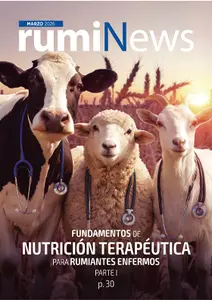
The control of this collapse requires bold therapeutic management. According to expert Saulo Teixeira Rodrigues de Almeida, in his seminal review on Fundamentals of therapeutic nutrition for sick ruminants, it is essential to reorient the ration towards the supply of physically effective fiber that reactivates the mechanoreception of the rumen and triggers the cycles of rumination and protective salivation again. The inclusion in the diet of ionophores (such as monensin) or selective inoculants can modify the bacterial profile mitigating lactic acid peaks and safeguarding homeostasis.
Thermoregulation and Productive Resilience to Heat Stress
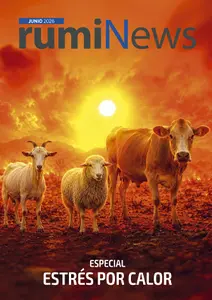
The global climate scenario adds a severe stressful burden on ruminants, whose own fermentation vat (the rumen) acts as a biological stove generating enormous amounts of dissipated endogenous heat. In the face of extreme heat episodes (heat waves), the ruminant adopts drastic compensatory strategies: drastically cutting voluntary dry matter intake (to cool the ruminal chamber), altering peripheral vascular flow, and exponentially increasing respiratory rate (panting).
This constant panting expels large amounts of CO2 alveolar, triggering respiratory alkalosis. To compensate for blood pH, the ruminant’s kidney aggressively secretes bicarbonate through urine. The tragic irony, as explained by Braulio De La Calle Campos and Yaniv Lavon in their treatises on productive resilience to heat waves, is that the animal quickly depletes the organic bicarbonate reserves it desperately needs in saliva to buffer the rumen, making it extremely susceptible to suffering from SARA even with balanced diets. The technical prescription involves the implementation of intensive environmental cooling (cross-ventilation systems and high-speed spraying) firmly supported by a redesign of the cation-anion of the diets, formulating hyper-concentrated supplements in microminerals, and adding protective lipotropic compounds against induced ketosis, such as choline and B-complex vitamins, which often represent “the missing ingredient for young ruminants”.
Challenges in Biosecurity and Global Herd Health
Pharmacological and vaccination prevention forms the central core of management in veterinary medicine. The pages of the specialized magazine rumiNews continuously echo the epidemic challenges. For example, devastating udder conditions such as mastitis, which drastically reduce milk health parameters, today have advanced therapeutic interventions like Lenzelta®, developed by Boehringer Ingelheim, which rewrites the preventive paradigms on the mammary gland.
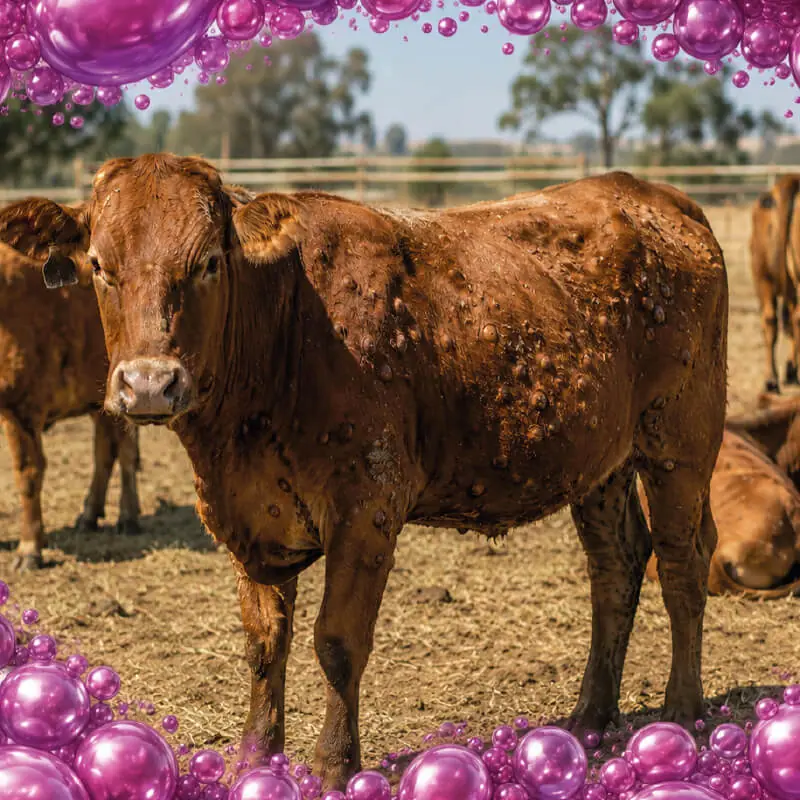
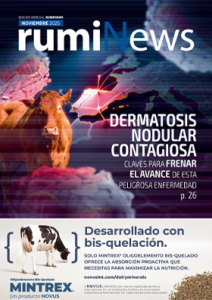
In turn, neonatal syndromes such as calf diarrhea – often exacerbated by cryptosporidiosis or rotavirus – threaten replacement rates, being combated from the first day of life with integrated prophylactic strategies and the administration of polyvalent mucosal vaccines, such as the updated presentations against the Bovine Respiratory Disease Complex (BRD) and associated viruses. Furthermore, the spread of emerging and vector-borne viral diseases, exhaustively analyzed by David García Páez in his work on Contagious nodular dermatitis in Spain, emphasizes the inexcusable message that preventive biosecurity of farms stands as the main barrier against the economic collapse of the primary sector.