


 Latinoamérica
 Europa
Assessment of the impact of mobile lamb slaughterhouses on animal welfare, meat quality, and carbon footprint












In Spain, as in other Western countries, the closure of small rural slaughterhouses has given way to large-capacity industrial facilities, which has significantly changed the context for the livestock sector.
 This transformation has generated various problems, especially in the case of small ruminants, such as sheep and goats, whose slaughter in industrial slaughterhouses entails multiple challenges, both logistical and related to animal welfare.
As an alternative to this issue, mobile slaughterhouse pilot projects have been developed in communities like Catalonia.
 These slaughterhouses allow the slaughter of animals directly on the farm, avoiding the stress derived from transport and improving their welfare.
Among the different steps of the pre-slaughter logistics chain, transport and pre-slaughter waiting represent the most stressful factors.
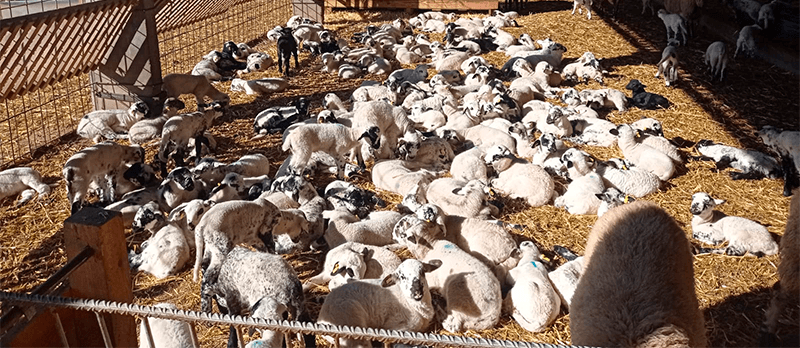
 Mobile slaughterhouses offer a viable alternative for small farms, allowing slaughter on the same farm and thus avoiding the stress associated with loading, transporting, and unloading the animals, as well as contact with unfamiliar individuals in industrial slaughterhouses. Mobile slaughterhouses offer a viable alternative for small farms, allowing slaughter on the same farm and thus avoiding the stress associated with loading, transporting, and unloading the animals, as well as contact with unfamiliar individuals in industrial slaughterhouses. |
ANIMAL WELFARE AND ENVIRONMENTAL SUSTAINABILITY: COMPARISON BETWEEN MOBILE AND CONVENTIONAL SLAUGHTERHOUSE
In this project, an observational study was conducted on stress-related behavior during the management of sheep before and during slaughter in a mobile slaughterhouse, compared to a conventional slaughterhouse.
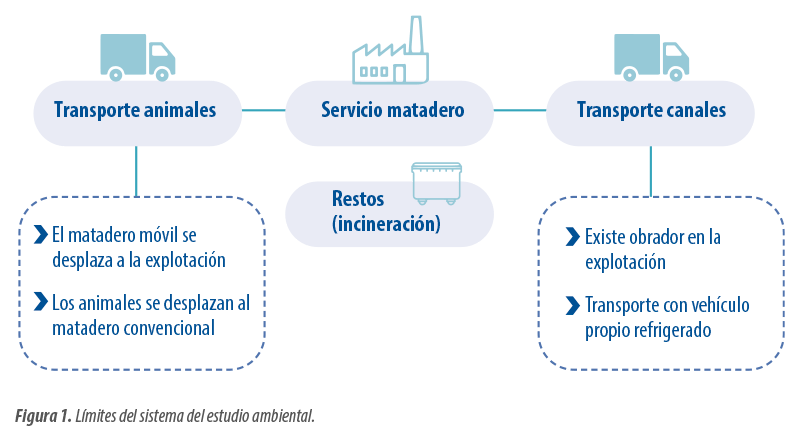
 Various phases of the slaughterhouse service life cycle were considered: the transport of the animal and carcasses, the mobile slaughterhouse service, as well as all infrastructure and energy consumption.
 Animal welfare
The behavior of the sheep before and during slaughter in a mobile slaughterhouse was analyzed, comparing it with a conventional slaughterhouse.
 The welfare assessment was conducted following protocols based on scientific reports from the EFSA and the guidelines for euthanasia and humane slaughter from the AVMA and the HSA (2016).
Three visits were conducted in which animal welfare was evaluated at two key moments:
During their stay in the pen and transport to the mobile slaughterhouse.
During the stunning and slaughter.
Additionally, blood samples were taken to measure cortisol levels and the measurement of the pH of the carcasses was performed at 45 minutes postmortem (in the L. thoracis muscle).
Environmental sustainability
To evaluate the environmental impact, the carbon footprint of the mobile slaughterhouse service was calculated and compared with that of a conventional slaughterhouse through Life Cycle Analysis (ISO 14040 and 14044).
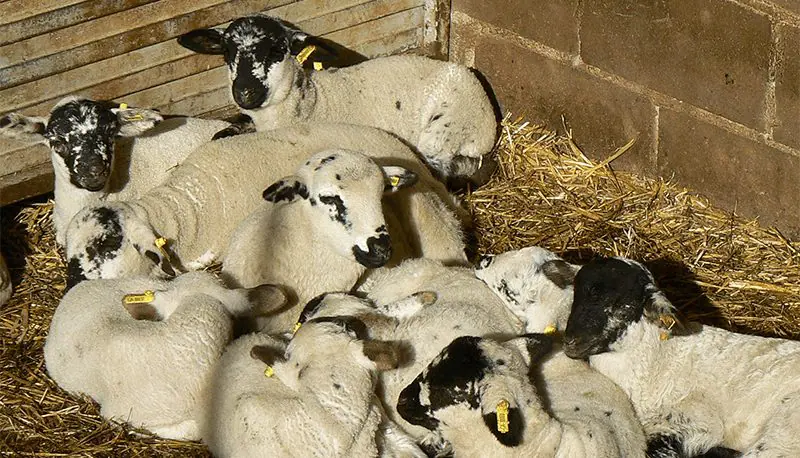
KEYS TO MAXIMIZING ANIMAL WELFARE BEFORE STUNNING AND SLAUGHTER
In the mobile slaughterhouse, several handling phases are reduced or eliminated, which significantly decreases stress:
Preparation, loading, transport, and unloading are not necessary, allowing the animals to remain in their usual environment until the time of slaughter.
Waiting in the pen and moving to the stunning area are minimal and the animals remain in their usual environment, thus reducing the animals’ anxiety.
 To further minimize stress, it is recommended to reduce waiting time in trailers or pens and only move the animals when the slaughter is ready to proceed.
 It is also essential to control the ambient temperature and ensure adequate space (especially when using a trailer for transport to the slaughter point).
 In case of transfer within the farm, the path must be free of obstacles and properly lit, avoiding any kind of mistreatment or use of techniques that cause pain.
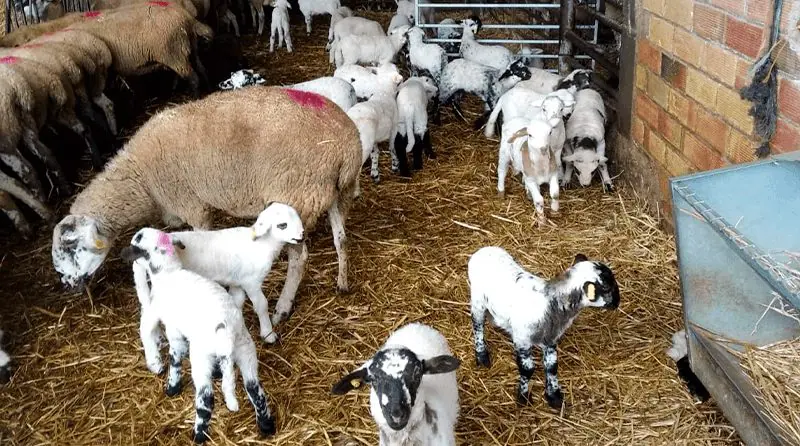
KEYS TO ENSURE ANIMAL WELFARE DURING STUNNING AND SLAUGHTER
Stunning was carried out using penetrating captive bolt, a method that ensures loss of consciousness without pain.
Although the mobile slaughterhouse has a head restraint as a mechanical system to restrict the movement of the lamb, on the days of the visit it was not used, as they were in a calm state and could be manually restrained before stunning.
Regulation (EC) 1099/2009 does not establish a maximum time between stunning and bleeding, but recommends that it be as brief as possible (considered acceptable up to a maximum of 60 seconds).
In the mobile slaughterhouse, this interval ranged from 33 to 57 seconds, with an average of 41 seconds and in none of the cases evaluated were indicators of consciousness observed during the three evaluation moments (after stunning, during bleeding, and during exsanguination).
IMPACT OF THE MOBILE SLAUGHTERHOUSE ON PHYSIOLOGICAL PARAMETERS: pH AND CORTISOL
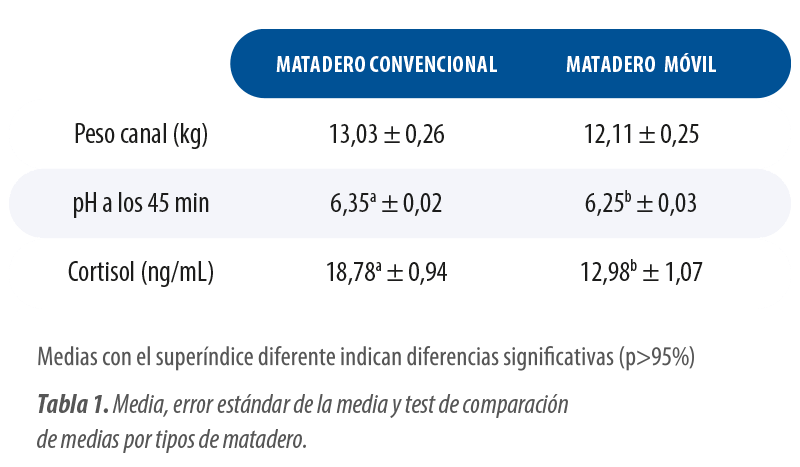
In Table 1 the pH values and cortisol levels in lambs slaughtered in the mobile and conventional slaughterhouses can be observed.
The pH and cortisol analyses revealed significant differences between the animals slaughtered in the mobile slaughterhouse and those in the conventional slaughterhouse.
The pH at 45 minutes postmortem was 6.25 in the mobile slaughterhouse, 0.1 points lower than that of the lambs slaughtered in the conventional slaughterhouse.
This difference is probably due to a lower accumulation of postmortem lactic acid in the animals slaughtered in the mobile slaughterhouse. This small variation is unlikely to have any impact on the final meat quality.
The cortisol levels were significantly lower in the animals slaughtered in the mobile slaughterhouse, confirming a lower level of pre-slaughter stress.
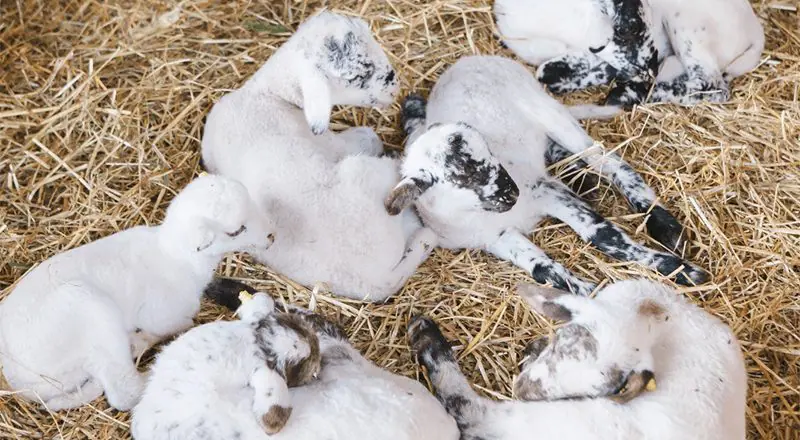
CARBON FOOTPRINT REDUCTION
 The study analyzed data from 9 farms in Catalonia, with 92 services and a total of 676 animals slaughtered.
The results showed that the mobile slaughterhouse allows for a 35% reduction in carbon footprint compared to conventional slaughterhouses.
Transport is the phase with the greatest environmental impact, representing around 80% of the total impact of the slaughterhouse service.
With the mobile slaughterhouse, this impact was reduced by approximately 40%, thanks to the reduction in distances between the farm and the reference conventional slaughterhouse.
CONCLUSIONS
 Slaughtering in the mobile slaughterhouse improves animal welfare by eliminating the stress of transport and handling in industrial slaughterhouses.
Additionally, the application of good management practices during the transfer of animals from the original pens to the mobile slaughterhouse can further reduce the risk of stress situations.
The process of stunning and slaughtering with a penetrating captive bolt ensures loss of consciousness without pain, ensuring that no animal regains consciousness before bleeding.
 A 35% reduction in the carbon footprint is achieved, mainly due to the decrease in emissions derived from transport. A 35% reduction in the carbon footprint is achieved, mainly due to the decrease in emissions derived from transport.
The welfare, quality, proximity, and carbon footprint reduction credentials provided by slaughtering in a mobile slaughterhouse can provide a marketing advantage in the commercialization of lamb meat. |
Results of the project ‘Trial, monitoring, and scalability of a mobile sheep and goat slaughterhouse as support for small farmers and generational renewal in the rural world’. Project funded through Operation 16.01.01 (Cooperation for innovation) through the Rural Development Program of Catalonia 2014-2020.
You may be interested in: Mobile slaughterhouses as an innovative tool to support small farms
BIBLIOGRAPHY
AVMA (American Veterinary Medical Association), 2016. AVMA Guidelines for the Humane Slaughter of Animals. 2016 Edition.
AVMA (American Veterinary Medical Association), 2020. AVMA Guidelines for the Euthanasia of Animals. 2020 Edition
EFSA AHAW Panel (EFSA Panel on Animal Health and Welfare), Nielsen SS, et.al., 2022. Scientific Opinion on the welfare of small ruminants during transport. EFSA Journal 2022;20(9):7404, 101 pp.
EFSA AHAW Panel (EFSA Panel on Animal Health and Welfare), Nielsen SS, et.al., 2021. Scientific Opinion on the welfare of sheep and goats at slaughter. EFSA Journal 2021;19(11):6882, 111 pp.
HSA (Humane Slaughter Association), 2016b. Captive-bolt stunning of livestock.