


 Latinoamérica
 Europa
Challenges and Opportunities of Animal Welfare in European Cattle







The World Organisation for Animal Health (WOAH) defines Animal Welfare as “the physical and mental state of an animal in relation to the conditions in which it lives and dies.”
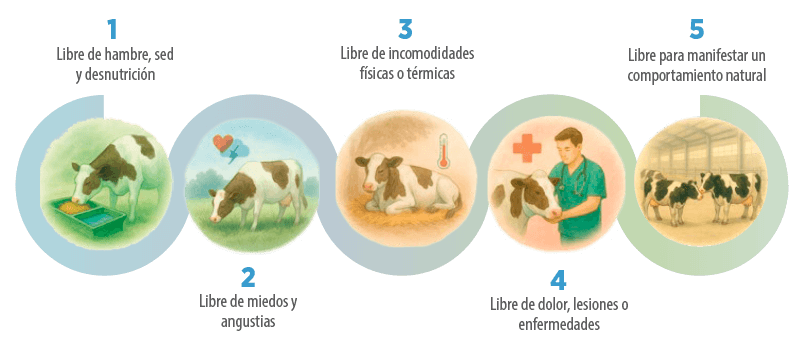
WOAH guidelines on terrestrial animal welfare are based on the “Five Freedoms”, enunciated in 1965 and widely accepted.
These freedoms reflect society’s expectations regarding the conditions to which animals under human care should be subjected:
 The EU has one of the most comprehensive and demanding regulatory frameworks in the world regarding Animal Welfare, covering farm animals during their breeding, transport, and slaughter.
This regulatory approach largely responds to the expectations of European consumers, who consider Animal Welfare a fundamental pillar and demand that animal-derived foods be produced respecting these principles.
 In this regard, surveys conducted by the European Commission confirm that it is a matter of great relevance to the public, demonstrating a high degree of commitment to animal welfare.
People around the world share a growing concern for nature, sustainability, and Animal Welfare.
The new consumer profile:
 Is informed.
Demands more ethical and sustainable products from companies.
 Is aware that, with small gestures in their daily life, they can play a key role in social changes.
This way of thinking directly influences what they consume and how they make their purchasing decisions.
ANIMAL WELFARE CERTIFICATION: GUARANTEE, VALUE, AND TRUST
The main advantages of having an Animal Welfare certification are:

Currently, there are various certifications or seals related to Animal Welfare, some of them linked to protected geographical indications, both in beef cattle and dairy production.
 All of them are based on the five freedoms defined in 1965 and follow the “Farm to Fork” approach established by the EU, evaluating all elements of the production chain.
The most significant certifications in the field of cattle are:
PAWS: Animal Welfare Certification by PROVACUNO 
PAWS (Provacuno Animal Welfare Spain) is a certification developed by PROVACUNO within the framework of the Animal Welfare Commitment B+, promoted by the Agri-food Interprofessional Organizations of the meat livestock sector.
 It allows the use of the B+ brand on products made in controlled industries and from animals raised on certified farms, which meet high standards of Animal Welfare and traceability.
 This certification has been developed based on scientific criteria, taking into account the current legislation and the principles established by the OIE.
The development of the regulation has involved the collaboration of the Spanish Society for Animal Protection (SEPROBA), certification experts and a multidisciplinary scientific committee.
 The objective of the PAWS regulation is to establish the tools necessary to ensure Animal Welfare at all stages of the production chain, with a continuous flow of information between all the links that comprise it, thus ensuring a high level of compliance. The objective of the PAWS regulation is to establish the tools necessary to ensure Animal Welfare at all stages of the production chain, with a continuous flow of information between all the links that comprise it, thus ensuring a high level of compliance.
|
The PAWS certification links Animal Welfare directly with the animal’s quality of life.
Thus, an animal enjoys good Animal Welfare if it is healthy, comfortable, well-fed, safe, and does not suffer unpleasant sensations such as pain, fear, or distress, and if it can express behaviors important for its good physical and mental state. To ensure this, it requires:
 Disease prevention measures
Adequate veterinary care
Appropriate shelter, management, and nutrition
Safe and stimulating environment
Proper handling, including humane slaughter
Animal Welfare on the Farm
 On farms, factors related to the environment, production, and behavior of the animals are evaluated through audits that verify both direct and indirect conditions that may affect them.
Animal Welfare in the CPS
 At the Processing Center – Slaughter (CPS), aspects such as the impact of transport, housing, and stunning and slaughter practices are assessed, in order to apply humane and technically effective management that minimizes stress and avoids any unnecessary suffering.
WELFAIR: Animal Welfare Certification based on Welfare Quality 
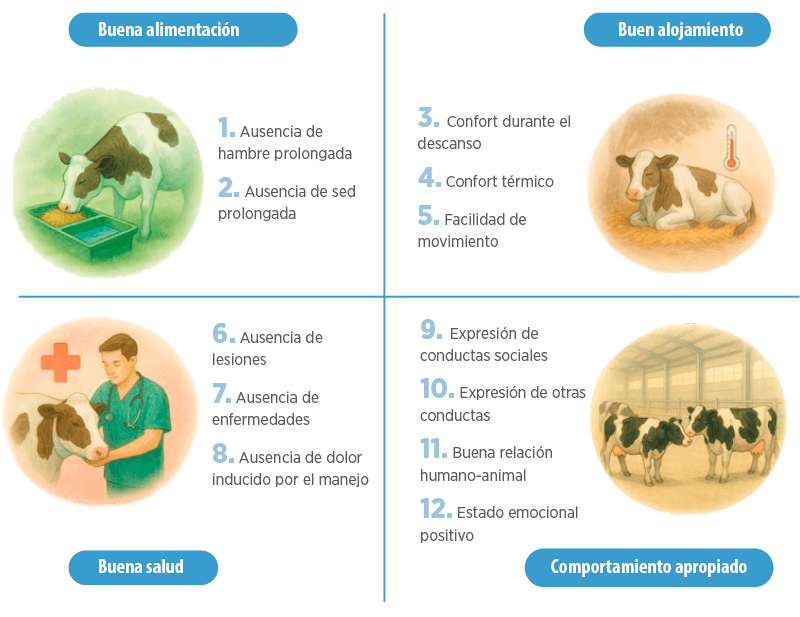
The Welfair animal welfare certification is an independent seal, approved by IRTA in collaboration with NEIKER, based on the European Welfare Quality benchmarks.
 It is designed to cover the entire food production chain, offering a comprehensive guarantee of animal welfare, from the farm to the final consumer.
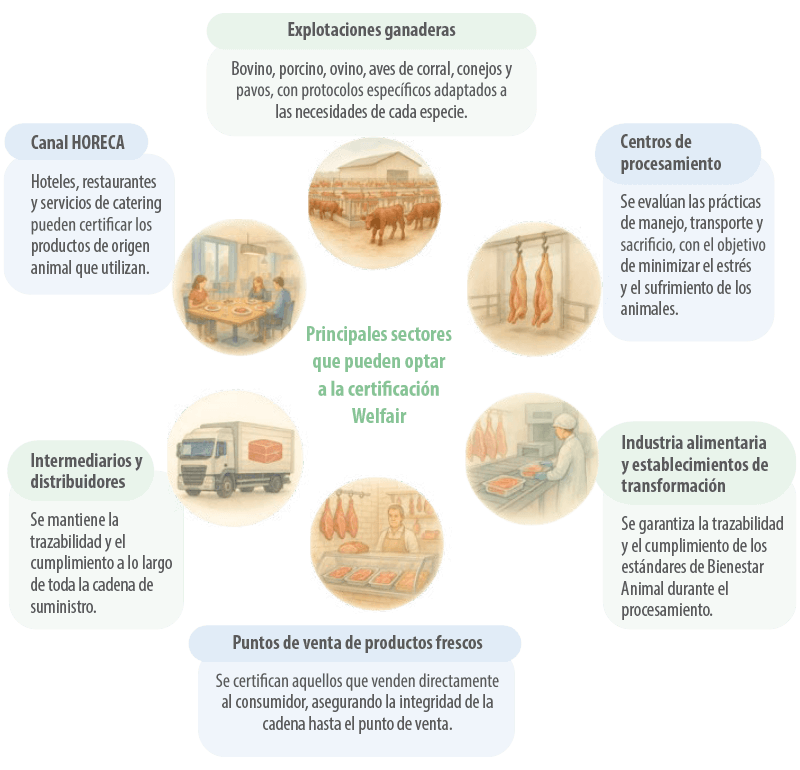
This model is structured around 4 basic principles and 12 criteria, which allow for an objective evaluation of Animal Welfare:

POSITIVE ANIMAL WELFARE
 Traditionally, Animal Welfare has focused on minimizing suffering, that is, on avoiding negative aspects. However, this view may be limited, as some emerging legislative trends point out.
The concept of “Positive Animal Welfare” goes a step further: in addition to covering basic needs, it seeks to promote pleasurable experiences throughout the animal’s life.
Its promotion should focus on the animal’s satisfaction, without losing sight of practical viability in the farm environment.
Positive animal welfare is defined as
“the flourishing of the animal through the experience of predominantly positive mental states and the development of competence and resilience”.
This approach opens the door to new, more comprehensive farming strategies and practices, which respond to the growing social demands for ethics and sustainability.
It can be measured through animal-centered indicators, based on observations of their behavior over different time scales, allowing for a global view of their quality of life.
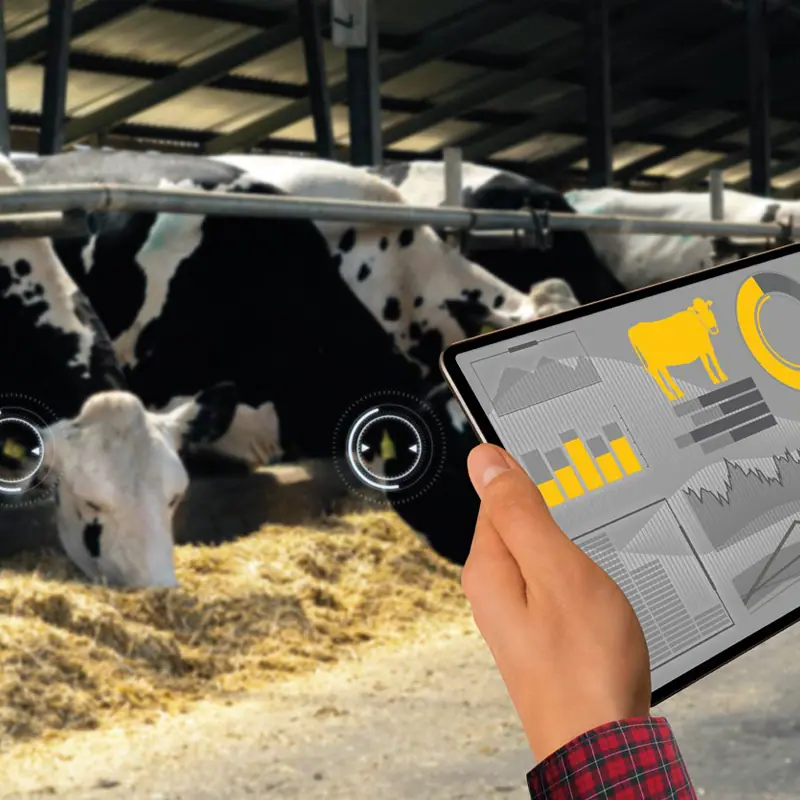
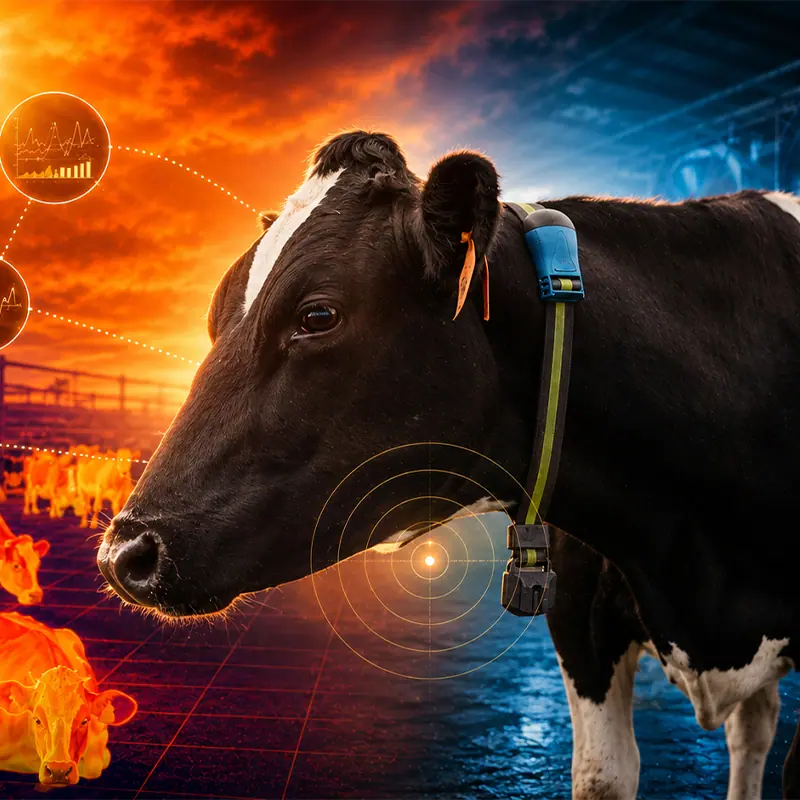
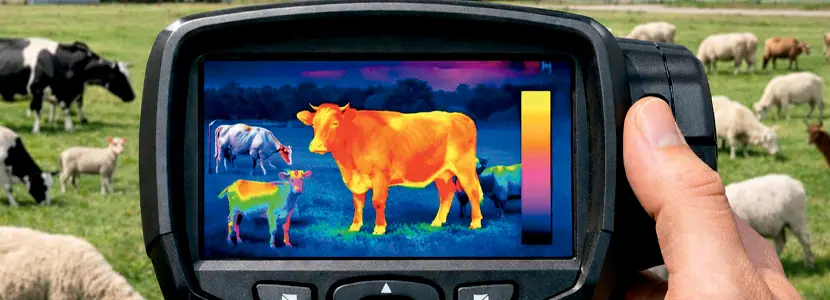
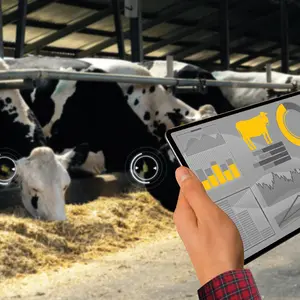
| Additionally, the use of technologies based on automated systems connected to the internet, capable of constantly and objectively monitoring the animals, along with the use of Artificial Intelligence:
|
NEW REGULATION ON ANIMAL WELFARE IN TRANSPORT
The new regulation on Animal Welfare during transport aims to improve the conditions in which animals are transported, incorporating measures to reduce their suffering.
Among the most notable proposals are:
Restrictions on travel duration
Limitations on loading density
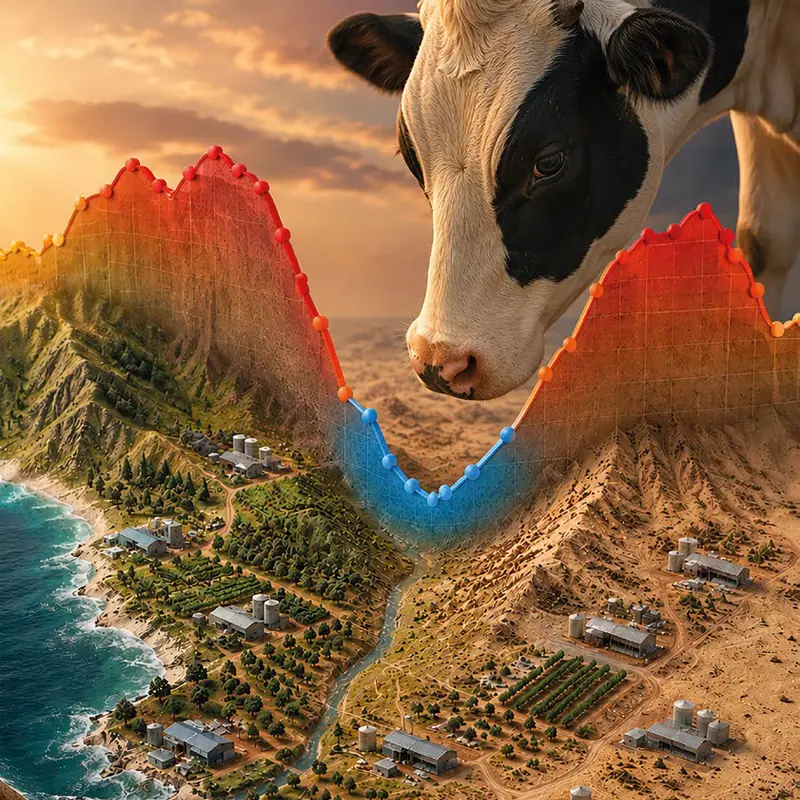
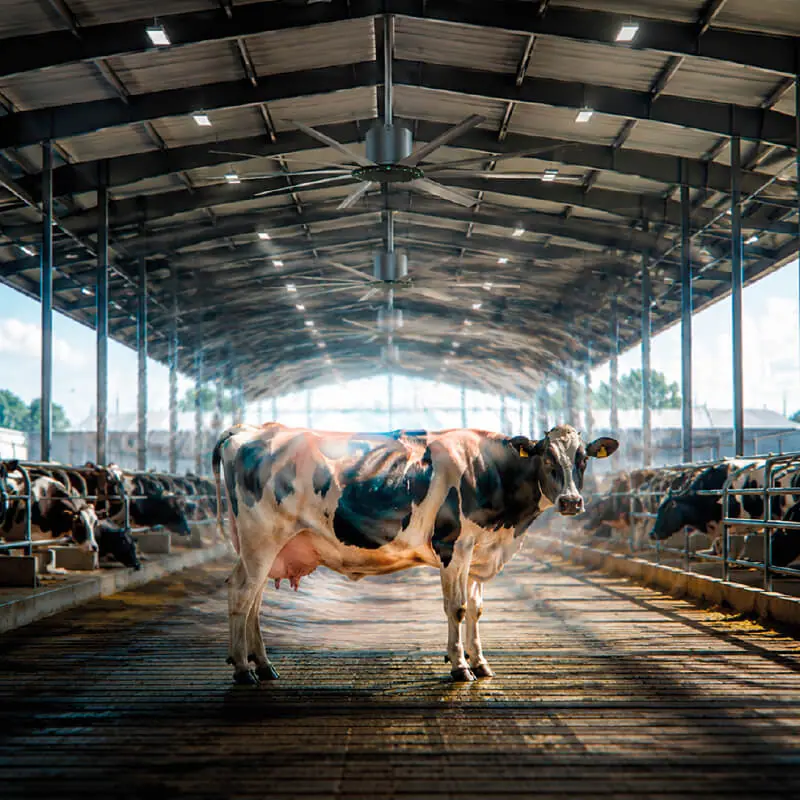
New conditions for transport in extreme temperatures.
| Specifically:
|
 It is proposed that movements at high temperatures can only be carried out at night.
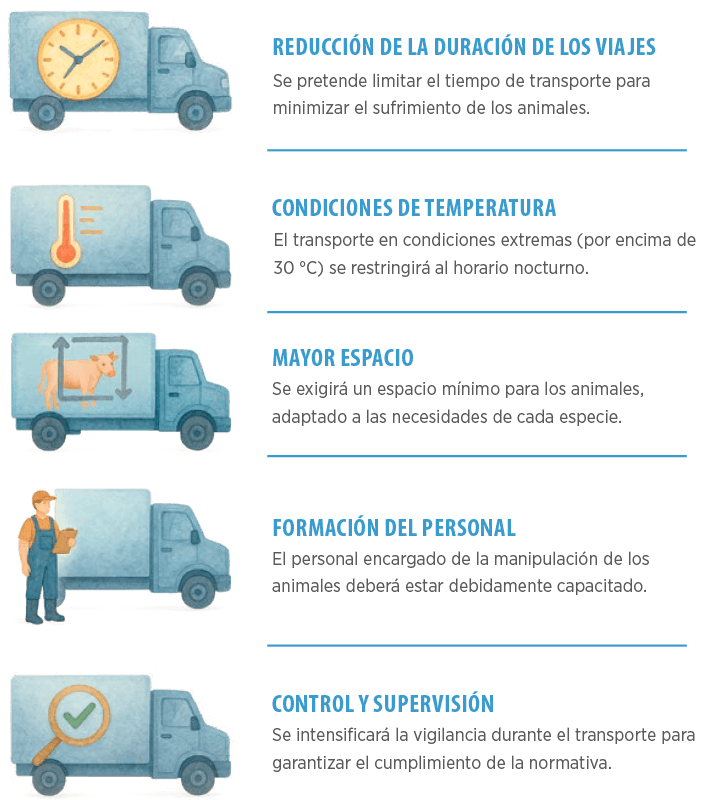
 Measures included in the regulation
The new regulation includes the following measures:
Impact of the new regulation
The implementation of these measures entails various implications for the farming and logistics sector. Below, the main effects that the new regulation could have are analyzed, both in economic and organizational terms, and the challenges that its compliance poses for the different stakeholders involved.
Increase in costs: these measures could significantly increase transportation costs.
According to estimates from transport associations, the 30% reduction in animal load would mean that where two trucks are currently used, three would be needed, with an estimated additional cost of €332/100 km for cattle and €214/100 km for sheep.
Impact on working conditions: the lower load density and reduced travel time may negatively affect the working conditions of transporters.
Limitation on the transport of suckling calves: restricting the journey to the equivalent of 18 hours of driving would prevent their transport from much of the European Union to Spain.
Short trips for lactating calves: limiting journeys to 8 hours requires, in some cases, the use of specially equipped vehicles to feed the animals halfway, which increases costs and complicates logistics.
Increase in minimum departure age: raising the departure age of lactating calves from dairy farms to 35 days would create organizational difficulties and increase production costs.
Modification of transport compartments: raising the height of the compartments could require the removal of a floor in the vehicles, which would result in a significant increase in costs.
Mandatory feeding stops: the requirement to stop for 3 hours during long journeys of lactating calves to provide milk could create health problems.
CONCLUSIONS
Animal welfare has become established as a fundamental pillar in the EU, not only from a regulatory perspective but also as a growing demand from society.
In this context, it is essential to move towards a positive Animal Welfare approach, which not only avoids suffering but also promotes the full well-being of animals. The integration of technological tools such as AI represents an opportunity to optimize the monitoring of Animal Welfare and facilitate decision-making.
To achieve this, it is crucial to certify all links in the production chain, thus ensuring traceability and compliance with welfare standards from the farm to the consumer.
This effort must be framed within a constantly evolving European legislative context, to which the sector must adapt swiftly.
The integration of technological tools such as AI represents an opportunity to optimize the monitoring of Animal Welfare and facilitate decision-making.
Equally important is the need to communicate clearly and transparently the progress made, building consumer trust and highlighting the sector’s commitment.
Finally, the continuous training of all personnel involved in the production chain is essential to ensure the correct application of Animal Welfare practices and consolidate a culture based on respect and continuous improvement.