


 Latinoamérica
 Europa
Reduction and Optimization of Antibiotic Use in Cattle






Reduction and Optimization of Antibiotic Use in Cattle
 A NEW LEGAL FRAMEWORK
On June 13, 2018, the Permanent Committee of Representatives of the European Union confirmed the agreement to develop a new regulation in the field of veterinary medicines, especially focused on the fight against antibiotic resistance.
This agreement also includes a clear commitment to innovation and the development of new antimicrobial therapies. Specifically, the agreement defines the objective of developing a new legal framework to limit the use of antibiotics in healthy animals, restricting their use as prophylactics and metaphylactics to the maximum.
A list of antibiotics will also be defined, which will become exclusively for human medicine use, many of which are currently frequently used in veterinary medicine.
All these measures are accompanied by an increase in the levels of surveillance and control of antibiotic use, resistance levels, and the regulation of imports from third countries, which must also comply with a new and stricter regulation.
Now that the agreement is confirmed, it must continue the ordinary procedures within the European Union and will be applicable by 2022 at the latest. In summary, we have, at most, 4 years to update our work system and adapt it to the new regulations.
We must also consider the pressure exerted by consumers who increasingly demand higher quality products committed to animal welfare and public health.
 Specifically, associated with the increase in the problem of antibiotic resistance, there is a growing demand for animal products produced without antibiotics or with responsible and optimal use of them.
 ANTIBIOTIC USE IN CATTLE IN SPAIN
The European report analyzing the consumption of antibiotics in animals and humans (JIACRA) includes data on their use in veterinary medicine in our country, as well as the resistance levels of bacteria isolated in slaughterhouses within monitoring programs (Figure 1).
Within this report, it is observed that the main antibiotics used in cattle are Beta-lactams (Penicillin, Ampicillin, Amoxicillin…) followed by Tetracyclines (Doxycycline, Tetracycline, Oxytetracycline…).
It is noteworthy that, unlike in swine, Polymyxins, especially Colistin, are hardly used. This fact is very favorable, as these antibiotics are considered of high importance in human medicine.
 However, efforts should be made to reduce the use of 3rd and 4th generation Cephalosporins, as well as Quinolones and Fluoroquinolones, as these antibiotics have been classified as Category 2.
Following the guidelines of the World Organisation for Animal Health, a categorization of the importance and use of antibiotics in veterinary medicine at the national level has been developed.
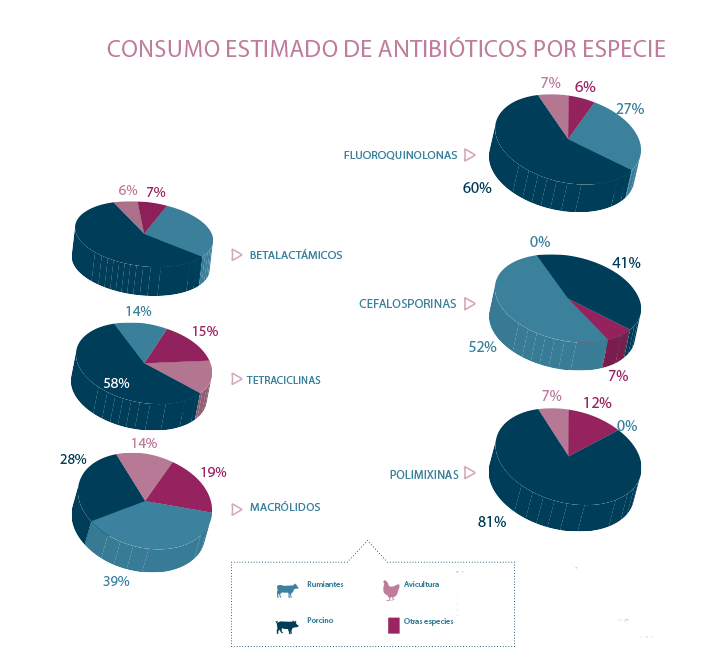
Figure 1. Estimated consumption by species of different families of antibiotics. *Adapted from the second JIACRA report.
 ANTIBIOTIC CATEGORIZATION
CATEGORY 1
Category 1 includes those antibiotics commonly used in veterinary medicine as a first choice, but with usage recommendations.
CATEGORY 2
Category 2 includes those antibiotics considered as second choice or last resort.
CATEGORY 3
Category 3 encompasses those antibiotics not approved for use in veterinary medicine.
CATEGORY 0
Category 0 includes those antibiotics not evaluated, as there are alternatives available to treat serious human diseases and they have lower risk of resistance emergence and spread.
Within each category, there are recommendations that must be considered when using these antibiotics (Table 1). In addition to following these recommendations, efforts should be made to prevent the emergence of diseases and to be aware of the available advances in this field.
Specifically, the analysis of biosecurity levels and the detection of critical points is key in preventing the emergence of diseases. On the other hand, the veterinarian must know and use the available tools that improve their general health and particularly their immune status.
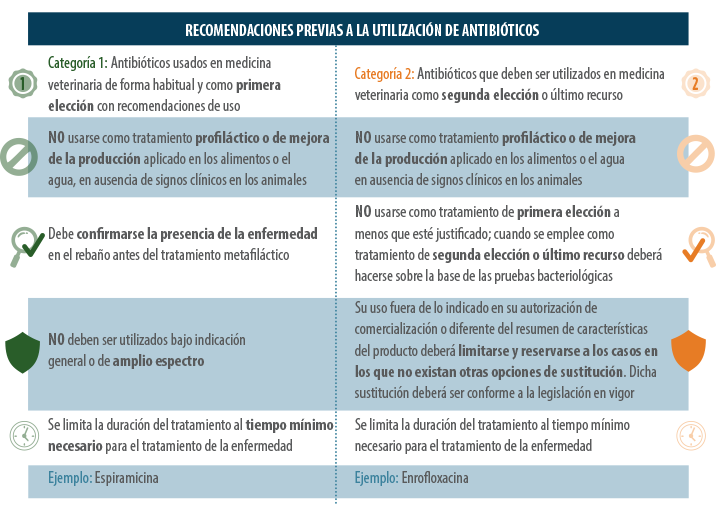
Table 1. Categorization of antibiotics in veterinary medicine according to the National Antibiotic Resistance Plan.
 BIOSECURITY
In recent years, the world of animal production has been focusing attention on biosecurity. The reduction of disease emergence risks is directly related to the reduction of antibiotic use.
 Before recommending measures to improve biosecurity, a personalized analysis of each farm should be conducted to detect its critical points.
A WELL-DESIGNED BIOSECURITY PLAN
We could make the mistake of applying general measures on farms that result in a waste of time and money and whose effect is not as expected, as critical and specific points in each of them can undermine any biosecurity plan, even if well designed.
When analyzing the biosecurity levels of a farm, both external and internal biosecurity should be considered.
EXTERNAL BIOSECURITY
 The analysis of the external biosecurity level will indicate the possibility of an infectious agent entering from outside the farm.
INTERNAL BIOSECURITY
 The analysis of the internal biosecurity level will indicate the possibility of existing pathogens on the farm and those that may enter spreading among the animals.
In addition to conducting this type of analysis, it is advisable to establish a routine of analysis and identification of pathogens causing diseases on our farm.
This will allow optimizing antibiotic use and employing new therapies that reduce the impact of an emerging disease in the herd, as well as preventing them in the future.
 ADVANCED THERAPIES
Currently, the veterinarian must know and manage a wide range of advanced therapies that allow reducing and optimizing the use of antibiotics.
 IMMUNOTHERAPY
Highlight the relevance of immunotherapy, which was already classified in 2013 as a key tool for treating infectious diseases.
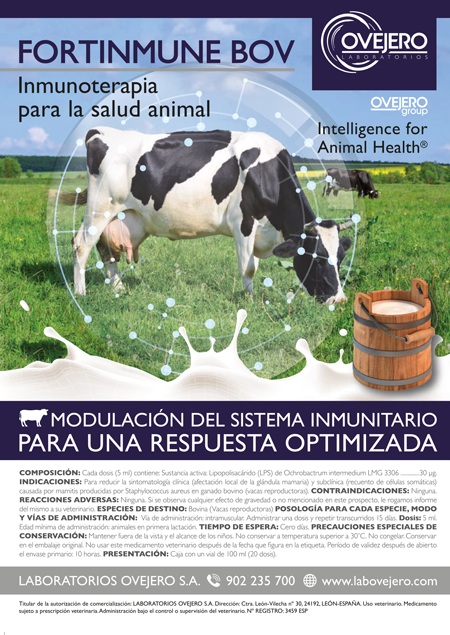
A reference in this field is the results obtained by the application of Fortinmune Bov, which shows great effectiveness in the reduction of mastitis symptoms and in the somatic cell count.
 The protocolized application of this product is allowing many farms to achieve their productive goals and favorably impact the way antimicrobial substances are used.
 POLYVITAMIN SUPPLEMENTS
The use of polyvitamin supplements that improve the general health status of our animals should also be considered.
Polyvitamin supplements enhance the response against:
 Stress
 Pathogens
 Convalescence periods
Among the market options, Polyfil from Laboratorios Ovejero is a complete product, easy to administer and with low economic impact for the owner, recommended for application at those critical points the animal faces throughout its productive cycle.
DIARRHEA CONTROL
As mentioned in the previous section, internal biosecurity is fundamental when controlling the spread of pathogens within our farm.
One of the main problems that can cause outbreaks in cattle farms is diarrhea.
The products from the Diar Frivit line allow us to control and restore normal digestive function quickly and effectively.
The combination of a rapid diagnosis, with highly efficient products in diarrhea control and internal biosecurity measures, will allow us to control the emergence of possible outbreaks on our farm and thus optimize and reduce the use of antibiotics.
Having a personalized program that includes critical points in biosecurity, a responsible use of antibiotics, and the use of advanced therapies, such as immunotherapy, will allow the producer to reduce the emergence of infectious diseases and, therefore, increase economic returns and animal welfare.