


 Latinoamérica
 Europa
Ten Commandments for Livestock Transport During Heatwaves


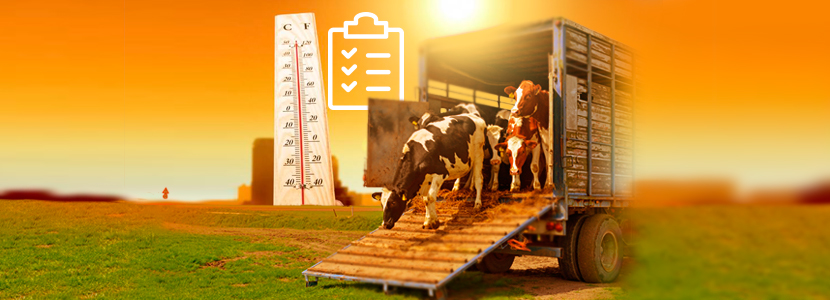






Recent heatwaves have put farmers and veterinarians on alert, recommending special precautionary measures during animal transport to minimize the harmful effects of high temperatures (Ten Commandments).
Exposure of livestock to high temperatures and humidity during transport poses a significant risk to their welfare, negatively impacting their health and production levels.
When planning animal transport, it is essential to consider the forecasted temperature during the journey and, if high temperatures are expected, contingency measures should be implemented to prevent animal suffering.
What can we do to minimize the effects of heat during animal transport?
Below we will see a series of simple and low-cost measures (Ten Commandments) that will improve animal transport conditions during heatwaves:
1.- PROPER MANAGEMENT
Handle the animals as little as possible, treating them carefully to avoid distress during loading, transport, and unloading.
2.- REGULAR INSPECTION
Check the animals frequently to detect signs of heat stress:
- Excessive panting with an open mouth
- Increased respiratory rate
- Sweating
3.- ANIMAL DENSITY
- Reduce animal density by at least 30%, especially in the hottest parts of the vehicle (front, near the cabin, and upper area).
- Ensure there is enough space for all animals to regulate their body temperature, as they tend to overheat if too close together.
4.- VEHICLE HEIGHT
It is advisable to maximize the internal height above the animals to improve air circulation inside the vehicle.
5.- VEHICLE COOLING
In extreme cases, and always preserving the vehicle’s biosecurity, it can be useful to spray it with clean water to cool it down.
6.- TRANSPORT TIME
Whenever possible, transport the animals at night, even if the journey is short, to avoid the hottest hours of the day.
7.- VEHICLE POSITION
When parking the vehicle, it should be left in the shade and positioned to allow air circulation.
8.- WATER AVAILABILITY
- It is essential that vehicles are equipped with systems to provide drinking water and that animals have clean water available.
- There should be enough water for all animals, according to their age and species.
9.- VEHICLE COLOR
Transporting animals in a light-colored vehicle will help reflect more heat, preventing the interior from overheating and improving the ventilation system’s performance.
10.- PLANNING
Good route planning often allows avoiding delays associated with roadworks, traffic detours, or border crossings.
This would be the Ten Commandments for livestock transport during heatwaves.