


 Latinoamérica
 Europa
5 Steps for Better Control of Cryptosporidiosis



 Polígono Industrial El Montalvo C/ Zeppelin, 6 – Parcela 38 Carbajosa de La Sagrada Salamanca 37008
  +(34) 923 190 345
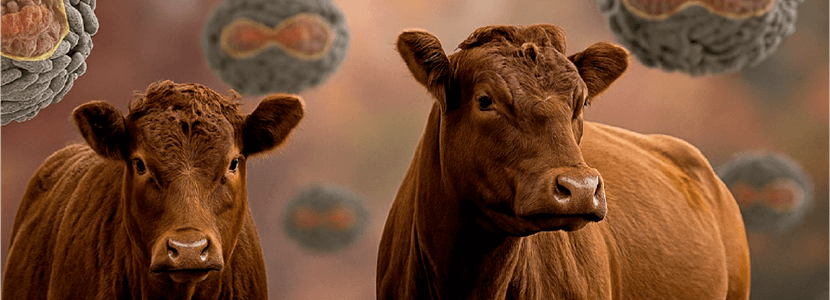
 Cryptosporidium parvum is one of the main causes of diarrhea in nursing calves, both in pure infections and in combination with other agents.
Eliminating cryptosporidiosis from the farm is a complex task due to, among other factors:
 The low number of oocysts needed to cause infection in relation to the millions excreted in the feces of infected calves.
Their high environmental resistance and resistance to disinfectants.
However, if the number of oocysts of C. parvum ingested by the calf is reduced and the age of infection is delayed, it will decrease:
 The percentage of calves with diarrhea.
The severity of the symptoms.
The excretion of oocysts.
(Zambriski et al., 2013)
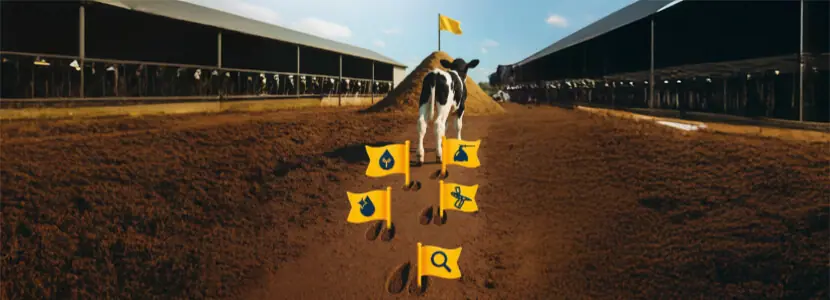
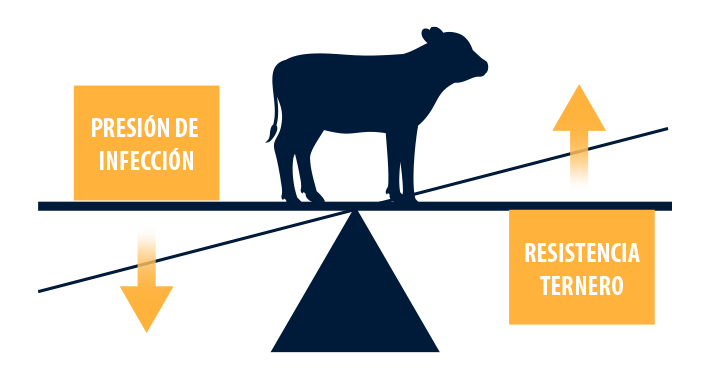 To achieve control of cryptosporidiosis, a FIVE-STEP PLAN can be implemented to identify areas that require attention and establish an action plan that helps reduce infection pressure and maximize calf resistance.
 STEP 1. DIAGNOSIS
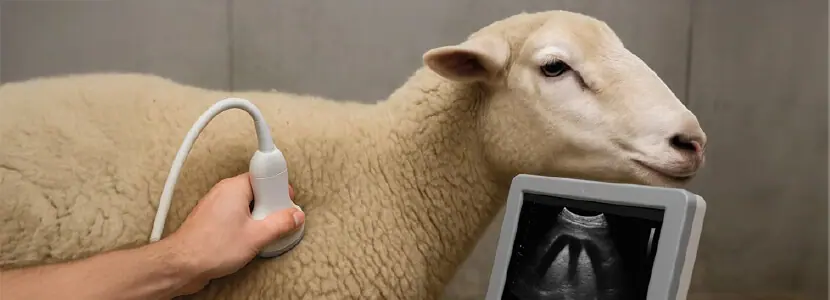
Identifying the agent/s responsible for the diarrhea and the involvement of cryptosporidium is crucial when implementing the most appropriate control strategies.
To reach an adequate diagnosis, it is advisable to complement two types of diagnosis
ETIOLOGICAL DIAGNOSIS
A sampling of feces from affected animals should be conducted for analysis:
 A. The use of field diarrhea kits, which, being for on-farm use, are simple, fast, and allow the identification of the presence of C. parvum, rotavirus, coronavirus, and/or E. coli K99.
B. Sending to the laboratory for analysis, which will be key when we suspect the involvement of other agents, such as Salmonella and coccidia, that are not included in these kits, or when an antibiogram is required.
EPIDEMIOLOGICAL DIAGNOSIS
There may be animals that excrete enteropathogens like C. parvum asymptomatically (Diaz et al., 2021).
Therefore, when interpreting the etiological result, it is necessary to evaluate whether the clinical picture and the epidemiological information of the case are compatible:
 Age of onset of diarrhea.
Characteristics of diarrhea.
Percentage of calves with diarrhea, mortality rate, etc.

 STEP 2. ENVIRONMENT AND MANAGEMENT
Cryptosporidia are very resistant in the environment, especially in suitable humidity conditions, and are also resistant to many commonly used disinfectants, so among the disinfection recommendations are:
 Physical methods: drying, solar radiation, composting, flaming.
Chemical methods: hydrogen peroxide, quaternary ammonium compounds, or quicklime.
Sources of infection
 At the environmental level, the calf can come into contact with the parasite from birth in the calving pen itself, as the mothers can shed the parasite around calving.
 The main source of oocysts will be in calves with diarrhea, so it is advisable to separate sick calves and/or attend to them last when they are housed individually. The main source of oocysts will be in calves with diarrhea, so it is advisable to separate sick calves and/or attend to them last when they are housed individually. |
 Apparently healthy older calves can also excrete oocysts that infect younger ones. Therefore, it is advised to avoid contact between calves of different ages.
 It is recommended to leave biosecurity gaps in the facilities before introducing new calves.
 Another possible point of contamination is the farm’s water sources if there is no adequate treatment (untreated well water, storage ponds, manure runoff, or failures in disinfection treatments).
Eliminating Cryptosporidium from water is quite a challenge due to the high resistance of its oocysts to conventional disinfectants like chlorine. However, there are some more effective physical methods to eliminate it:
 Boiling.
Conventional or advanced filtration with diatomaceous earth or membrane filters (nanofiltration with pores of ≤1 micron).
UV radiation.
Ozonation.
Another point to review is the cleaning protocols for feeding equipment:
Use of alkaline-chlorinated solution and disinfection.
Allow materials to dry between uses or, if sharing buckets or bottles, always feed in increasing order of age.

 STEP 3. VACCINATION
Vaccination against Rota-Corona-Coli has played a crucial role in the prevention of neonatal diarrhea.
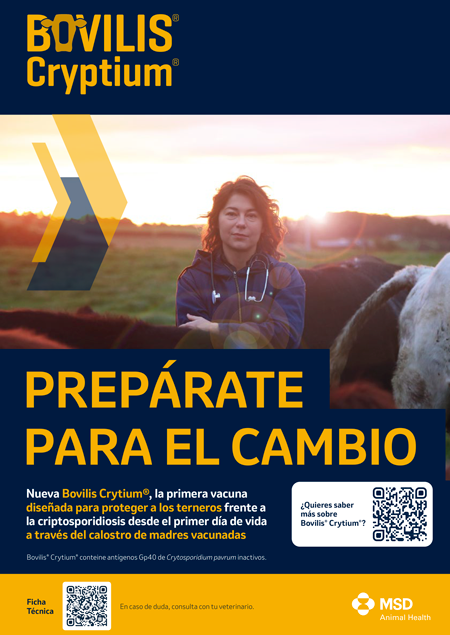
We now also have an innovative Bovilis Cryptium® vaccine, which allows protection of calves against cryptosporidiosis by inducing the production of antibodies in the colostrum and transition milk of vaccinated mothers, which will act against the Gp40 present in at least 4 stages of the parasite:
Hindering the infection of intestinal cells and their replication.
Minimizing the severity and duration of the clinical condition.
(Timmermans et al., 2023)

For the vaccine to exert its protective role, there are 2 fundamental aspects to consider:
 1. Vaccination should be completed at least three weeks before calving, otherwise there will not be enough time for the mothers to produce a sufficient amount of antibodies.
2. The vaccine protects through colostrum and transition milk, making it crucial to feed calves with transition milk from vaccinated mothers during the first five days to provide them with lactogenic protection.

Studies on vaccine efficacy against C. parvum
Recent studies conducted on dairy and beef cattle farms in our country have shown the following:
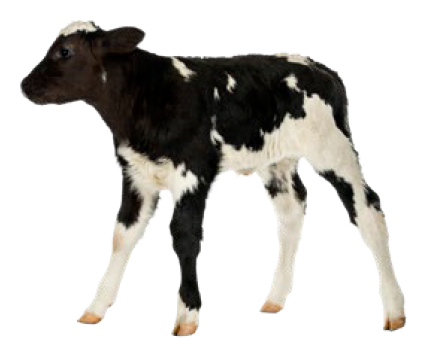 In dairy cattle – Greater immunity and better productive performance (Carbonell et al., 2025)
 The vaccinated group showed significantly higher levels of specific antibodies against C. parvum Gp40 (expressed in log₂) compared to the control group (p < 0.01), both in prepartum serum (16.7 ± 1.8 vs 11.1 ± 1.4), as well as in colostrum (18.1 ± 1.9 vs 12.9 ± 1.5) and in the calf serum (17.4 ± 1.8 vs 11.2 ± 1.3).
The calves born to vaccinated mothers showed lower mortality from diarrhea (3.7% vs 13.5%) and higher average daily gain at 21 days (482.8 vs 400.2 g/day).
In beef cattle – Reduction of morbidity and antibiotic use (Iglesias et al., 2025)
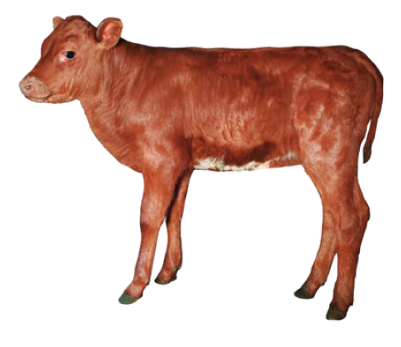 After vaccinating a batch of pure Limousin cows with the aim of protecting the winter calving, the following was observed:
A drastic reduction in morbidity (only one mild case of diarrhea, 5.5%).
Absence of emergency visits (to rehydrate calves).
A notable decrease in the use of therapeutic antibiotics (0 mg compared to an annual average of 8 kg of paromomycin).
Significant reduction in the time spent treating sick calves, which resulted in greater peace of mind for the farm staff.
 STEP 4. COLOSTRUM AND TRANSITION MILK
We all know the importance of colostrum feeding for calf health.
 Perhaps we have focused so much on the management of colostrum during the first 24h of life, that we have forgotten the importance of continuing to administer transition milk during the first days of life, just as was traditionally done on farms.
| A farmer recently told us that it was vintage because he had continued using transition milk and it turns out that it’s now in fashion! |
Numerous recent studies have shown that continuing to feed with transition milk provides numerous benefits for intestinal health and calf growth (Schalich et al., 2021), especially when the mothers have been vaccinated to protect the calves against diarrhea.
| In practice, in order to feed the heifers for several days with this transition milk, we face the challenges of collection, storage, and preservation that make us ask certain questions. |
 Do I use diluted colostrum or transition milk?
 Since it is often difficult to collect enough first milking colostrum, most farms choose to use transition milk from cows from the 2nd to 5th milking (Tejero et al., 2025).
 When selecting how many milkings to collect transition milk, the closer it is to the first milking, the higher the immunological quality will be.
Ideally, when possible, it will be best to use the transition milk from the first milkings and avoid diluting it in milk replacer.
Would it be necessary/recommended to perform a thermal treatment on the TM like pasteurization?
When it is not possible to ensure impeccable hygiene during milking, in the milking cans, or in the storage systems, and especially if there are pathogens present on the farm that can be transmitted to the calf through the milk (such as Paratuberculosis, Mycoplasma, or Salmonella), pasteurization is recommended.
 The recommended thermal treatment, as in the case of colostrum, consists of heating the milk to 60 °C for 60 minutes.
How do I preserve the transition milk to avoid the risk of contamination?
To preserve the transition milk between milking and its administration, refrigeration can be used, just as is commonly done with colostrum or cow’s milk.
However, it is important to note that a greater refrigeration capacity will be needed, as the volume to be stored will be higher.

A critical point is the cooling speed, because if we refrigerate it in large barrels and/or low-power coolers, it will take many hours to drop to 4 °C and bacteria will take the opportunity to replicate.
It will be essential to invest in a tank, chest or cooler and/or add chemical preservatives, such as potassium sorbate, to minimize bacterial multiplication and extend the refrigeration preservation time up to 5 days (Steward et al., 2005; Denholm et al., 2022; Carbonell et al., 2024).

How do I identify the bottles and calves that are in the 5-day program with transition milk?
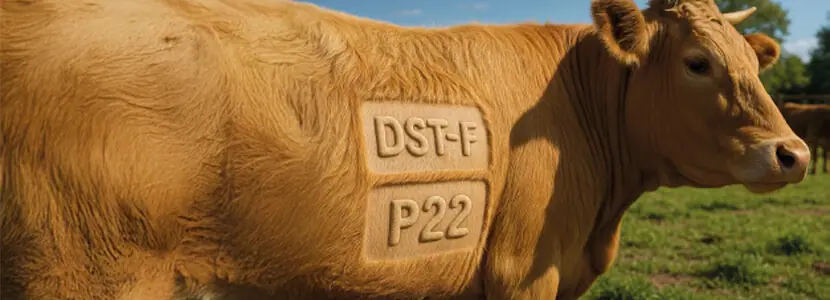
On farms, different strategies are used to help employees identify the calves to be fed with transition milk, for example, markings on the huts, stickers where each feeding is marked with a line, or a string tied to the hut to which a knot is added for each administered feeding.

Should I feed only the replacement heifers with this milk from vaccinated cows or also the calves for sale or fattening?
It will be key to success that all calves are fed with transition milk from vaccinated cows, in order to achieve herd protection that minimizes infection pressure for both groups of animals.
 5. TREATMENT
Despite the four previous steps, in situations of high infection pressure it may be necessary to treat calves individually that present a clinical condition. Additionally, on many occasions, infections are mixed and several agents may be involved, requiring different treatments.
 The priority in any type of diarrhea is to keep the heifer calves well hydrated.
 In case a calf becomes ill due to cryptosporidia in an environment with a high environmental load, it will be necessary to apply a therapeutic treatment with a cryptosporidiostatic, such as the halofuginone (Halocur®). In case a calf becomes ill due to cryptosporidia in an environment with a high environmental load, it will be necessary to apply a therapeutic treatment with a cryptosporidiostatic, such as the halofuginone (Halocur®). |
Vaccination increases resistance, but does not prevent infection. Therefore, just as calves that develop pneumonia are treated with antibiotics despite being vaccinated, clinical cases of cryptosporidiosis should also be treated when the situation requires it.
The control of cryptosporidiosis requires a comprehensive approach that combines adequate diagnosis, good management and hygiene, strategic use of vaccination, utilization of transition milk as an immunological tool, and individualized treatments when necessary.
 Coordinated application of these five steps not only improves the health and welfare of calves but also helps reduce infection pressure on the farm and optimize productive outcomes.
Acknowledgments. We would like to thank the veterinarians and farmers who have participated in the studies, devised solutions to facilitate feeding with transition milk, and/or shared their experience with the new Bovilis Cryptium® vaccine.