


 Latinoamérica
 Europa
Squamous Cell Carcinoma in Rasa Aragonesa Sheep: Predisposition-Phenotype Paradigm














The squamous cell carcinoma (SCC) is the most common skin neoplasm in sheep worldwide.
 It is a malignant tumor of epithelial origin that develops from the squamous layer of the epidermis.
Although its etiology is multifactorial, the scientific literature agrees in pointing out ultraviolet radiation as the primary physical carcinogen, whose action is exacerbated by intrinsic factors of the animal (Méndez et al., 1997):
 Absence or low pigmentation.
Lack of wool coverage.
This neoplastic disease can affect various species.
The following analyzes this pathology in the specific context of the Rasa Aragonesa breed and its traditional management in the Ebro Valley.
RASA ARAGONESA BREED: PHENOTYPE AND SKIN SUSCEPTIBILITY
The Rasa Aragonesa sheep breed presents defined racial characteristics that, paradoxically, increase its vulnerability to solar radiation.
 According to the breed standard described by the Royal Spanish Federation of Select Livestock Associations (RFEAGAS, n.d.), these animals are characterized by a subconvex profile, white coat, and a uniformly white fleece.
This selection may be directly influenced by certain conditioning factors, such as:
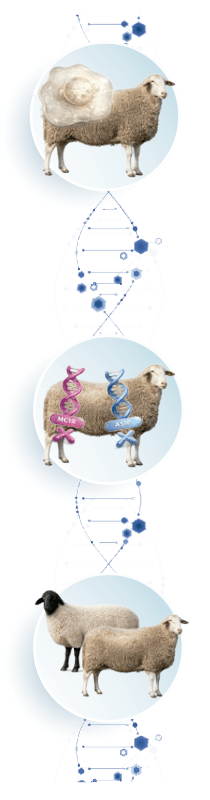 Hypopigmentation
Pigmentation is a critical factor, as it not only determines the color of the wool but also of the skin and mucous membranes. The Rasa Aragonesa has pinkish and depigmented mucous membranes and skin, which, combined with a lack of wool coverage in key areas constantly exposed to the sun, such as the ears, muzzle, and perineum, can promote its occurrence.
The lack of melanin in keratinocytes reduces the ability to protect against UV radiation, allowing it to directly damage cellular DNA (thymine dimers), thus initiating carcinogenesis (Riet-Correa et al., 1981).
Genetic predisposition
Hypopigmentation is regulated by genes, such as MC1R (Melanocortin 1 Receptor) and ASIP (Agouti Signaling Protein), which influence the occurrence of SCC, so there may be a genetic predisposition (Vasconcelos et al., 2023).
The protective effect of dark pigmentation
Comparative studies have shown that breeds with dark pigmentation on the head and limbs have an almost zero incidence of SCC compared to depigmented white breeds, confirming the direct phenotypic correlation (Méndez et al., 1997). On the other hand, adult animals will have a higher susceptibility compared to young ones (Vasconcelos et al., 2023).
ANATOMICAL LOCATION OF SCC
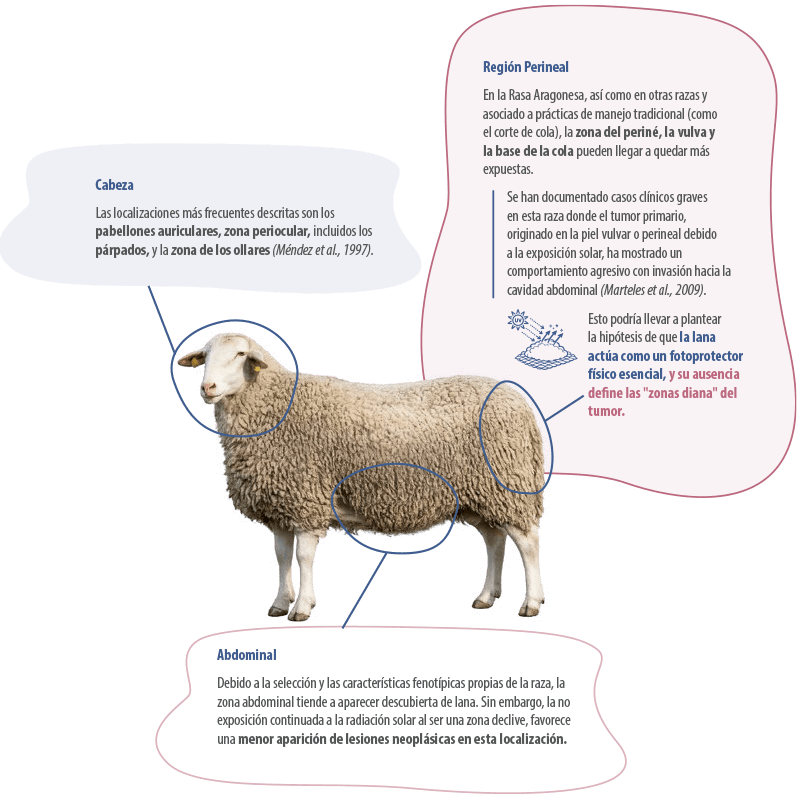
The anatomical distribution of SCC is not random. In sheep, the tumor is almost exclusively located in wool-free areas that tend to have scant hair coverage and little or no pigmentation.
The most frequent locations are:

THE ENVIRONMENTAL FACTOR: SUN EXPOSURE IN THE EBRO VALLEY
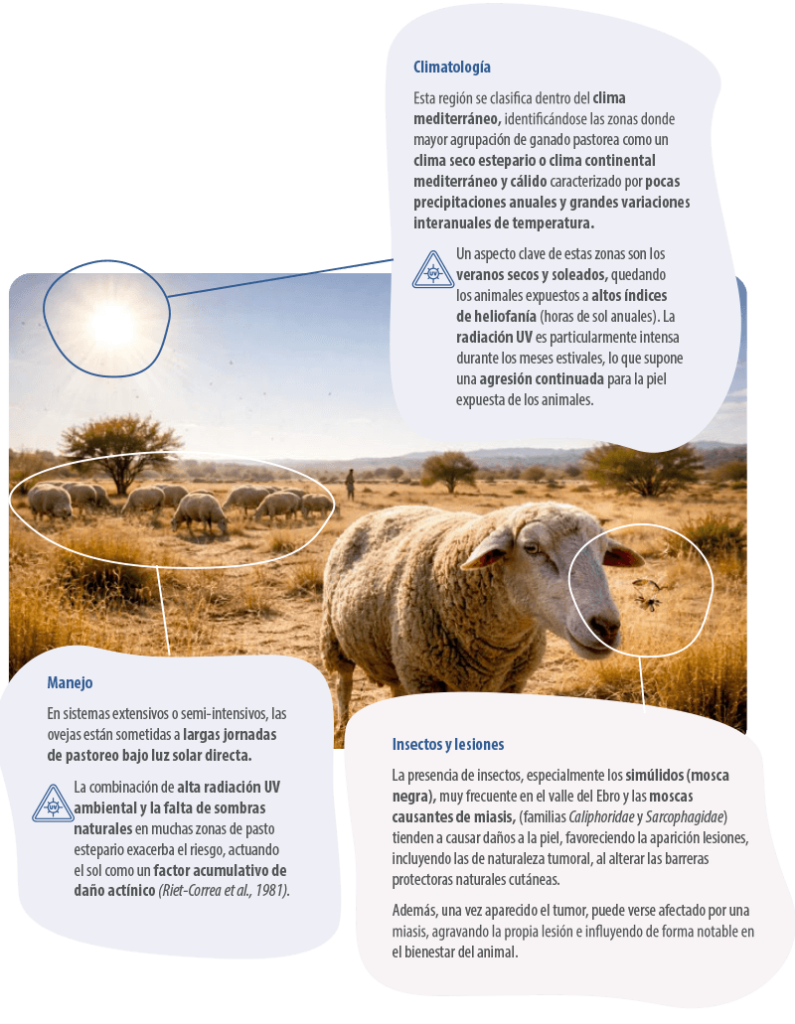
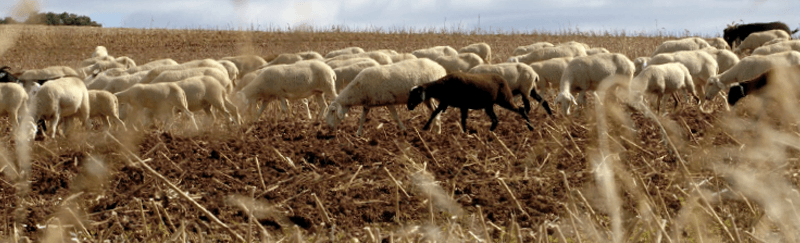
The geographical location of the herds and traditional management practices with semi-intensive or extensive production systems associated with the production of this breed play a determining role in the pathogenesis.
Most of the Rasa Aragonesa sheep are concentrated in the Ebro basin and arid areas of Aragón.
EPIDEMIOLOGY AND CHRONOLOGY OF THE LESION
SCC is a malignant tumor of keratinocytes that presents a slow development and a chronic course, with diagnosis often occurring when the lesion is already quite advanced.
Age of presentation
It is a pathology linked to adult animals, in line with the most predisposing factor considered, solar exposure and the accumulation of associated damage.
 Méndez et al. (1997) observed that the incidence increased dramatically with age, being almost non-existent in lambs. Thus, the majority of detected cases were found in animals over 5 years of age.
Pathogenesis
Solar damage is cumulative and the initial lesions are usually actinic keratoses (thickening of the skin) or solar dermatoses which, after years of continuous exposure, evolve into invasive carcinomas.
This explains why herds with a higher replacement rate (younger animals) tend to present fewer visible clinical cases than those with a higher percentage of sheep over 5 years, as the prevalence of SCC increases with age (Daniels and Johnson, 1987).
PREVALENCE AND PRODUCTIVE IMPACT
Global statistics on slaughterhouse condemnations may seem low (often <1%), but these figures underestimate the reality in the field and can partially distort it (Swan et al., 1984).
Actual Prevalence
In herds of white breeds exposed to high radiation, morbidity can skyrocket.
In the outbreak studied by Méndez et al. (1997) in Spain, a clinical prevalence of 10.8% was reported in adult sheep, an alarming figure for a neoplasm. Prevalence increases in arid and semi-arid climates and during dry weather with many hours of sunlight (Méndez et al., 1997).
As a precedent in comparative medicine, field studies conducted in the Arabian Peninsula and Australia on the sheep sector demonstrate the high prevalence of cutaneous neoplasms, including malignant melanoma, in local breeds such as Najdi and Awassi (Ladds & Entwistle, 1977; Ladds & Daniel, 1982; Ahmed & Hassanein, 2012).
 These studies highlight that the lack of pigmentation in specific areas and prolonged exposure to solar radiation are key determinants in the frequency of these pathologies in regions with high insolation.
Consequences
The SCC causes significant deterioration of the animal, which becomes evident not only in its productivity but also in its own welfare, as the lesions tend to become infected or suffer myiasis, further worsening the situation. This tends to lead to the premature culling of the animal.
DIFFERENTIAL DIAGNOSIS OF SCC
In the differential diagnosis of clinical presentations compatible with squamous cell carcinoma (SCC) in sheep, various processes of neoplastic, infectious, parasitic, inflammatory, and traumatic origin should be considered, which may present proliferative, ulcerated, or similarly located skin lesions.
Neoplastic processes
Among the neoplastic processes, the following are included:
- Melanomas associated with areas of dark pigmentation.
- Amelanotic melanomas.
- Sarcomas, fibromas, myxomas, and carcinomas of the lacrimal gland
(Ahmed & Hassanein, 2012; Villalobos, 2022)
- Ovine papillomatosis, caused by the Ovine papillomavirus (OvPV), which more frequently affects young animals, although it can be located in anatomical regions similar to those of SCC and present a similar macroscopic appearance (Polinas et al., 2024).
Parasitic diseases
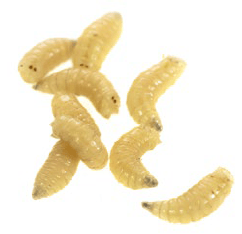 Among parasitic conditions, ovine myiasis constitutes a relevant differential diagnosis.
This is an infestation by dipteran larvae that develop in living or necrotic tissues, mainly from the families Sarcophagidae (Wohlfahrtia magnifica) and Calliphoridae (Lucilia sericata, Phormia regina).
In sheep, lesions are most frequently located in moist areas, such as the perineal region, vulva, prepuce, and skin wounds.
 Primary myiasis affects healthy tissues, while secondary myiasis develops on pre-existing lesions (Valladares-Carranza et al., n.d.).
Infections
Infected skin lesions secondary to blackfly bites, blood-sucking insects whose bites can cause severe dermatitis, edema, necrosis, and ulceration, especially in less hairy areas such as the face, ears, and scrotum, should also be considered.
 These lesions can be complicated by secondary bacterial infections, mainly by Staphylococcusaureus or Trueperella pyogenes (Ruiz- Arrondo et al., 2014).
Other processes
Other processes to include in the differential diagnosis are traumatic lesions, periocular abscesses, actinic keratosis, eosinophilic granuloma (characterized by a dense cellular proliferation of eosinophils, macrophages, and mast cells) and photosensitization processes, which can lead to ulcerative or proliferative skin lesions in areas exposed to solar radiation.

LIST OF SCC CASES DIAGNOSED IN THE SCRUM
In recent years, the Ruminant Clinical Service (SCRUM) of the University of Zaragoza has received a series of cases with certain similarities that have highlighted the importance of this tumor in the livestock herd.
Diagnostic approach
They have been diagnosed as squamous cell carcinomas five cases in adult Rasa Aragonesa sheep from different farms located in the Ebro Valley.
 All were adult sheep aged 3-6 years from farms included in the genealogical book of the Rasa Aragonesa breed and with traditional semi-intensive management typical of the Ebro Valley.
The five animals presented masses located at the head level, four of them at the periocular level and one closer to the nostrils (Image 1).
 The masses had a hemorrhagic-purulent appearance, with high cellularity and a notable bad odor, which considerably affected the animal welfare.
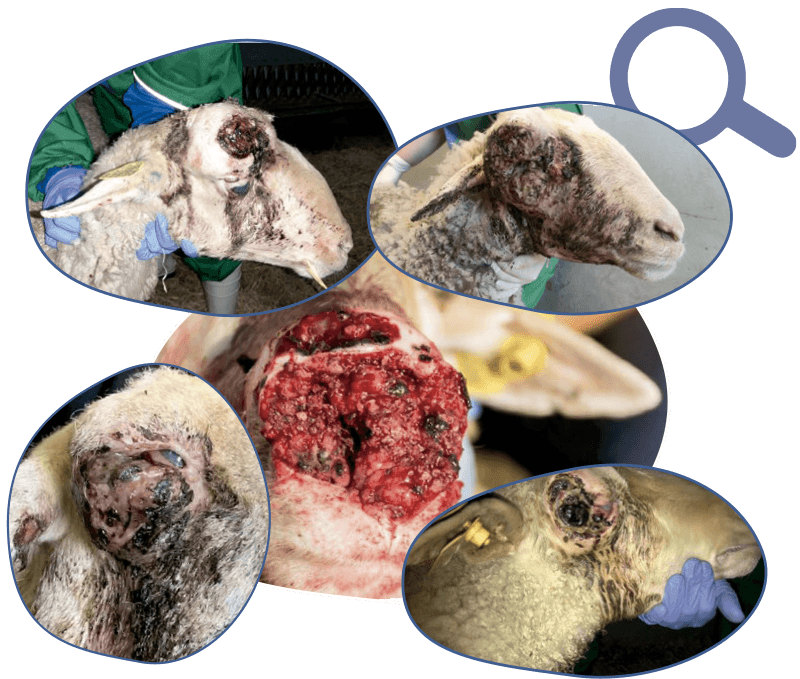
Image 1. External appearance of the masses of the five animals upon arrival at the Ruminant Clinical Service (SCRUM).
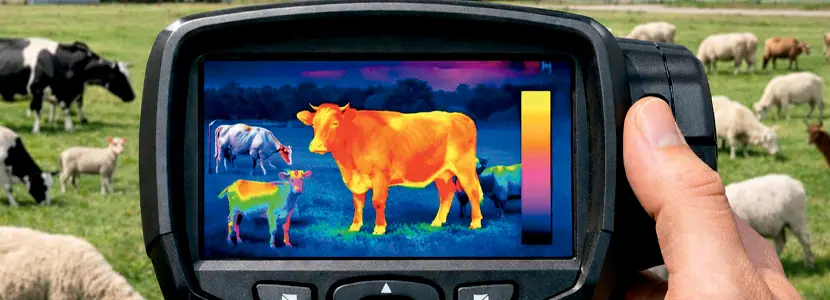
In all cases, the pertinent complementary tests were performed, which included analyses, diagnostic imaging techniques such as thermography and computed tomography.
 After the application of palliative care by the clinical team, it was necessary to proceed with the humane euthanasia of the animals for the histopathological examination.
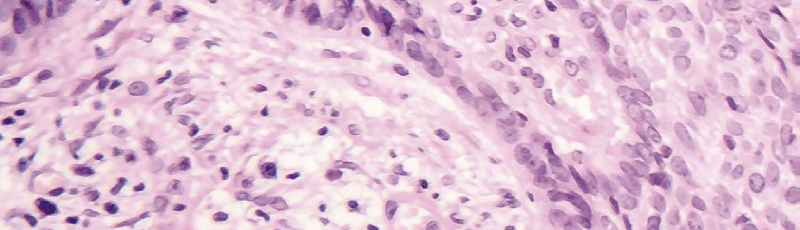
All animals were diagnosed with squamous cell carcinoma, with varying degrees of tumor development and variable presence of secondary lesions.
The diagnostic protocol followed was previously described in a case of periocular squamous cell carcinoma published in the November 2025 edition of the magazine rumiNews (Sánchez et al., 2025).
READ ARTICLE: Squamous cell tumor in a cull ewe
 The observation of this series of cases in the SCRUM over the past few years highlights the need to perform broad and systematic differential diagnoses in the presence of skin lesions in sheep.
Although the occurrence of cutaneous neoplasms in this species is less frequent than in other domestic species, such as equids, its consideration is fundamental in the clinical approach.
This is especially relevant due to the risk of confusing these lesions with other more common processes, such as myiasis or traumatic injuries, which can lead to repeated treatments, prolonged healing, and diagnostic delays that negatively affect the prognosis.
Preventive and treatment options
The prevention and treatment of this pathology in productive conditions are particularly complex:
 The sun exposure is considered the main predisposing factor, but it is not easy to modify the traditional management practices associated with sheep production, which include grazing and the use of pastures and woodland areas throughout the year.
 The historical process of genetic selection applied in most sheep breeds, including the Rasa Aragonesa, aimed at obtaining white fleeces that facilitate wool dyeing, could have contributed to a greater susceptibility to this pathology.
In this regard, certain genetic lines with very marked phenotypes and an almost total absence of cutaneous melanin seem to be the most affected.
Currently, maintaining a balance between genetic selection and sun exposure, along with early diagnosis that allows minimizing the repercussions on animal welfare, constitutes the main control strategy available.
CONCLUSION
The squamous cell carcinoma in the Rasa Aragonesa sheep constitutes a paradigmatic example of the genotype-environment interaction.
The characteristic depigmentation of the breed, along with the high insolation typical of the Ebro Valley, creates conditions especially favorable for the tumor development in body areas devoid of wool.
In practice, prevention options in production systems are limited, given that neither the genetic base of the breed nor the traditional managements associated with extensive grazing are easily modifiable.
Therefore, early diagnosis and clinical monitoring of incipient skin lesions in adult animals are outlined as the most relevant measures to reduce the impact of this pathology on animal welfare.