


 Latinoamérica
 Europa
The Drying Off Period: A Physiological Challenge for the Cow and the Help of Safydry


 C/ Lopez de Aranda, 35 Madrid 28027
  (+34) 917 43 46 41
THE INVOLUTION OF THE MAMMARY GLAND
The drying off period, or cessation of milking at the end of lactation, initiates the dry period, a crucial phase for dairy cows that influences both future milk production and udder health.
 A key physiological event during the dry period is the involution of the mammary gland, during which the udder volume decreases, mainly due to the cessation of milk production and its accumulation in the udder.
This physiological process is fundamental because it allows the mammary gland to recover before the next lactation. During this period, milk production stops, giving the udder time to regenerate and replace old and less efficient cells with new ones. This helps maintain good milk production in the next lactation.
 Additionally, the dry period allows the cow to replenish its body reserves after the demands of lactation and prepare metabolically for calving and the next productive cycle. In general, a well-managed drying off period is essential to ensure optimal health, productivity, and performance in the next lactation.
A planned drying off period, which usually lasts between 6 and 8 weeks before calving, is essential to promote mammary gland involution, restore epithelial cells, and ensure optimal milk production and good udder health in the next cycle.
MAMMARY CONGESTION AND INCREASED PRESSURE IN THE UDDER
 However, after the last milking, high-producing cows tend to accumulate milk in the udder, which can lead to mammary congestion. This phenomenon is exacerbated when drying off is abrupt, the most commonly used method currently in dairy farms.
 The accumulation of milk increases intramammary pressure. This increase in pressure is associated with a delay in the formation of the keratin plug, leaving the teat canal exposed to external microorganisms, which can have significant consequences in the next lactation.

 Additionally, the high pressure inside the udder is related to an increased local immune response. At the same time, the retained milk creates a favorable environment for bacterial growth and triggers an immune response that causes an influx of leukocytes to the udder.
 Together, these effects result in an increase in the somatic cell count (SCC), which can become visible in the next lactation. A high SCC often leads processing companies or dairy cooperatives to downgrade milk quality, thus reducing farm income.
On the other hand, the high pressure caused by retained milk generates significant stress for the cow and, in many cases, profound discomfort and restlessness that can even lead the animal to injure itself.
SAFYDRY: SUPPORT DURING THE DRYING OFF PERIOD
To address these challenges, Innofarm launches in the Spanish market, under the brand RaizUp, SafyDry, a complementary feed designed to promote udder health in high-producing cows during the dry period and facilitate mammary involution.
| SafyDry is a complementary feed for ruminants. It is a mixture of plant extracts, vitamins, and minerals supplied in a cartridge compatible with a dosing gun. |
BENEFITS OF SAFYDRY
 Accelerates the decrease in milk production during the drying off period.
Helps limit udder congestion.
 Contributes to the reduction of somatic cell count at the start of the next lactation.

TRIALS CONDUCTED WITH SAFYDRY
Specific trials were conducted with SafyDry using physiological and economic criteria.
PHYSIOLOGICAL CRITERION: UDDER PRESSURE AND STRESS
Udder congestion is associated with increased pressure that generates stress and causes the cow to appear restless, uncomfortable, and even vocalize due to discomfort.
 In a specific trial, udder pressure was measured from the time of drying off to three days later. The “SafyDry” group received the oral gel twice: once at the end of lactation (Day 0) and again the next day (Day 1).

A pressure peak was observed one day after the end of lactation, associated with milk accumulation. However, a significant difference was detected between Day 1 and Day 3 in the SafyDry group, while no significant differences were observed in the control group.
 The use of SafyDry at the end of lactation in high-producing cows helps limit mammary congestion and animal stress.
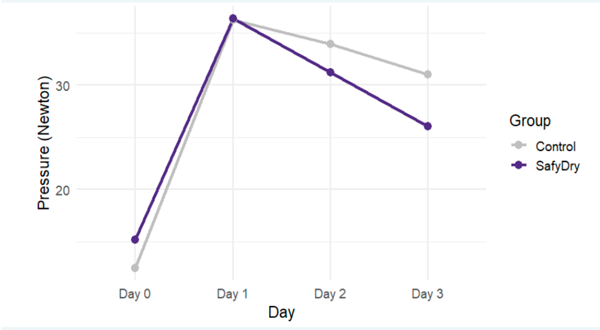
Figure 1. Average udder pressure from Day 0 (drying off) to Day 3.
ECONOMIC CRITERION: SOMATIC CELL COUNT
SafyDry contributes to reducing the somatic cell count at the start of the next lactation in high-producing cows.
In this second trial, half of the cows received SafyDry at the start of the drying off period, after the last milking, and again the next day. The somatic cell count was monitored 30 days after calving, at the start of the next lactation.
The results showed a lower somatic cell count in the milk of cows that received SafyDry.
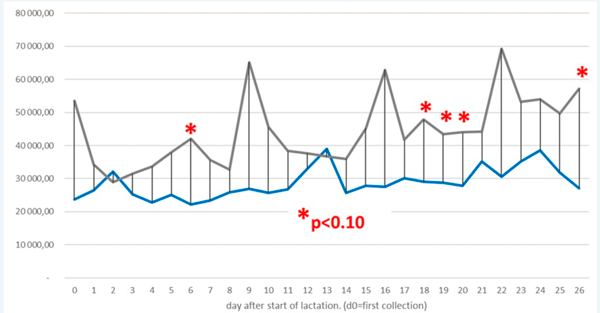
Figure 2. Evolution of somatic cell count at the start of lactation.
INSTRUCTIONS FOR USE 
SafyDry is a complementary feed administered directly into the animal’s mouth using a dosing gun.

1. Insert the cartridge into the dosing gun.
2. Adjust the wheel to the corresponding notch.
3. Administer the required amount directly into the animal’s mouth by pulling the trigger several times.
RECOMMENDED DOSAGE 
 DAIRY COWS:
Administer 70 ml on the day of drying off. In high-producing cows (>20 kg of milk the day before drying off), repeat the same administration the next day.
 GOATS AND SHEEP:
Administer 15 ml.
| SafyDry has been tested and used in numerous farms across several European countries. For more information, please contact the Innofarm team. |